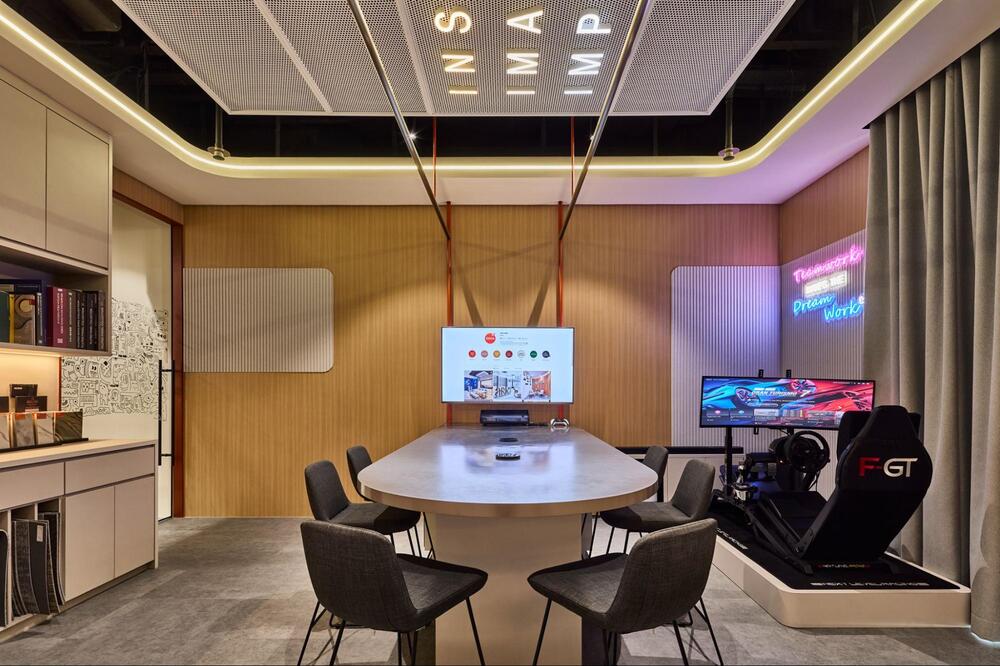
As employee well-being becomes a priority, companies are rethinking how office spaces support both work performance and mental health. One emerging solution is the development of wellness zones, dedicated areas that help employees rest, recover, and maintain balance during the workday. Find more with OSCA Asia.
1. What Are Wellness Zones?
Wellness zones are dedicated areas in an office designed to support physical health, mental balance, and daily recovery for employees. These spaces form a structured part of workplace wellness strategy, rather than functioning as casual break rooms. It is a purpose-planned environment that combines spatial planning, ergonomic design, air quality management, lighting strategy, and acoustic control. Companies use them to reduce stress, improve focus, and maintain employee performance during the workday.
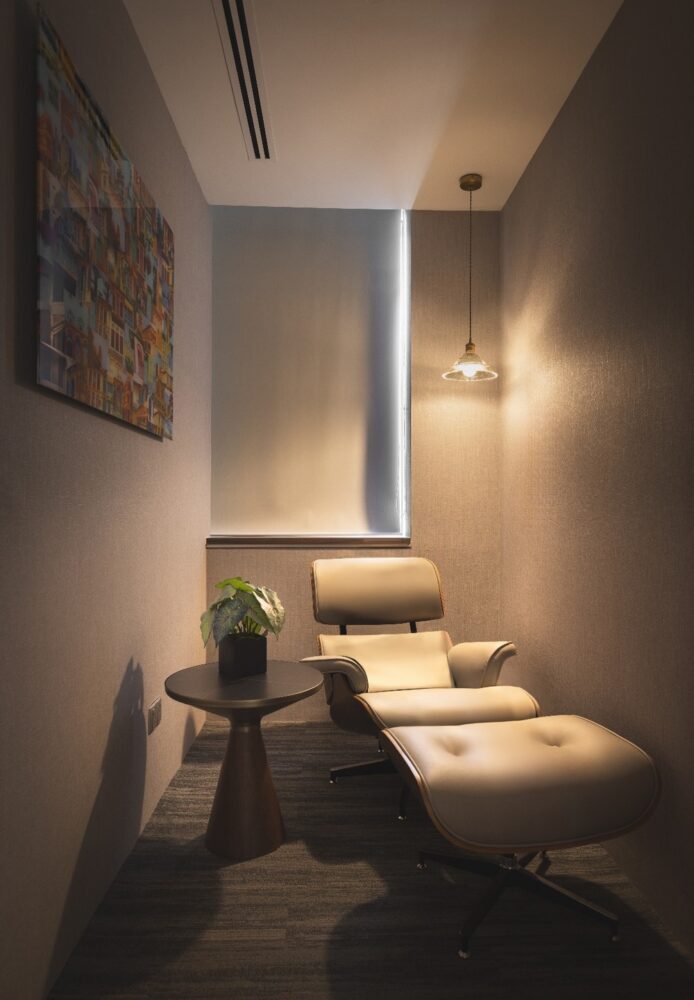
Modern office wellness space interior
Many offices already include pantry areas or lounges. However, these spaces differ from wellness zones in both function and design strategy.
| Feature | Traditional Break Area | Wellness Zone |
| Purpose | Casual rest or eating | Structured employee recovery |
| Design strategy | Furniture placement only | Integrated wellness office design |
| Environmental control | Limited | Acoustic, lighting, air quality planning |
| Activities | Informal conversation | Relaxation, focus reset, movement |
| Workplace role | Social break | Part of workplace wellness strategy |
A pantry or lounge may help employees relax for a short time. However, a wellness zone supports a wider set of wellbeing activities and aligns with long-term workplace health goals.
2. Why Wellness Zones Matter in Modern Offices?
The following benefits explain why wellness zones have become essential in modern office environments.
Improve employee productivity
Wellness zones support productivity by enabling employees to recharge and recover from cognitive fatigue during the workday. Short breaks in a calm environment help restore attention and improve decision quality. Key productivity benefits include:
- Better concentration after short recovery periods
- Reduced distractions compared to open work areas
- Improved task accuracy and efficiency
Reduce stress and burnout
Workplace stress often results from continuous meetings, noise, and heavy workloads. Wellness zones provide quiet environments where employees can decompress and regain mental balance. Stress reduction benefits include:
- Lower exposure to noise and workplace distractions
- Opportunities for short relaxation breaks
- Reduced accumulation of daily stress
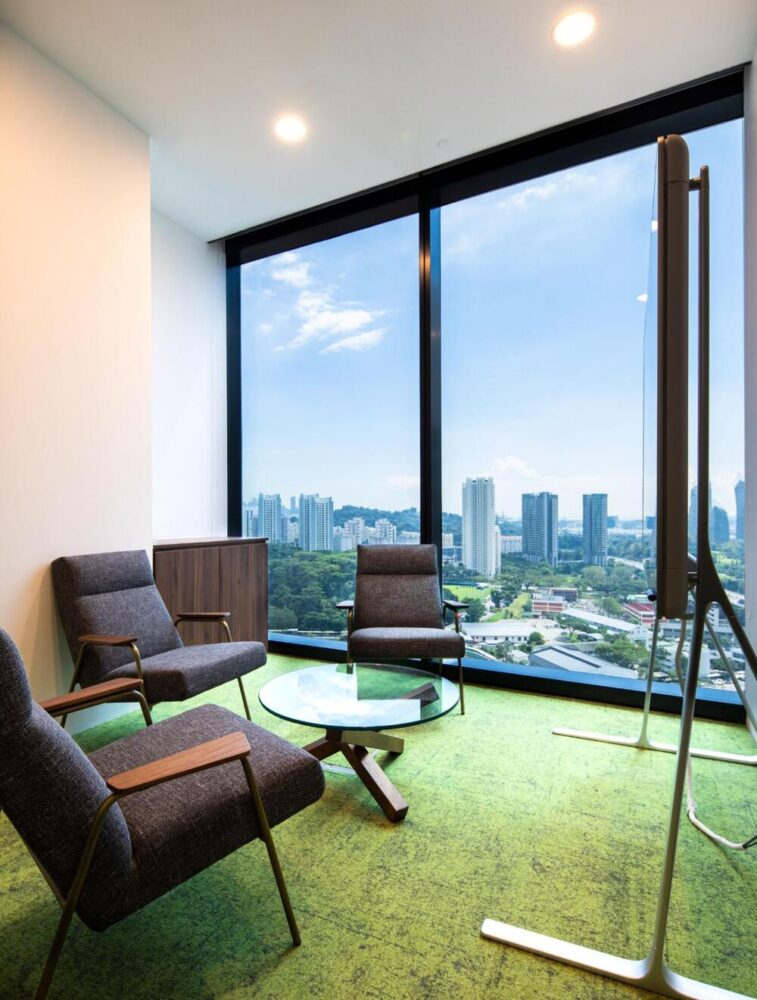
Workplace wellness zone design concept
Support mental and physical health
Office work often involves prolonged periods of sitting and exposure to screens. Wellness zones help employees restore both physical comfort and mental clarity. Health benefits include:
- Spaces for light movement and posture recovery
- Quiet environments for mental reset
- Improved indoor comfort and air quality
Enhance employee retention and employer branding
Workplace quality influences how employees evaluate employers. Companies that invest in wellness zones demonstrate a commitment to employee well-being. Key organizational benefits include:
- Higher employee satisfaction
- Stronger workplace culture
- More attractive employer brand
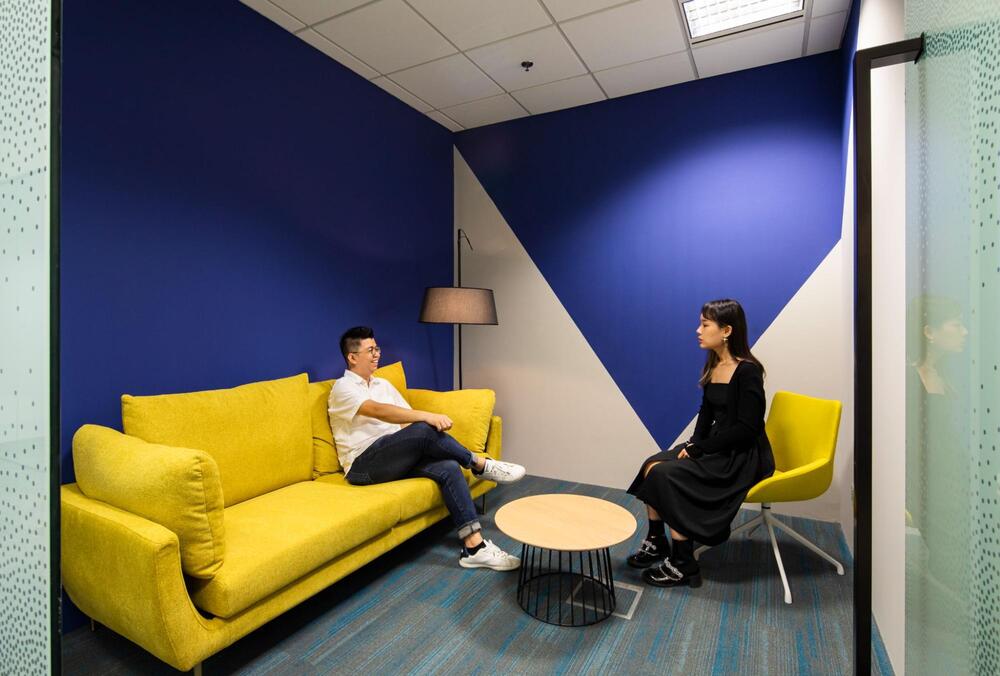
Employee well-being area in a modern office
3. Key Design Principles for Effective Wellness Zones
Organizations that implement wellness zones should focus on design elements that directly influence physical comfort, mental clarity, and environmental stability. Each principle below addresses a specific factor that contributes to a healthy workplace environment.
3.1 Human-Centric Design
Human-centric design places employee well-being at the center of spatial planning. The goal is to create wellness zones that respond to how people work, rest, and recover during the workday.
Key elements of human-centric workplace wellness design include:
- Comfortable seating that supports short rest periods
- Clear circulation paths that allow easy access
- Calm visual environments with minimal distractions
- Flexible spaces that accommodate different activities
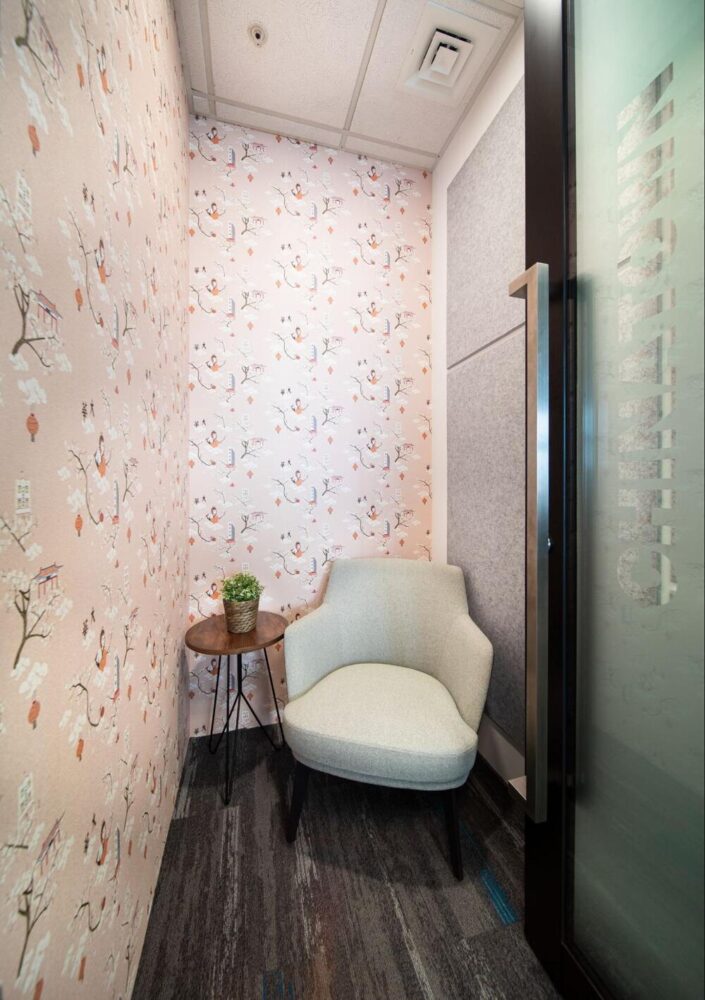
Human-centered workplace wellness environment
3.2 Acoustic Comfort
Noise is one of the most common causes of workplace stress. Open-plan offices often expose employees to constant conversations, phone calls, and background activity. Wellness zones must control these conditions to provide a quiet recovery space.
Important acoustic strategies include:
- Installing acoustic wall panels or ceiling baffles
- Using carpets or soft flooring to absorb sound
- Positioning wellness spaces away from busy corridors
- Adding partitions that block noise from work areas
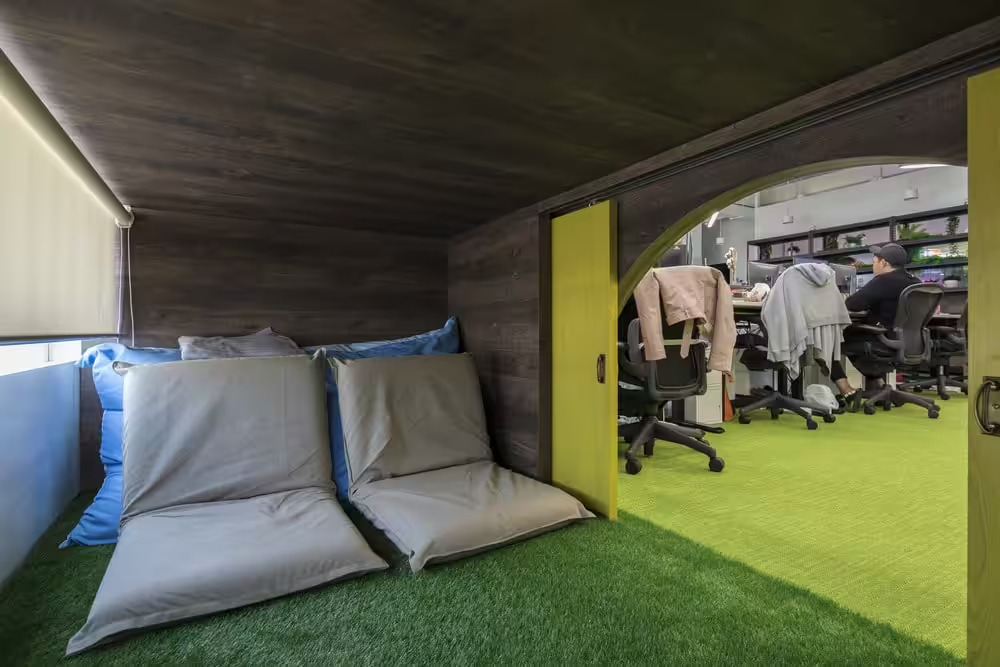
Acoustic comfort design in the workplace
3.3 Air Quality & Ventilation
Indoor air quality has a direct impact on employee health and cognitive performance. Poor ventilation can lead to fatigue, headaches, and reduced concentration. Wellness zones should provide cleaner air conditions than standard workspaces.
Important air quality considerations in wellness office design include:
- Fresh air ventilation systems
- Air filtration units
- Low-emission materials and furniture
- Indoor plants that support air quality
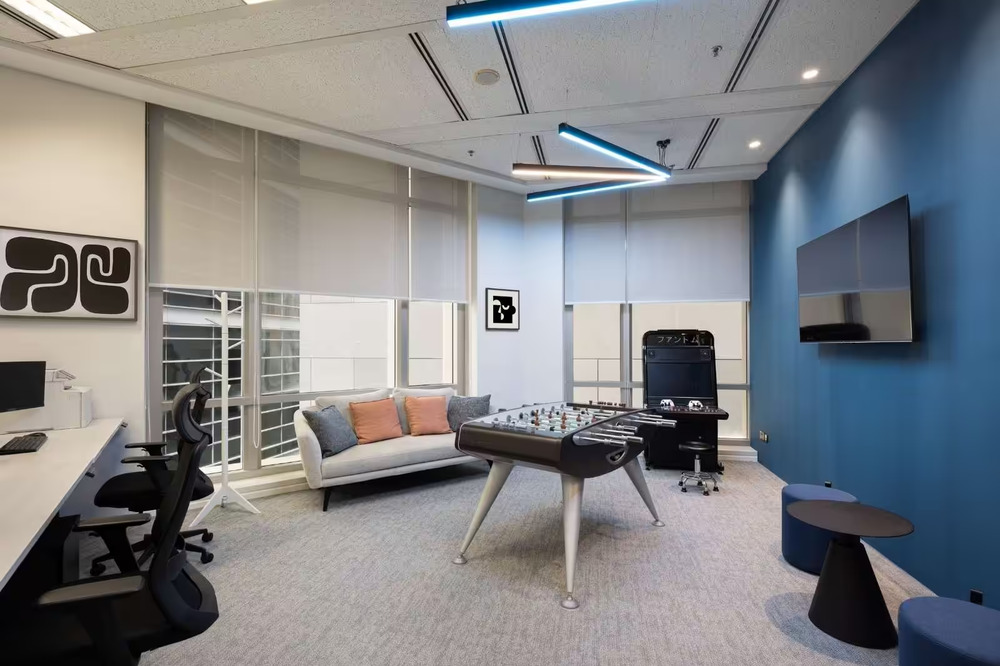
Air quality workplace design
3.4 Natural Light Optimization
Natural light plays a key role in regulating human circadian rhythms. Access to daylight improves mood, energy levels, and mental clarity. For this reason, wellness zones should be placed where natural light is available.
Strategies for optimizing natural light include:
- Positioning wellness spaces near windows
- Using glass partitions to distribute daylight
- Controlling glare with blinds or shading systems
- Combining daylight with indirect artificial lighting
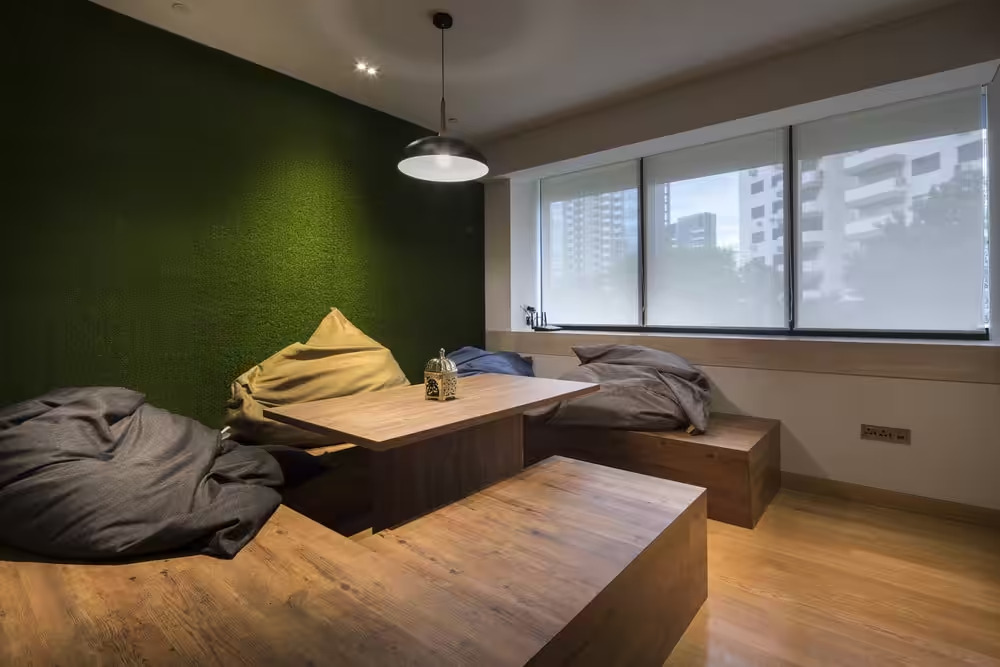
Natural lighting optimization in office space
3.5 Ergonomic Integration
Ergonomics is essential for maintaining physical health in office environments. Wellness zones should support posture recovery and gentle movement during the workday.
Examples of ergonomic features in wellness office design include:
- Adjustable seating for relaxation
- Stretching areas with open floor space
- Standing counters for short breaks
- Supportive lounge chairs designed for posture recovery
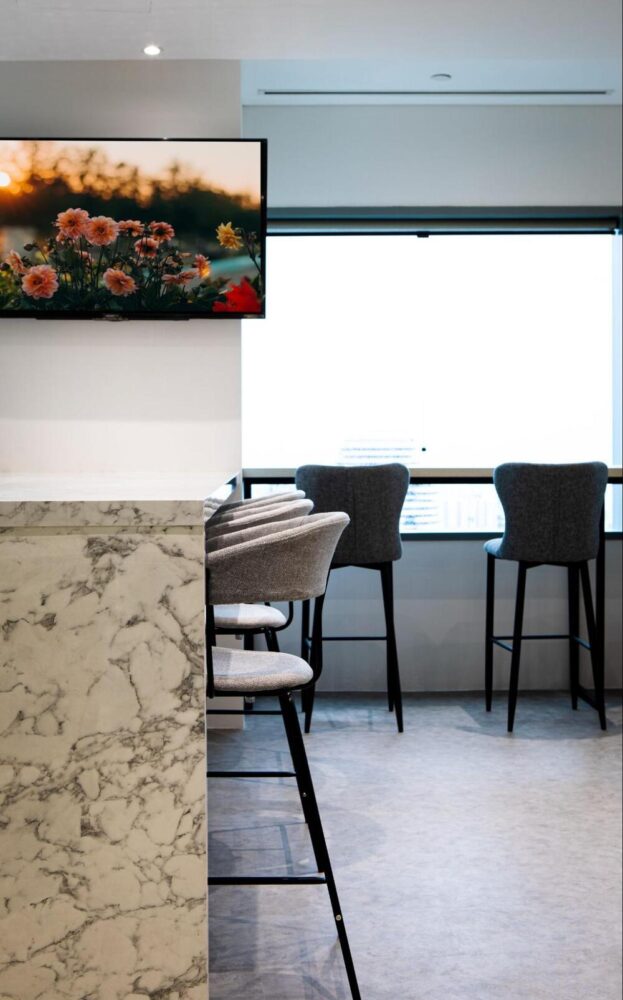
Ergonomic furniture for workplace wellness
3.6 Flexibility & Multi-Functional Layout
Modern offices require adaptable spaces. Employee needs change during the day, and wellness zones must support different activities without requiring large floor areas.
Key features of flexible wellness office design include:
- Modular furniture that can be rearranged
- Movable partitions that adjust the space size
- Multi-use seating areas
- Layouts that support both individual and small group use
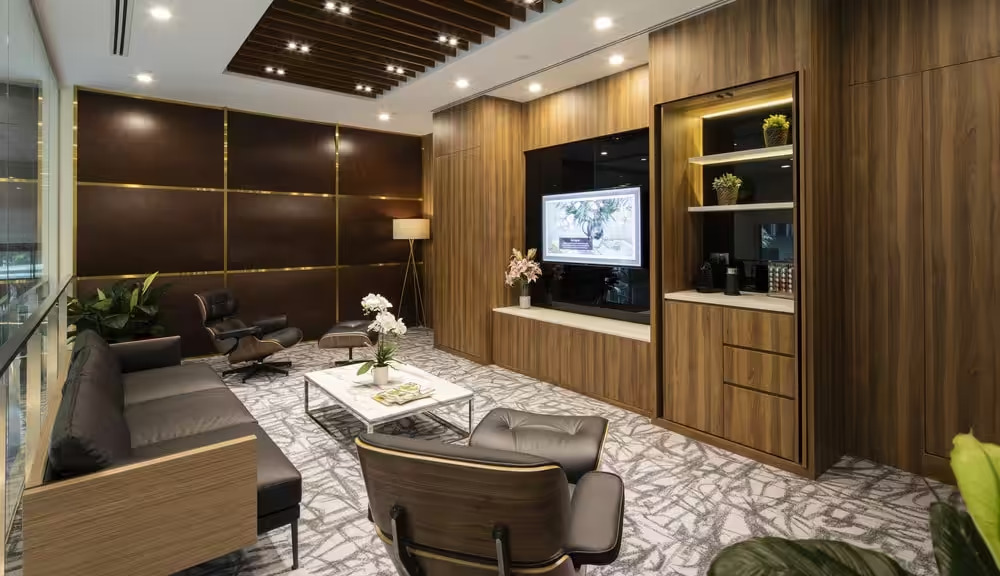
Flexible multi-functional office layout
4. Types of Wellness Zones in the Workplace
Quiet Rooms / Meditation Rooms
Quiet rooms are one of the most important types of wellness zones in modern offices. These spaces provide employees with an environment where they can disconnect from workplace noise and regain mental focus.
Quiet rooms should also provide privacy. Employees are more likely to use wellness zones when they feel comfortable and free from interruption. Proper acoustic treatment and controlled lighting help create a space where employees can focus entirely on recovery.
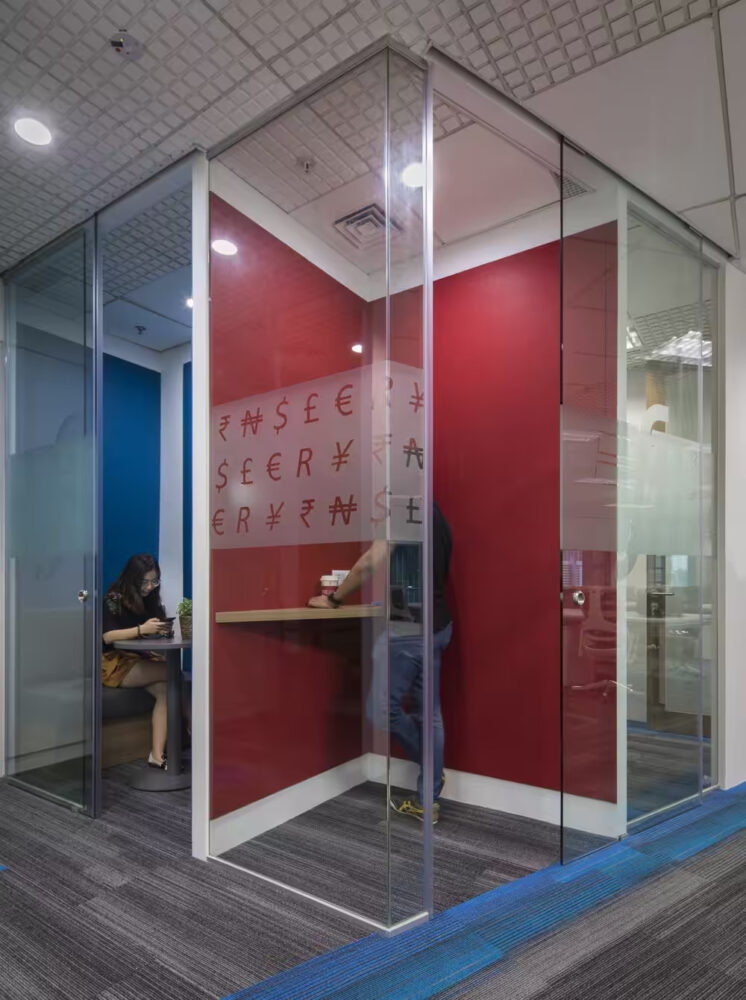
Relaxation and stress-relief space in the office
Biophilic Wellness Areas
Biophilic wellness areas introduce natural elements into the workplace to support employee health and environmental comfort. These wellness zones focus on the connection between people and natural environments.
Research in workplace design shows that exposure to natural materials, plants, and daylight improves mood and cognitive performance. A biophilic wellness zone creates a space where employees can experience this connection without leaving the office.
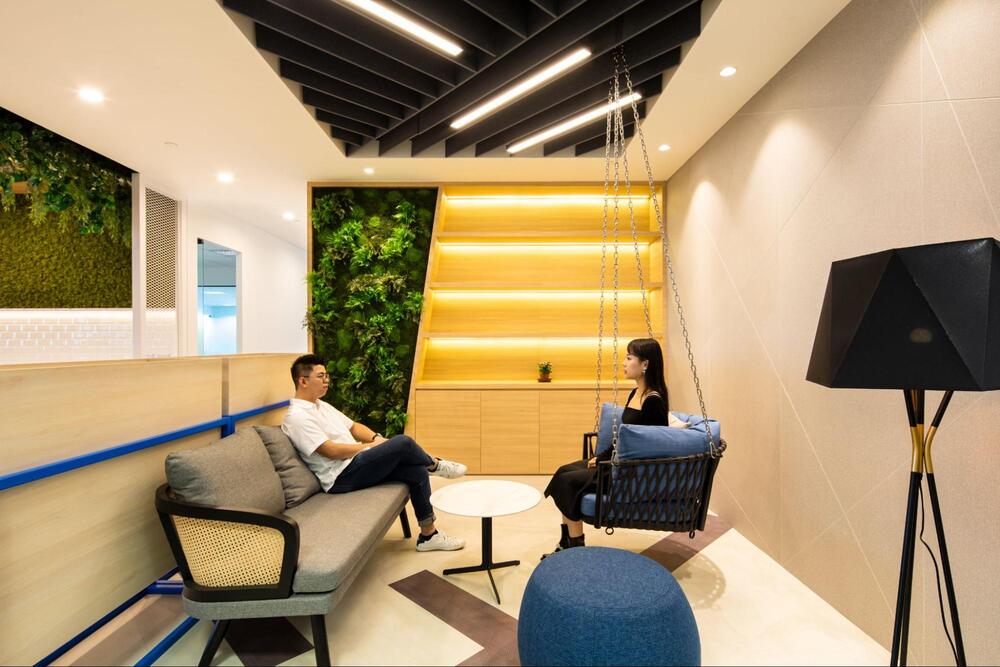
Employee taking a short break in the wellness zone
Fitness & Movement Spaces
Prolonged periods of sitting can lead to muscle tension, posture issues , and decreased energy levels. Fitness and movement zones offer spaces where employees can engage in light physical activity during the workday. These wellness zones do not function as full gyms. Instead, they offer simple environments that encourage movement and posture recovery.
A structured wellness zone for movement typically includes:
- Stretch areas with open floor space
- Standing collaboration tables
- Ergonomic furniture that supports posture change
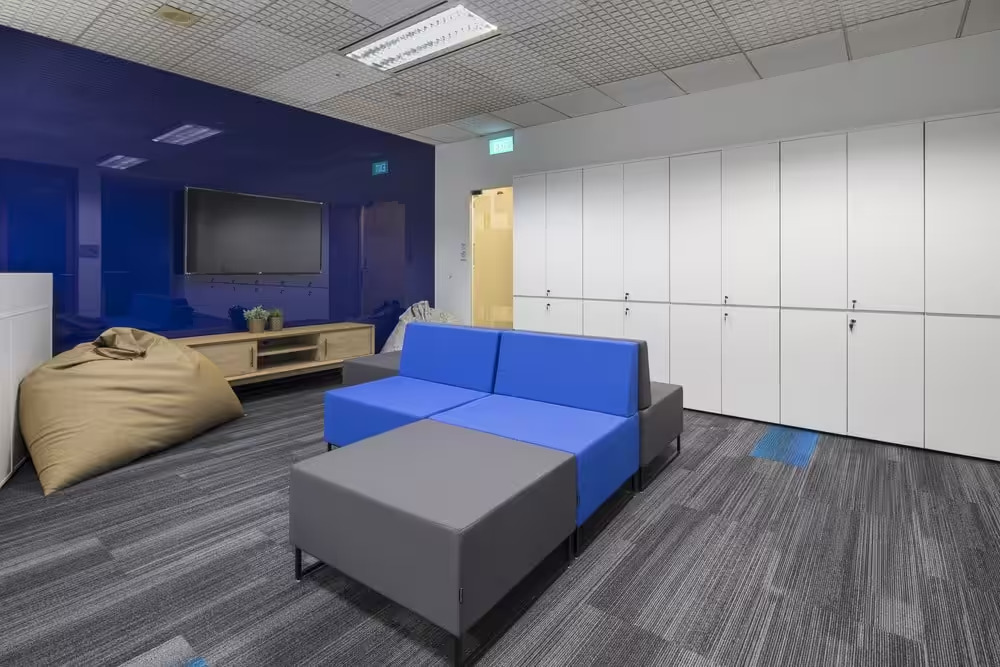
Workplace mental recovery area
Social & Community Spaces
Social interaction plays an important role in workplace wellness. Employees who have opportunities to connect with colleagues often report higher engagement and job satisfaction. Social wellness zones create environments where employees can interact outside formal meeting spaces. A social wellness zone encourages informal conversations and team interaction. These areas support both relaxation and collaboration.
Typical elements in social wellness office design include:
- Lounge seating areas
- Informal collaboration tables
- Pantry spaces designed for social interaction
Social wellness space
Recharge & Nap Pods
Recharge zones offer employees brief rest opportunities throughout the workday. These wellness zones support recovery from mental fatigue and prolonged screen exposure. A dedicated wellness zone for rest allows employees to pause briefly and regain energy before returning to work tasks.
Recharge spaces often include:
- Nap pods designed for short rest sessions
- Private relaxation chairs
- Low-lighting environments that support relaxation
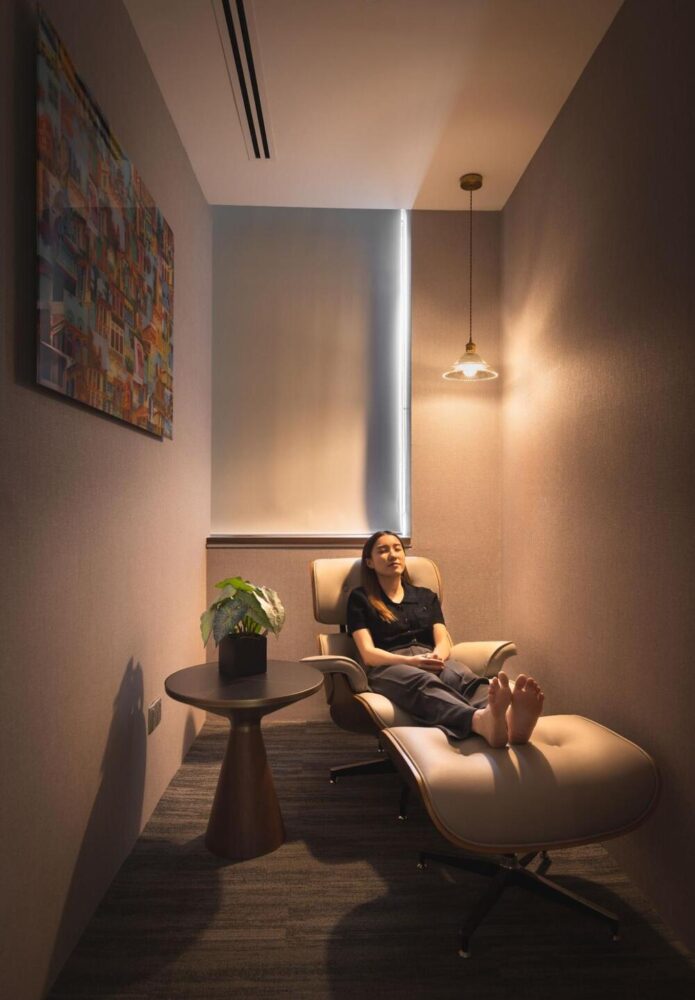
Employee recharge and nap pod area
Wellness zones are more than a design feature. They are a practical investment in people and workplace performance. If your business is looking to build a high-quality wellness workspace, consider partnering with an experienced workplace design and construction specialist like OSCA Asia.
Contact OSCA to explore professional office design and construction solutions that can help transform your workspace into a more comfortable, efficient, and employee-friendly environment today.