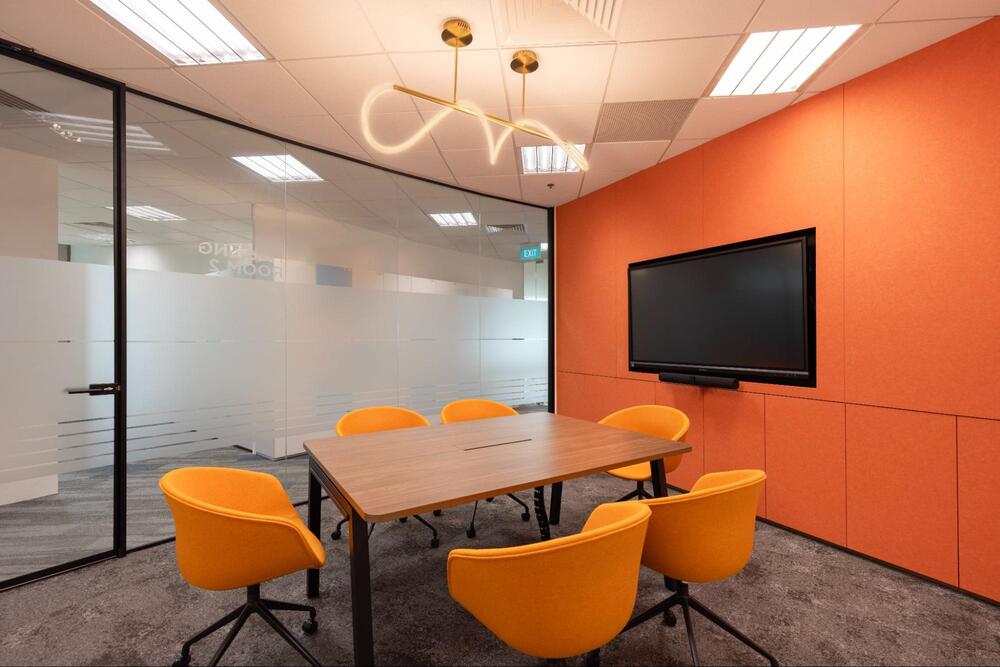
Orange office design is a strategic approach to shaping workplace experience, not just a visual choice. When applied correctly, orange can guide movement, define zones, and support collaboration. This guide explores how to apply orange office design through clear styles, effective color combinations, and practical implementation methods. Explore with OSCA Asia.
1. Popular Orange Office Design Styles
Orange office design works best when applied through a clear design direction. Each style controls how orange appears in the space, how it interacts with materials, and how it supports daily work.
1.1 Modern Orange Office Design
Modern orange office design focuses on clarity, function, and controlled contrast. The space uses simple geometry and clean surfaces. Orange appears as a strong visual signal rather than a dominant background.
Start with a neutral foundation:
- White walls or light grey panels
- Smooth finishes such as laminate, glass, or powder-coated metal
- Minimal decorative elements
Then apply orange in key zones:
- Reception counters or feature walls
- Meeting room partitions
- Task seating or acoustic panels
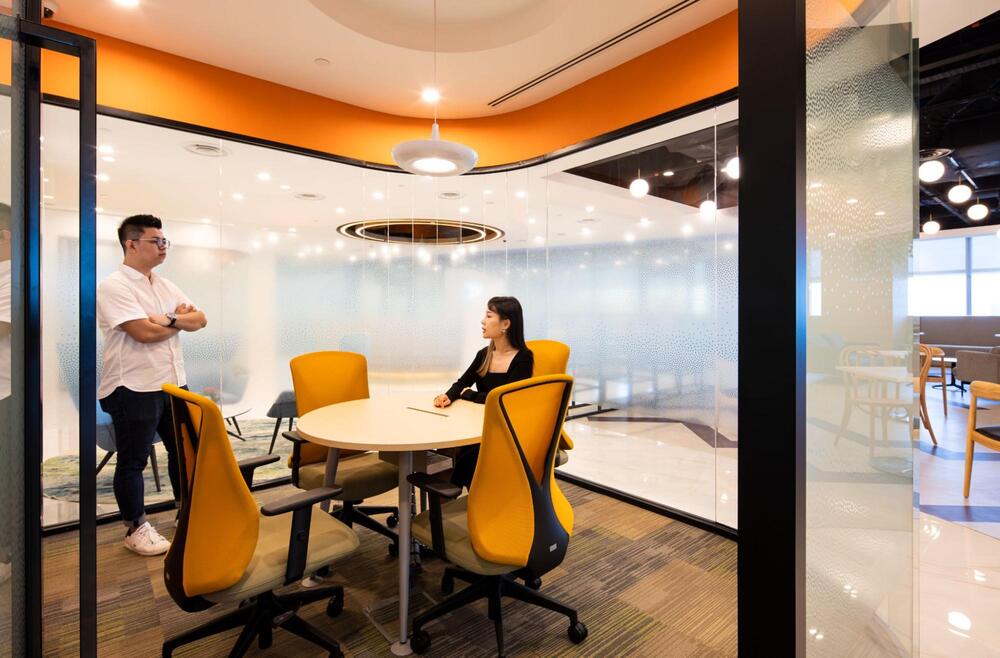
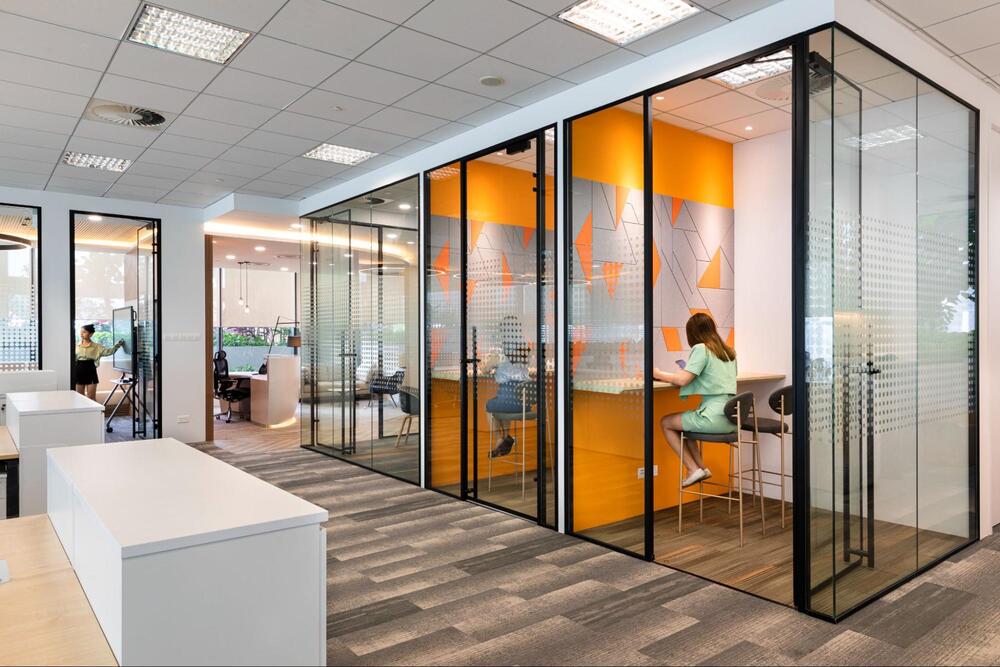
Modern orange office design with glass partitions
1.2 Minimalist Office with Orange Highlights
Minimalist orange office design reduces visual noise. The space removes unnecessary elements and keeps only what supports function. Orange is used in small amounts to create contrast.
Start with a restrained palette:
- White or off-white walls
- Light wood or matte finishes
- Hidden storage systems
Apply orange with precision:
- Chair upholstery
- Desk accessories
- Thin-wall trims or linear graphics
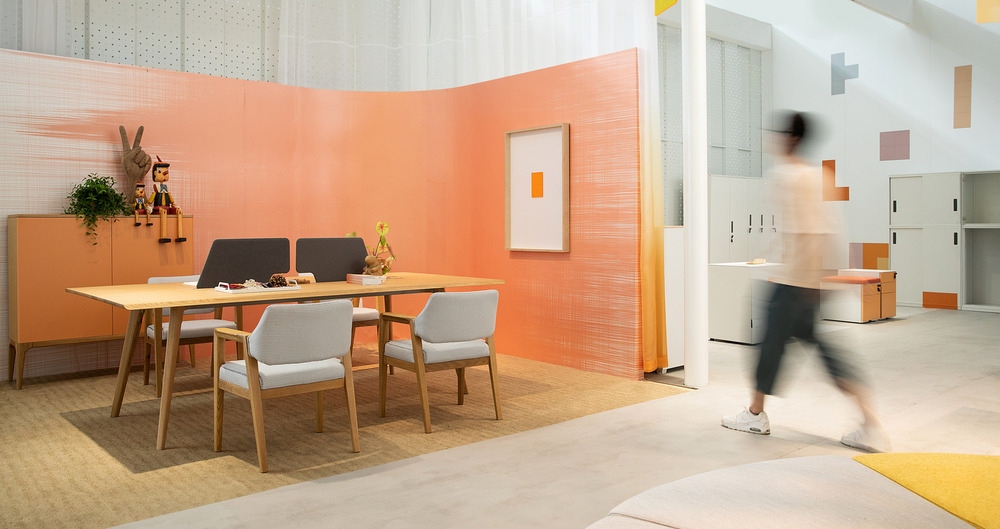
Minimalist orange office design with subtle accent elements
1.3 Industrial Orange Office Interiors
Industrial orange office design combines raw materials with a strong color contrast. The space exposes structure and services. Orange acts as a highlight against darker tones.
Base materials often include:
- Concrete floors or walls
- Black steel frames
- Exposed ceilings and ductwork
Orange is applied to:
- Structural elements such as pipes or beams
- Wayfinding lines on floors or walls
- Feature furniture or breakout zones
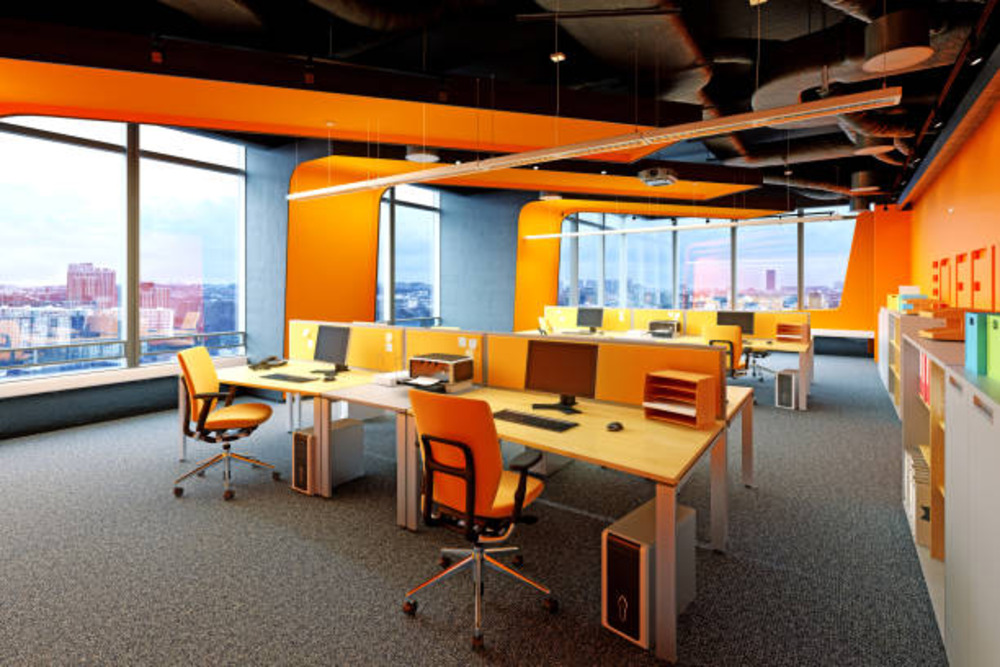
Industrial workspace with orange structural elements
1.4 Scandinavian Office with Warm Orange Tones
Scandinavian orange office design focuses on comfort, light, and human-centered spaces. The design uses natural materials and soft color transitions. Orange appears in muted tones such as terracotta or burnt orange.
The base environment includes:
- Light wood flooring and furniture
- White walls to reflect natural light
- Soft textiles for acoustic comfort
Orange is introduced through:
- Upholstered seating
- Rugs and soft furnishings
- Decorative panels or artwork
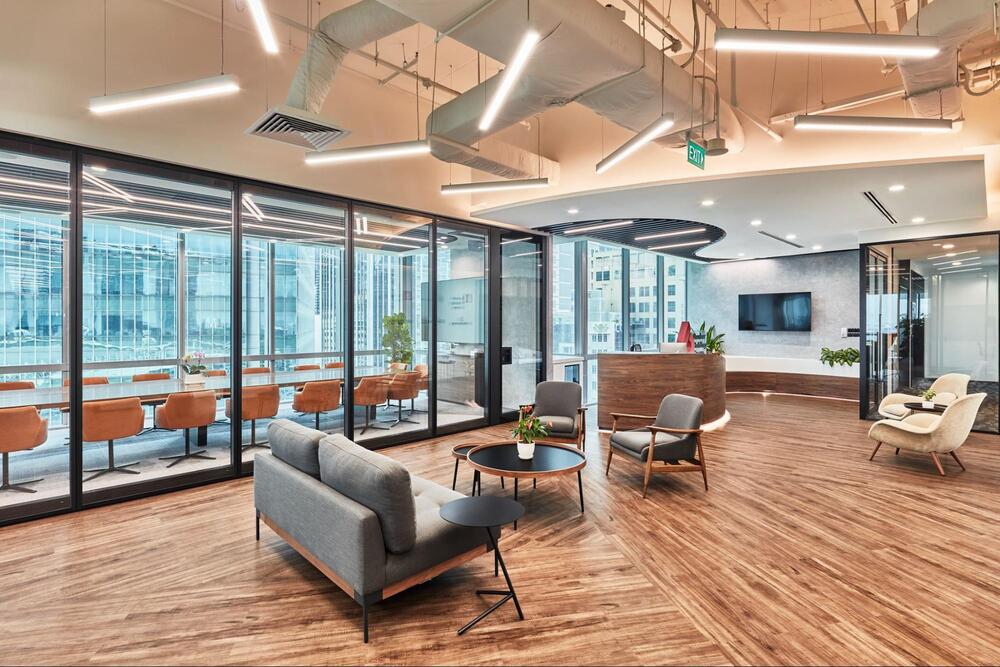
Scandinavian orange office design with light wood furniture
2. Best Color Combinations with Orange in Office Design
A successful orange office design depends on how orange interacts with other colors. Orange is an active color. If used alone, it can create visual fatigue. If paired correctly, it improves focus, wayfinding, and spatial clarity.
Orange and white office design
Orange and white is the most common combination in orange office design. White controls brightness and creates visual space. Orange adds energy without overwhelming the environment.
This combination works well in:
- Open-plan offices
- Reception areas
- Startups and collaborative spaces
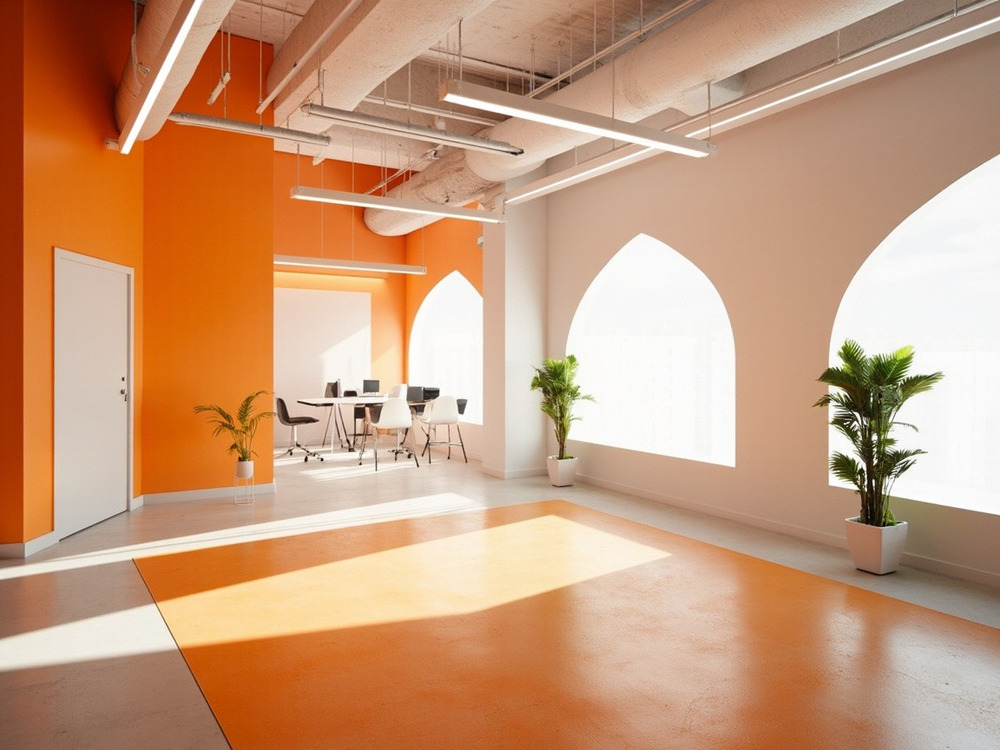
Orange and white office design with a clean workspace layout
Orange and grey office interiors
Orange and grey provide balance. Grey reduces the intensity of orange and creates a stable environment. This combination is widely used in corporate offices.
It works best in:
- Focused work areas
- Executive offices
- Hybrid workspaces
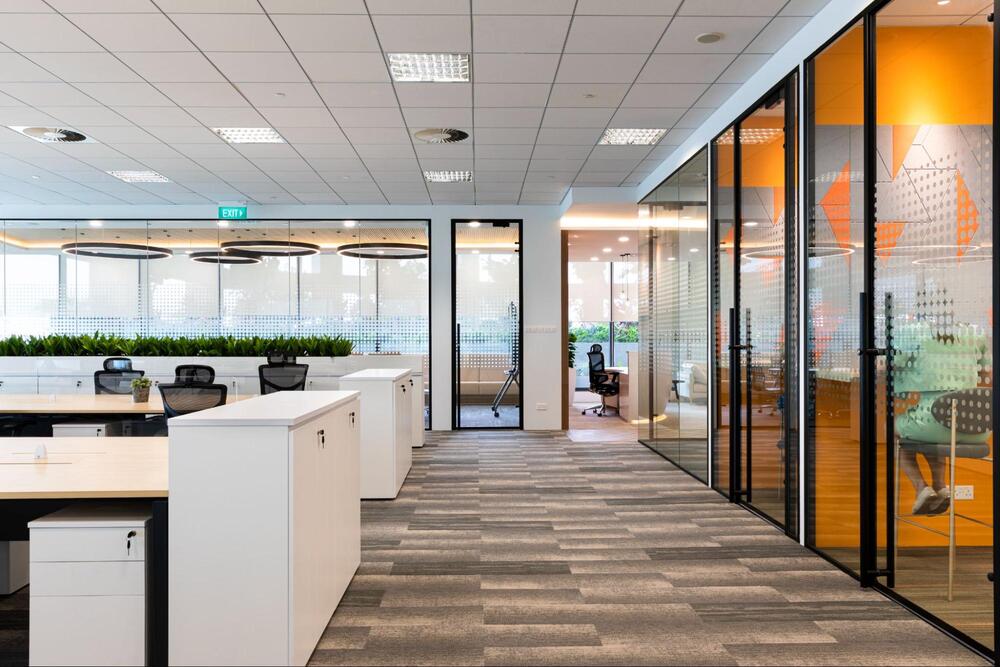
Orange office design with grey partitions and acoustic panels
Orange and black modern office
Orange and black creates a strong contrast. Black anchors the space. Orange highlights key elements. This combination requires careful control to avoid a heavy atmosphere.
It is suitable for:
- Creative studios
- Tech companies
- Brand-driven environments
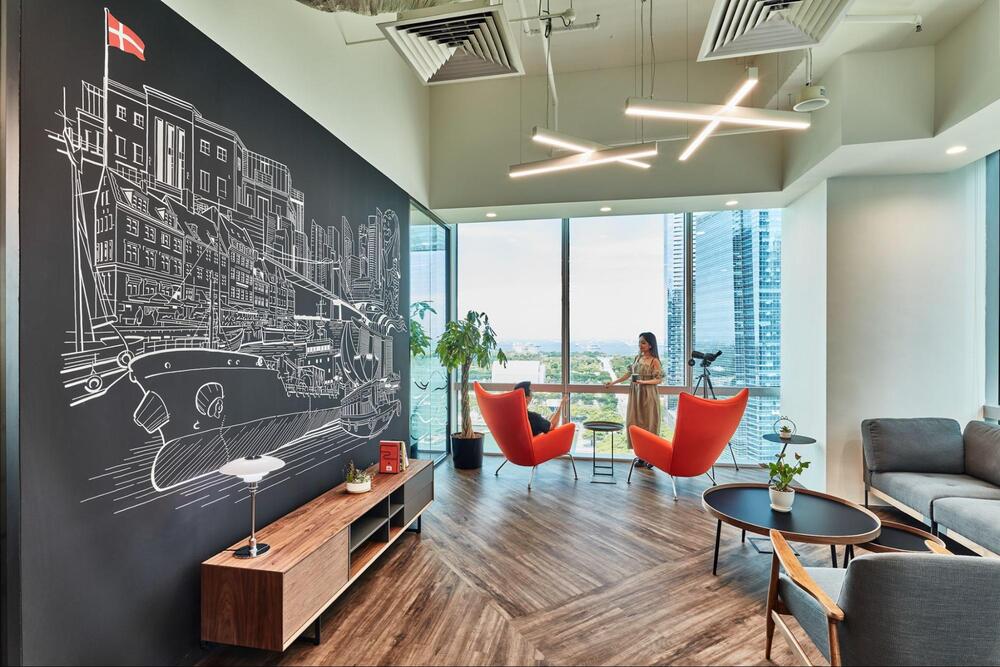
Creative workspace with orange highlights and dark tones
Orange and blue for balanced contrast
Orange and blue are complementary color pairings . It creates visual balance because the colors sit opposite each other on the color wheel. This makes the space dynamic but controlled.
It works well in:
- Creative environments
- Collaborative zones
- Multi-functional offices
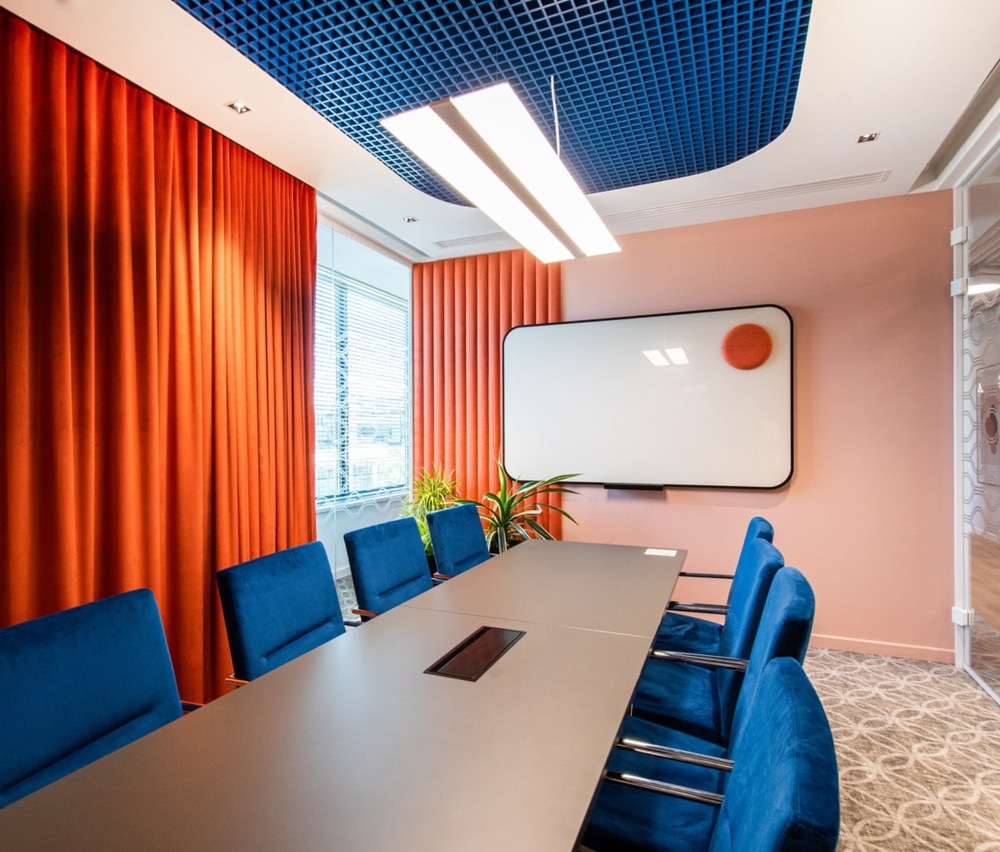
Modern workspace with a balanced orange and blue palette
Orange with natural wood tones
Orange and wood create a warm and balanced workspace. Wood softens the impact of orange and improves comfort. This combination is often used in human-centered office design.
It is suitable for:
- Long working environments
- Wellness-focused offices
- Scandinavian-inspired spaces
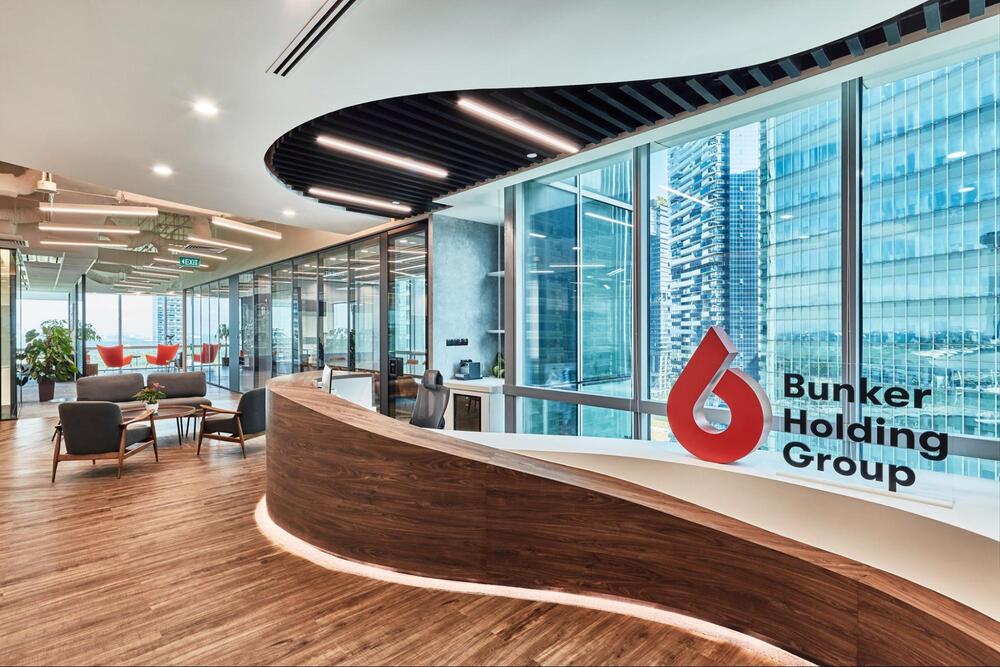
Orange office design with natural wood furniture and warm tones
3. Common Mistakes to Avoid in Orange Office Design
Below are the most common mistakes in orange office design, with clear instructions on how to avoid them.
Overusing bright orange
Overuse is the most frequent issue in orange office design. Orange is a high-impact color. When applied to large surfaces, it can reduce visual comfort and affect concentration.
Common problems:
- Entire walls painted in saturated orange
- Large furniture systems in bright tones
- Repetition across all zones without variation
How to fix it step-by-step:
- Set a strict color ratio: Orange should not exceed 20–30% of visible surfaces. Keep neutral colors as the dominant base.
- Limit orange to key zones: Apply in collaboration areas or feature points. Avoid using it in focus workstations.
- Use toned-down variations: Choose muted or burnt orange instead of bright tones. Maintain consistency across all elements.
- Break large surfaces: Combine orange with white, grey, or wood. Use panels instead of full wall coverage.
- Test visual comfort: Review the space from a user’s perspective. Ensure it supports long working hours.
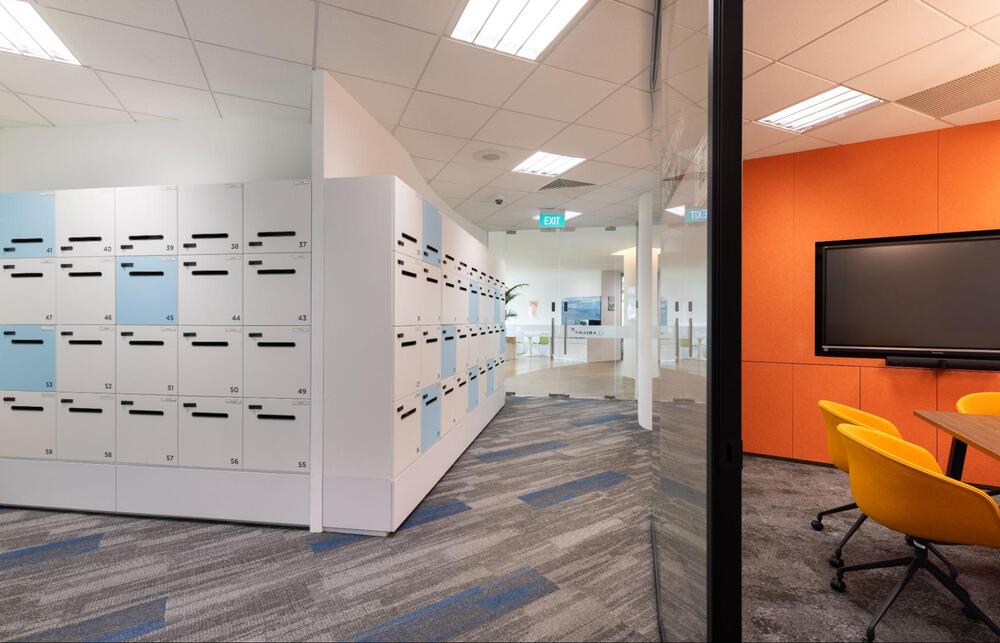
Creative office design with orange
Ignoring lighting conditions
Lighting changes how orange appears in a space. Ignoring lighting leads to color distortion and inconsistent visual experience.
Common problems:
- Orange appears too dark in low-light areas
- Color shifts under warm or cool artificial lighting
- Uneven lighting creates patchy surfaces
How to fix it step-by-step:
- Assess natural light first: Identify window positions and light intensity. Adjust color placement based on daylight.
- Select appropriate lighting temperature: Use neutral white lighting (3500K–4000K). Avoid overly warm lighting that alters orange tones.
- Ensure even light distribution: Combine ambient, task, and accent lighting. Eliminate dark spots on colored surfaces.
- Test materials under real conditions: Review samples on-site before final approval. Check appearance at different times of day.
- Use lighting to highlight design: Direct light toward feature walls or key elements. Enhance the role of oranges in space.
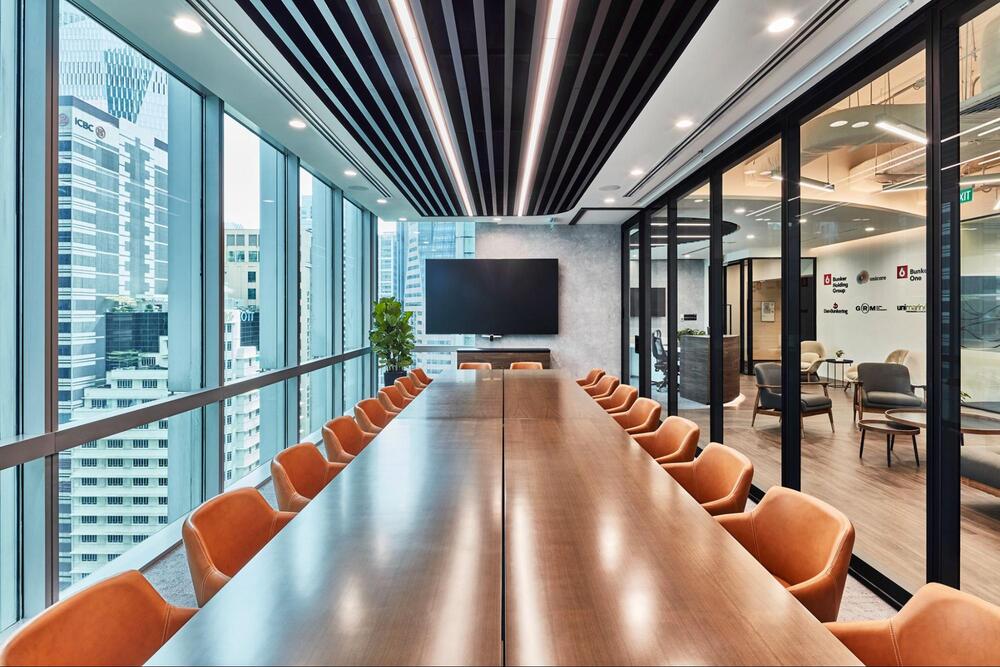
Comfortable office interior with wood and orange tones
Lack of color balance
A lack of balance creates visual confusion. When orange is not supported by a structured palette, the workspace loses clarity.
Common problems:
- Mixing too many colors with orange
- No clear hierarchy between primary and accent colors
- Inconsistent application across different zones
How to fix it step-by-step:
- Define a clear palette: Limit to 2–3 main colors. Use orange as one defined role only.
- Apply a color hierarchy: Primary – neutral base (60–70%). Secondary – supporting tone (20–30%). Accent – orange (10–20%).
- Maintain consistency across spaces: Use the same color logic in all departments. Align meeting rooms, work areas, and common zones
- Use color for function: Assign colors to specific zones. Avoid random placement.
- Document the color system: Create guidelines for future updates. Ensure consistency during expansion.
Office design with color balance using orange
Using incompatible materials
Material selection affects how color is perceived. Incompatible materials can reduce quality and create inconsistency.
Common problems:
- Glossy finishes causing glare on orange surfaces
- Poor-quality materials altering color tone
- Mixing too many textures without control
How to fix it step-by-step:
- Select appropriate finishes: Use matte or low-sheen surfaces. Reduce reflection and visual strain.
- Match materials with function: Durable finishes for high-traffic areas. Soft materials for acoustic comfort.
- Limit material variety: Use a consistent set of finishes. Avoid unnecessary complexity
- Test material samples: Review under actual lighting conditions. Confirm color accuracy before installation
- Coordinate with furniture systems: Ensure color consistency across built-in and loose furniture. Align with overall design intent.
Commercial office project by OSCA with orange highlights
A high-performing orange office design is not achieved by color selection alone. It requires precise control of proportion, material, lighting, and spatial planning. Without expert coordination, even a well-intended concept can lead to costly rework, inconsistent branding, and reduced workplace efficiency.
This is where OSCA Asia delivers measurable value. With a fully integrated Design & Build approach, OSCA Asia manages every stage, from workplace strategy and concept design to construction and final delivery. Each orange office design is developed based on real operational needs, ensuring that color enhances movement, supports collaboration, and aligns with your brand identity at every touchpoint.
- You avoid design inconsistencies across departments
- You reduce project risk and unexpected costs
- You achieve a workspace that performs from day one
If you are planning to transform your office, do not rely on assumptions or fragmented execution. Work with a team that understands both design intent and technical delivery. Contact OSCA today to develop a tailored orange office design that is functional, scalable, and built for long-term performance.