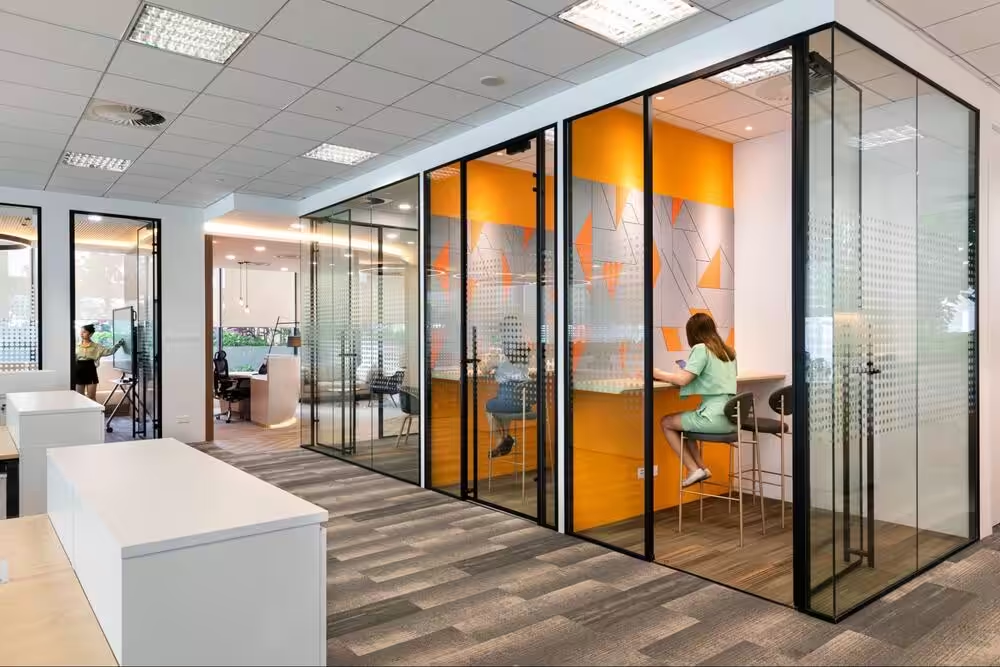
In Singapore’s post-return-to-office environment, the challenge is no longer whether companies need privacy booths. The real issue is that many offices do not have enough acoustic spaces during peak in-office days. Employees often book 6-person meeting rooms for 15-minute Zoom calls, take confidential calls from pantry corners, or work from stairwells to escape surrounding noise. To solve this, many organisations are integrating office phone booths, acoustic pods, and soundproof meeting pods directly into workplace planning strategies. Through workplace design expertise and acoustic integration experience, OSCA helps organisations create office environments that balance collaboration, privacy, flexibility, and long-term operational efficiency.
Key Takeaways
- Office phone booths improve privacy in open-plan workplaces.
- Typical acoustic performance starts from DS,A 24 dB.
- One phone booth usually supports 8–12 hybrid employees.
- Ventilation and airflow are critical for user comfort.
- Strategic booth placement matters more than product selection.
1. What Are Office Phone Booths?
Office phone booths are enclosed acoustic workspaces designed to support private calls, video conferencing, focused tasks, and confidential discussions within open-plan offices. They are commonly used in hybrid workplaces where employees frequently switch between collaborative and individual work modes throughout the day.
Compared to building permanent meeting rooms, office phone booths provide a more space-efficient and flexible solution. A single-person acoustic phone booth typically occupies only 1–1.5 m², while a standard enclosed meeting room may require 8–10 m² or more. In high-density Singapore offices, this difference significantly affects workplace efficiency and rental costs.
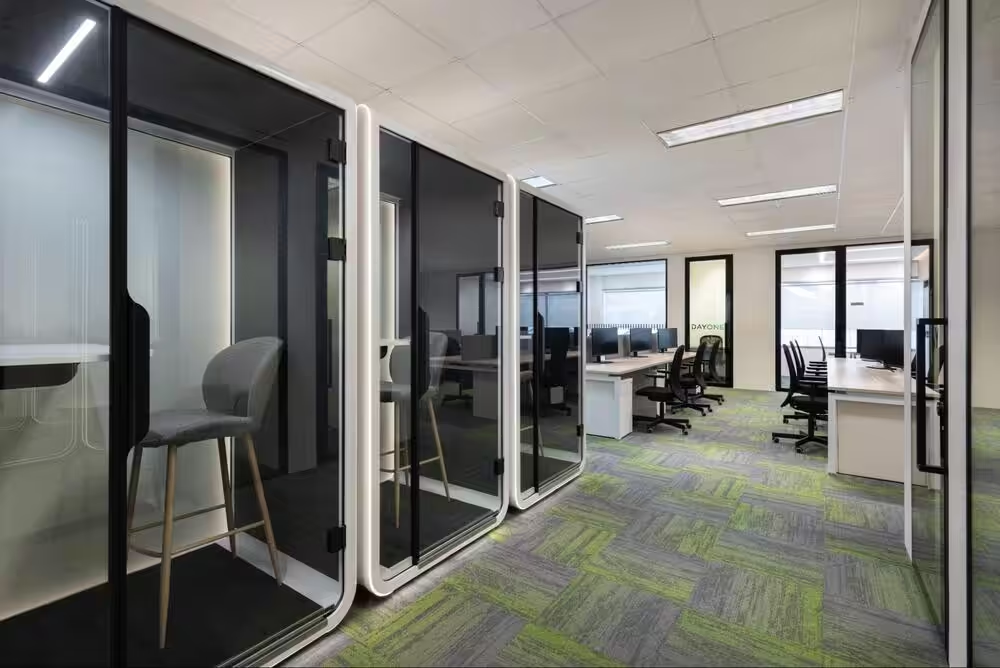
Office phone booths integrated into open-plan workspaces
In many CBD workplaces, a properly planned phone booth strategy can free up valuable meeting rooms while reducing call-related disruptions across the office floor.
Office Phone Booths vs Meeting Pods vs Huddle Rooms
| Criteria | Office Phone Booths | Meeting Pods | Huddle Rooms |
| Main purpose | Private calls, video meetings, focused work | Small team collaboration | Informal discussions |
| Typical capacity | 1–2 users | 2–6 users | 4–8 users |
| Acoustic privacy | High speech privacy | Full acoustic treatment | Moderate privacy |
| Installation type | Freestanding modular unit | Modular enclosed pod | Built-in room |
| Typical usage duration | 5–30 minutes | 30–90 minutes | Short informal sessions |
| Footprint efficiency | Very high | Moderate | Low |
| Best use case | Hybrid offices with frequent calls | Project discussions and interviews | Casual collaboration |
2. Benefits of Office Phone Booths in Hybrid Workplaces
2.1 Privacy and Acoustic Control
The primary purpose of office phone booths is to reduce speech transmission in open workplaces. Modern soundproof phone booth office systems typically achieve ISO 23351-1 speech level reduction ratings (DS,A) of 24–36 dB, depending on specification and intended use.
| Use Case | Recommended Acoustic Rating |
| General phone calls | DS,A ≥ 24 dB |
| Confidential HR or finance discussions | DS,A ≥ 30 dB |
| High privacy executive meetings | DS,A ≥ 36 dB |
Unlike older STC-based comparisons, ISO 23351-1 is now the preferred global benchmark for office pods because it measures actual speech privacy performance.
Most quality acoustic phone booths also include internal sound absorption materials with NRC ratings between 0.75–0.95, helping reduce echo and improve voice clarity during video calls.
2.2 Improved Productivity and Space Efficiency
Noise interruptions remain one of the largest productivity issues in open-plan offices. Employees who cannot access private spaces often occupy large meeting rooms for individual calls, reducing overall workplace efficiency.
A single 1.5 m² office phone booth can replace the functional need for a 10 m² meeting room during solo calls. In Singapore offices where rental costs remain among the highest in Asia-Pacific, this creates measurable space optimisation benefits.
As a planning benchmark, hybrid workplaces typically require one phone booth for every 8–12 employees with high video-call usage. However, actual demand depends on industry, work patterns, and meeting culture.
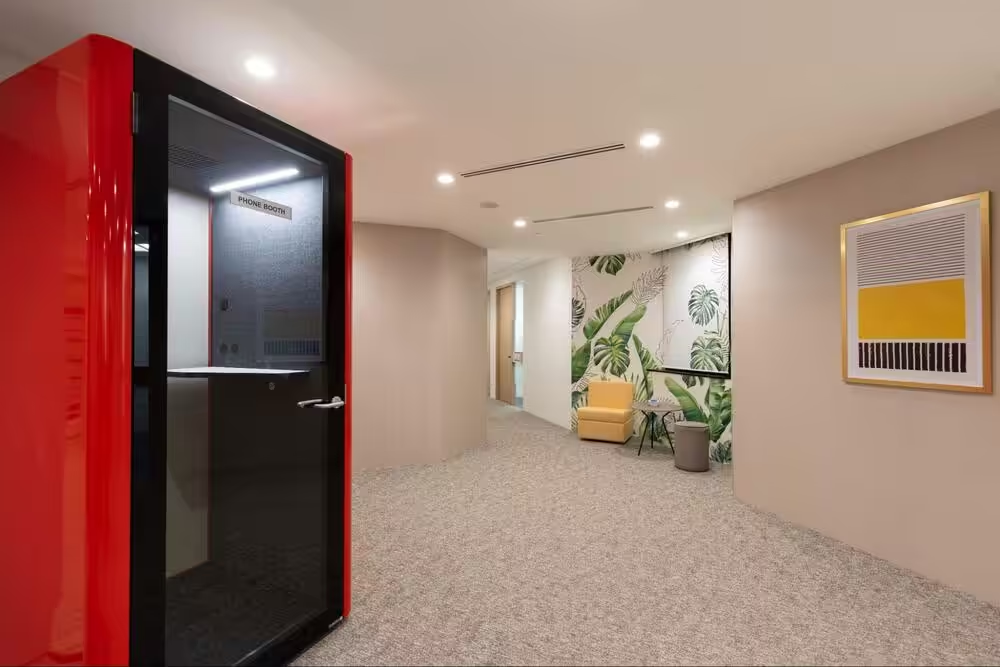
Privacy phone booth for calls and video meetings
2.3 Flexibility and Workplace Adaptability
Unlike conventional construction, modular privacy booths for office environments can be relocated, expanded, or reconfigured as workplace requirements evolve. This flexibility is particularly valuable for growing companies operating within shorter lease cycles.
Many 2024–2026 modular booth systems now feature ceiling-less or semi-open ceiling configurations to improve compatibility with existing HVAC systems while reducing psychological enclosure.
2.4 Employee Experience and Wellbeing
Modern office phone booths are increasingly designed around employee wellbeing. Features such as adjustable ventilation, soft lighting, ergonomic seating, and biophilic finishes improve comfort during repeated daily use.
Some premium acoustic pod systems now include occupancy sensors, UV-C sanitisation lighting, antimicrobial surfaces, and smart booking integration with platforms such as Robin, Joan, or Envoy.
3. What Types of Office Phone Booths Are Available?
3.1 What is a single-person office phone booth?
Single-person office phone booths are compact acoustic enclosures designed primarily for individual calls, virtual meetings, and focused tasks.
These booths are widely used in high-density offices because they fit into underutilised spaces without affecting circulation paths. Most single-user booths include integrated lighting, ventilation, power outlets, and acoustic wall panels.
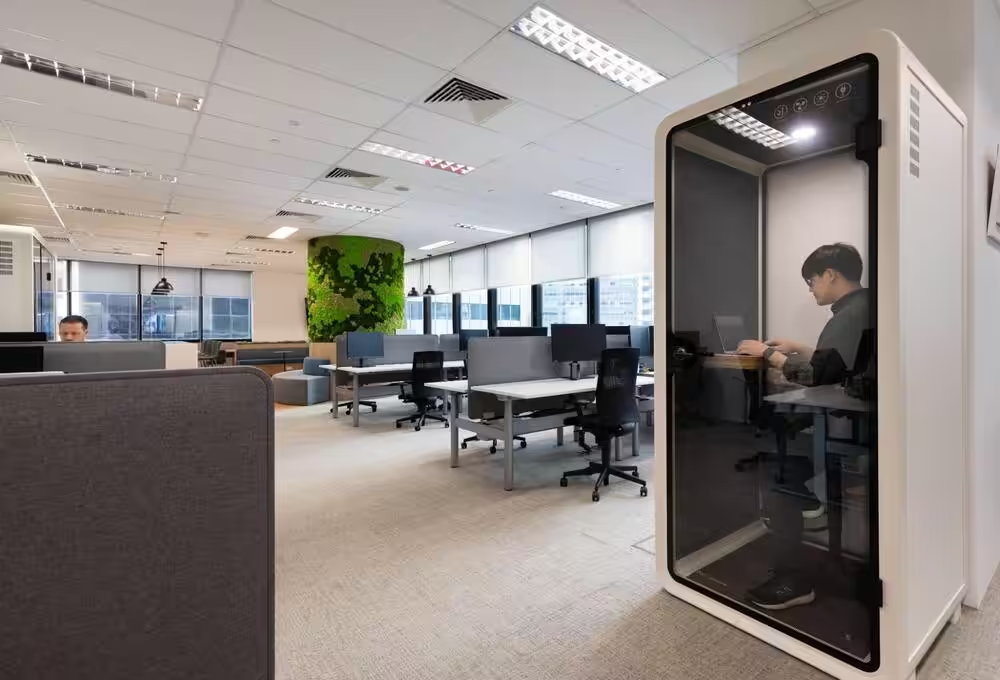
Single-person acoustic phone booth in high-density offices
Most high-performance single booths maintain airflow rates above 60 air changes per hour (ACH), helping keep internal CO₂ levels below 1000 ppm during regular use.
Sensor-activated ventilation systems are increasingly preferred because they reduce unnecessary energy consumption while improving occupant comfort.
3.2 What is a dual-person or collaborative booth?
Dual-person phone booth pods support private conversations, interviews, and collaborative video meetings between two users.
Compared to individual booths, these collaborative meeting pods for offices require stronger acoustic insulation and higher-capacity ventilation systems to maintain comfort during longer sessions.
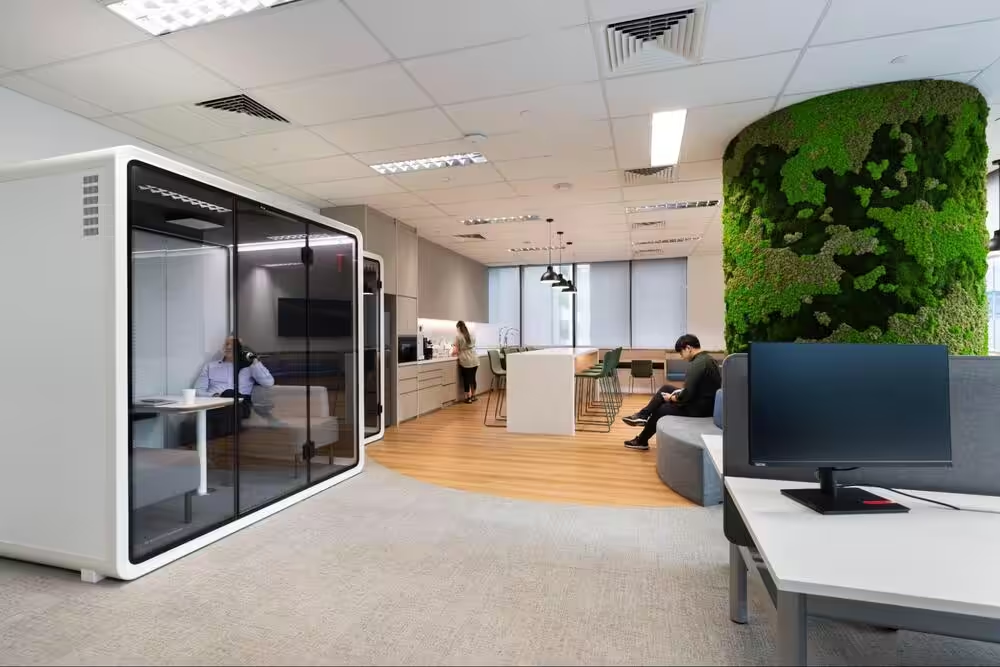
Dual-person phone booth pods for private discussions
In practice, dual-person booths are often more cost-efficient than building multiple small enclosed meeting rooms for short collaborative sessions.
3.3 What are modular and customisable office booths?
Modular office privacy booths provide the highest level of flexibility for evolving workplaces. These systems allow organisations to modify booth layouts, finishes, glazing specifications, and acoustic configurations over time.
Premium modular systems may offer multiple glazing options including 10 mm tempered glass, laminated safety glass, or double-glazed acoustic glass configurations such as 5+12A+5 systems.
Customisation options may include:
- Fabric and acoustic panel finishes
- Tinted or clear glazing
- Adjustable LED colour temperatures
- Integrated occupancy sensors
- Custom brand colours and materials
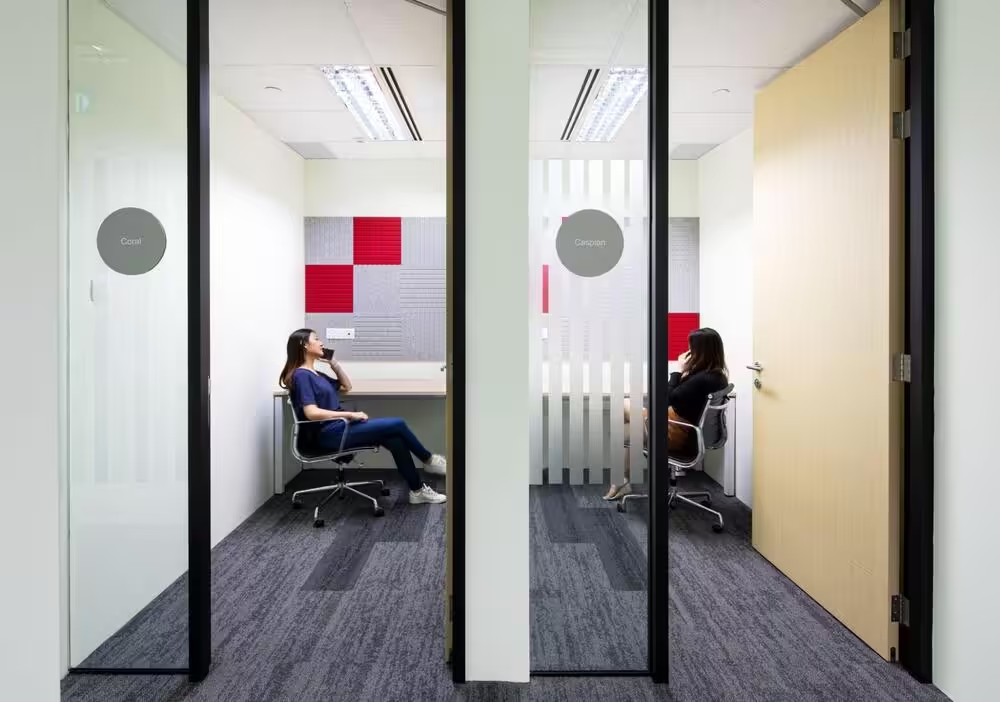
Modular office phone booth system with flexible configuration
4. Key Features to Look for in Office Phone Booths
4.1 Acoustic Performance
Acoustic quality remains the most important specification when selecting office phone booths. Buyers should prioritise independently tested speech privacy ratings rather than relying on generic “soundproof” marketing claims.
4.2 Ventilation and Indoor Air Quality
Ventilation directly affects comfort and long-term usability. Poor airflow quickly causes heat build-up and elevated CO₂ concentrations inside enclosed pods.
High-quality soundproof pod systems typically maintain airflow rates exceeding 60 ACH with low-noise fan systems.
4.3 Safety and Compliance
Safety compliance has become increasingly important for large enterprise and regulated-sector clients in Singapore.
Key considerations include:
- Fire-rating compliance (Class A, BS 476, EN 13501-1)
- Tempered or laminated safety glass
- Low-VOC and formaldehyde-free materials
- BCA Green Mark contribution potential
- SCDF egress and circulation compliance
For ESG-focused organisations, recycled PET acoustic panels, FSC-certified plywood, and low-emission materials are increasingly requested during workplace fit-outs.
4.4 Smart Booking and Utilisation Analytics
Many workplaces now integrate office phone booths into workplace analytics systems. Occupancy sensors and booking software help facilities teams track pod usage and optimise workplace planning.
In high-density hybrid offices, utilisation data often determines whether additional booths are required more accurately than employee headcount alone.
4.5 Pricing, Lead Times, and Warranty
| Category | Typical Singapore Market Range |
| Single-person booth | SGD 6,000–18,000 |
| Dual-person booth | SGD 12,000–25,000 |
| Meeting pod (4–6 pax) | SGD 20,000–35,000+ |
| Lead time | 2–10 weeks depending on stock/import |
| Installation | Typically 1 day per booth |
| Warranty | Commonly 3–5 years |
Rental demand has also increased significantly among companies with short lease commitments or temporary project offices.
Ergonomic interior design of an acoustic phone booth
5. How to Plan Office Phone Booth Placement Properly?
In many workplaces, poor booth placement creates more operational problems than the booth itself. At OSCA, workplace planning considers not only acoustic performance, but also circulation, HVAC integration, visual openness, and long-term maintenance accessibility.
Common placement mistakes include:
- Positioning booths beside pantry or printer zones
- Blocking emergency egress paths
- Placing booths directly against glass façades with high solar heat gain
- Overconcentrating booths within one department zone
- Ignoring HVAC airflow patterns
OSCA Design Perspective
We typically avoid positioning single-person booths directly beside full-height curtain wall glazing in Singapore offices. Excessive solar heat gain places additional strain on internal ventilation systems and reduces long-term user comfort.
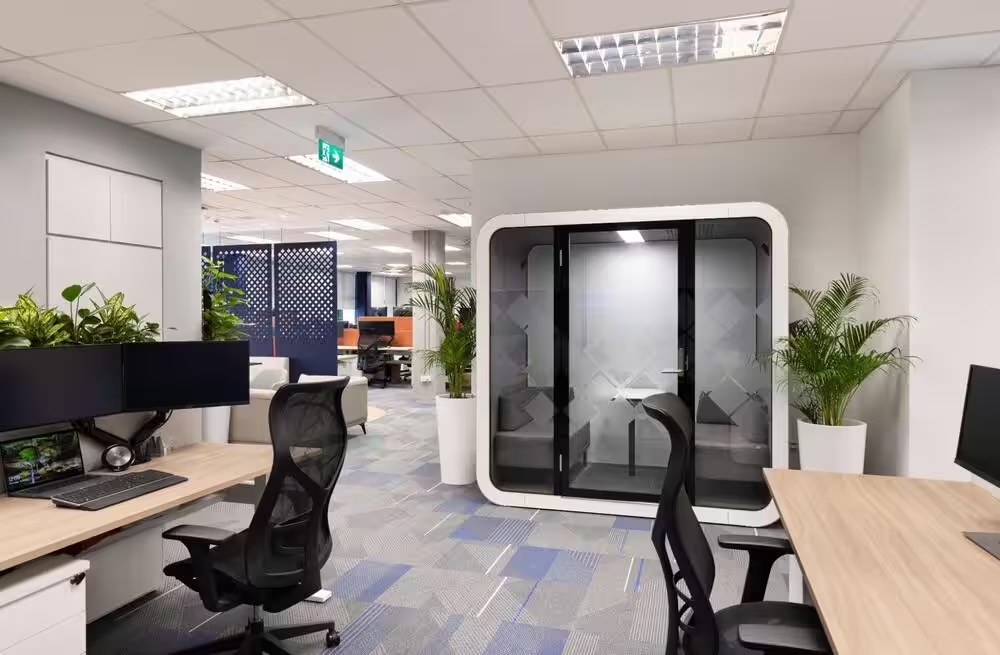
Soundproof pod designed for one-to-one meetings
6. Case Studies: OSCA Office Phone Booth Projects in Singapore
Rather than treating acoustic booths as standalone products, OSCA integrates them into the broader workplace strategy, circulation planning, and spatial identity of each office.
SKF Asia
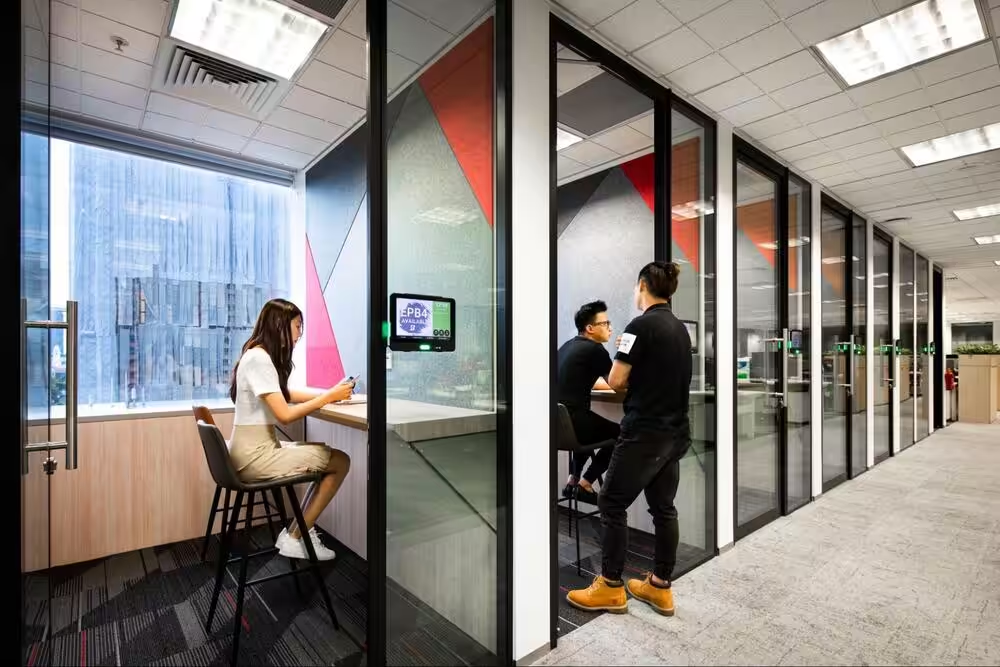
For SKF Asia, the challenge involved balancing open collaboration with acoustic privacy inside a fast-paced engineering and operations environment. OSCA strategically integrated privacy phone booths near collaborative work zones to reduce meeting room congestion while maintaining accessibility for short virtual meetings and confidential discussions. The booths were visually aligned with the workplace material palette to maintain design consistency across the office.
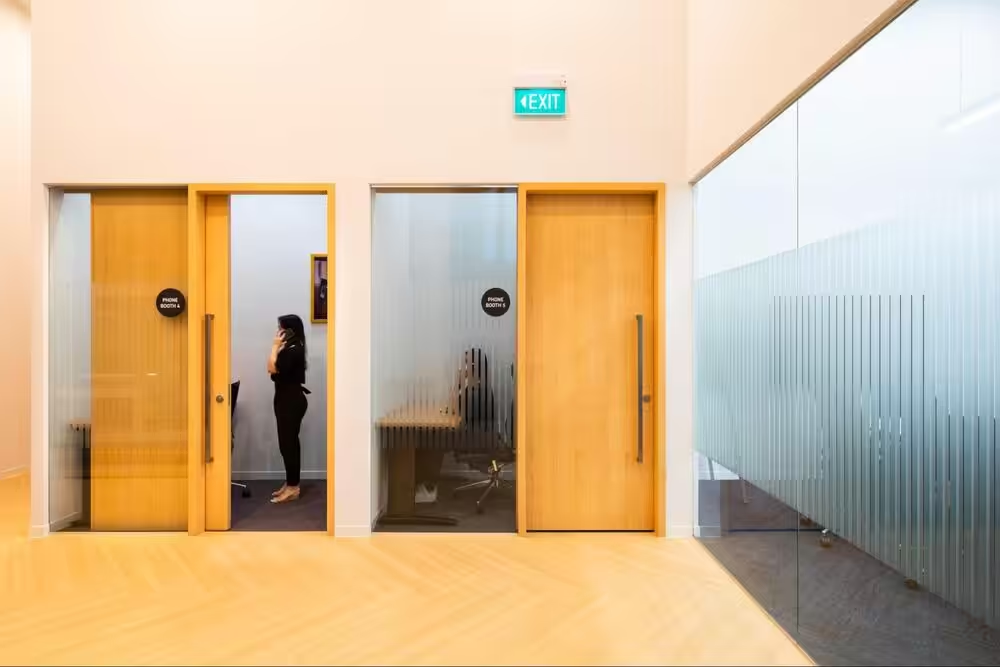
OSCA office phone booth solutions in SKF Asia workspace
Bridgestone
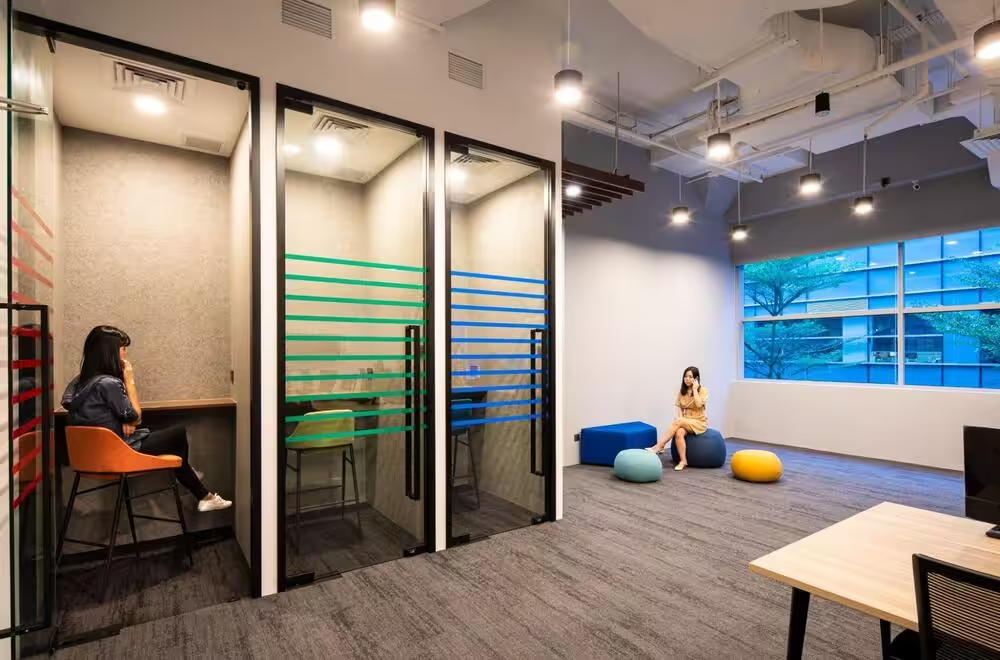
In Bridgestone’s office environment, acoustic separation was essential due to the high frequency of regional video calls across departments. OSCA incorporated soundproof meeting pods adjacent to collaborative work areas while carefully preserving circulation flow. The solution improved privacy without fragmenting the openness of the workplace.
OSCA acoustic phone booth solutions in Bridgestone office environment
Vulcan AI
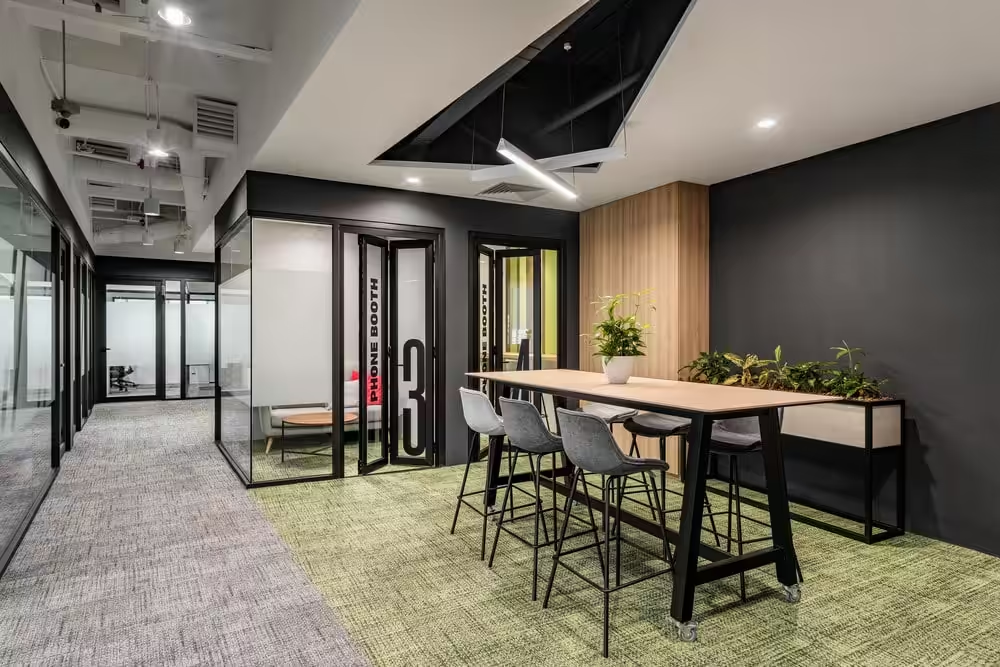
For Vulcan AI, flexibility and future scalability were prioritised due to projected headcount growth. OSCA selected modular acoustic booth systems that could be relocated and expanded without major reconstruction. The booths also supported the company’s hybrid work model by providing dedicated spaces for concentrated technical work and virtual collaboration.
Office phone booths designed by OSCA for Vulcan AI
Xsolla
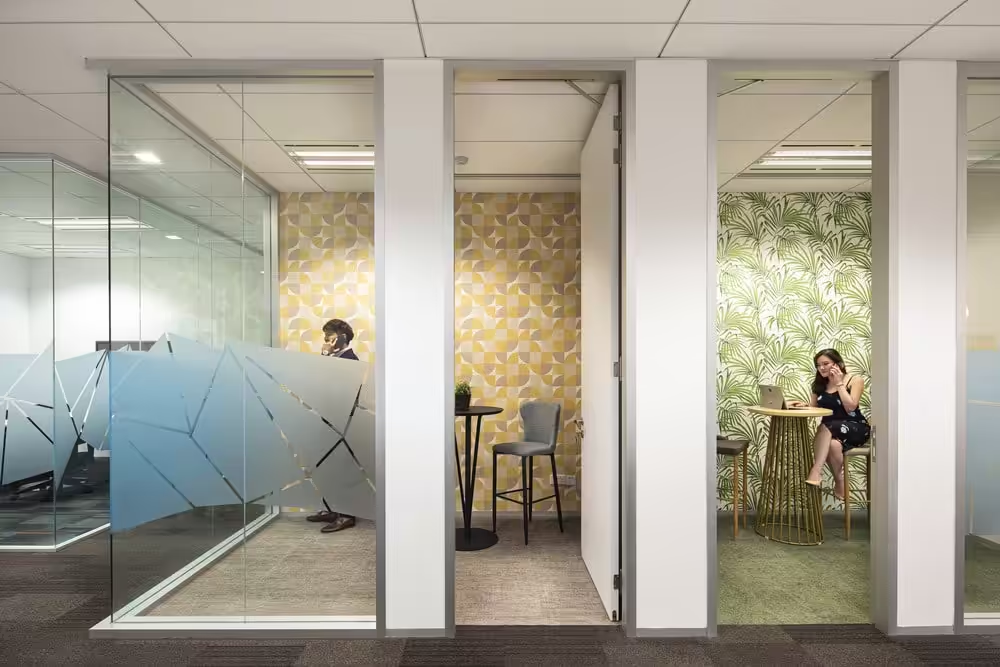
Within Xsolla’s gaming-focused workplace, acoustic booths needed to complement a visually immersive environment without appearing overly corporate. OSCA integrated acoustic pods using finishes and spatial positioning that aligned with the futuristic workplace concept while still delivering strong speech privacy performance.
OSCA-designed acoustic phone booths in Xsolla workplace
China Telecom
For China Telecom, the workplace strategy focused on supporting frequent cross-border communication while improving overall workplace efficiency. OSCA integrated privacy booths throughout the office floorplate to reduce disruption from high call volumes while maintaining visual openness and collaborative flexibility.
OSCA privacy booth solutions supporting China Telecom operations
7. FAQs About Office Phone Booths
How loud is an office phone booth?
Most quality office phone booths achieve ISO 23351-1 speech reduction ratings between DS,A 24–36 dB, depending on acoustic specification.
Do office phone booths need ventilation?
Yes. Proper ventilation is critical for comfort, air quality, and long-term usability. Most high-performance booths maintain airflow rates above 60 ACH.
How much does an office phone booth cost in Singapore?
Single-user office phone booths in Singapore generally range between SGD 6,000–18,000, while larger meeting pods may exceed SGD 35,000.
Can office phone booths replace meeting rooms?
Office phone booths reduce pressure on meeting rooms for short individual calls, but larger collaborative meetings still require dedicated meeting spaces.
Is BCA approval required for office phone booths?
Requirements depend on booth size, layout impact, fire safety, and landlord regulations. Professional workplace planning helps ensure compliance with local building and egress requirements.
Can office phone booths be relocated?
Many modular office privacy booths are designed for relocation and future reconfiguration without major reconstruction.
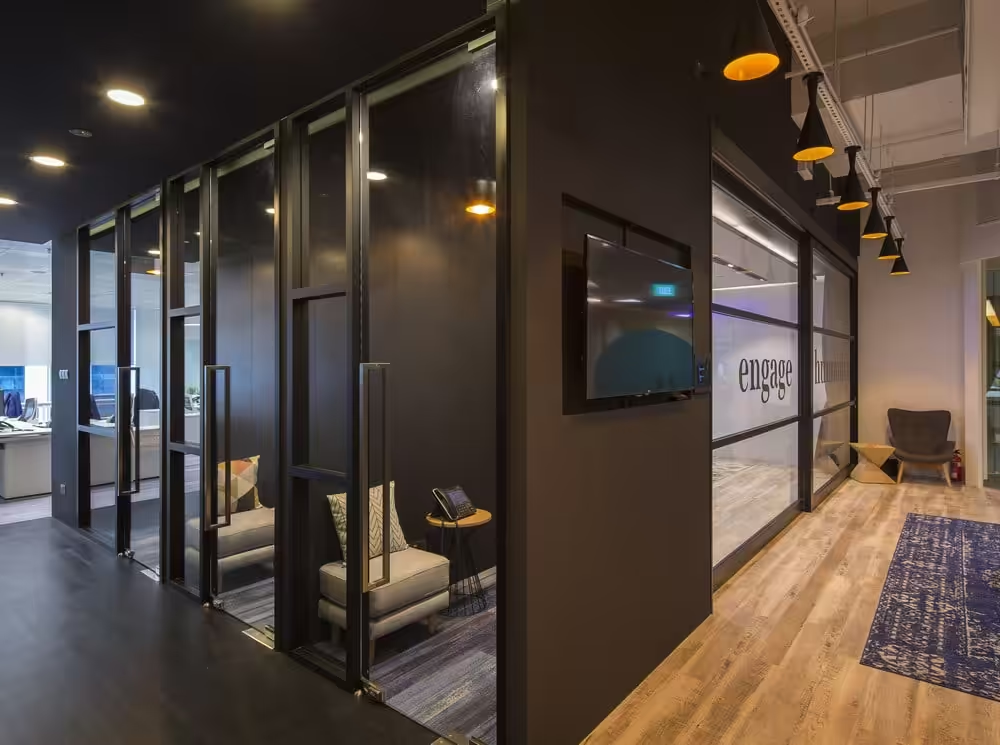
Soundproof performance of acoustic phone booths in offices
As hybrid work continues to increase the demand for acoustic privacy, office phone booths have become a core component of workplace planning rather than a standalone furniture product. Through integrated workplace strategy, acoustic planning, and commercial interior expertise, OSCA helps organisations design office environments that balance flexibility, employee experience, operational efficiency, and long-term adaptability.