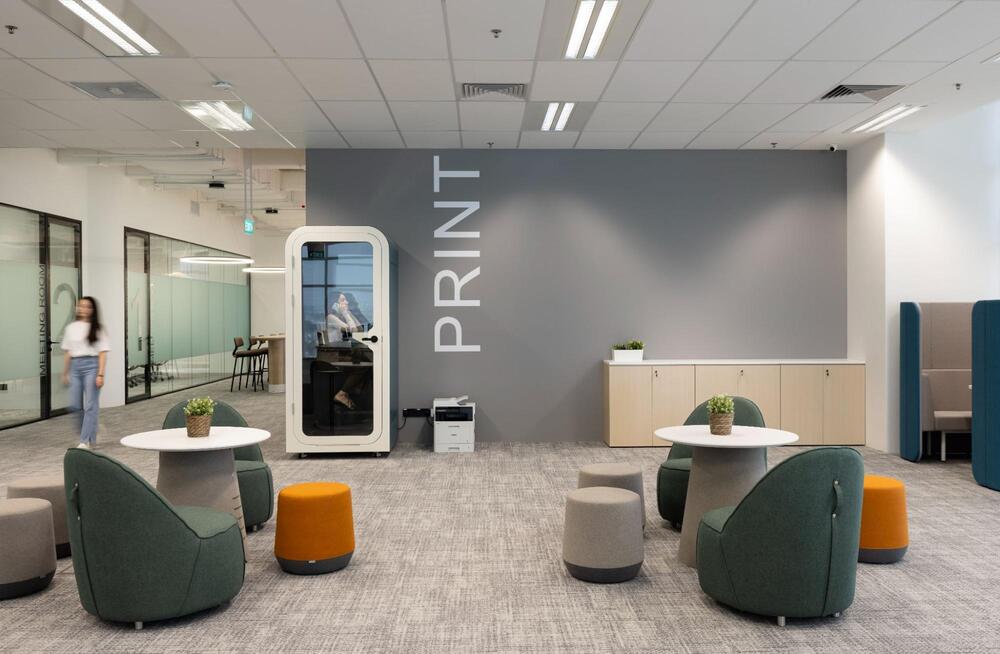
Grey has become one of the most widely used colours in modern workplace interiors. Many companies adopt a grey office design because it creates a neutral environment that supports focus, organisation, and professional identity. This OSCA Asia’s guide explores the most practical grey office ideas, including popular colour palettes, applications for different office areas, and design tips that prevent grey interiors from feeling flat.
1. Popular Grey Office Color Palettes
1.1 Light Grey Office Design
Light grey provides one of the most practical foundations for modern offices. Many organisations adopt this tone when planning flexible workplaces because it improves brightness and spatial clarity. For companies seeking adaptable grey office ideas, light grey often serves as the starting point.
Light grey surfaces reflect natural and artificial light efficiently. This reflection improves visual comfort across workstations. The result is a workspace that appears larger and more open.
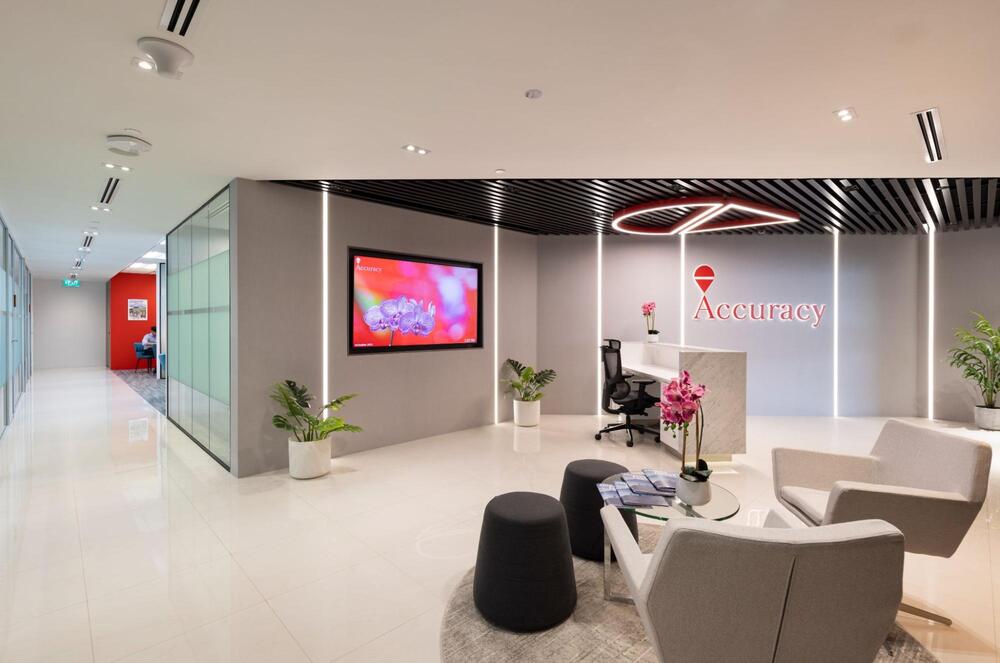
Light grey office design creating a bright workspace
1.2 Dark Grey Office Interiors
Dark grey tones create a controlled and focused atmosphere. Many companies adopt this palette when designing executive spaces or premium meeting rooms. Compared with lighter palettes, dark grey office ideas produce stronger visual contrast and a sense of authority.
Dark grey also performs well in spaces where concentration and privacy are important.
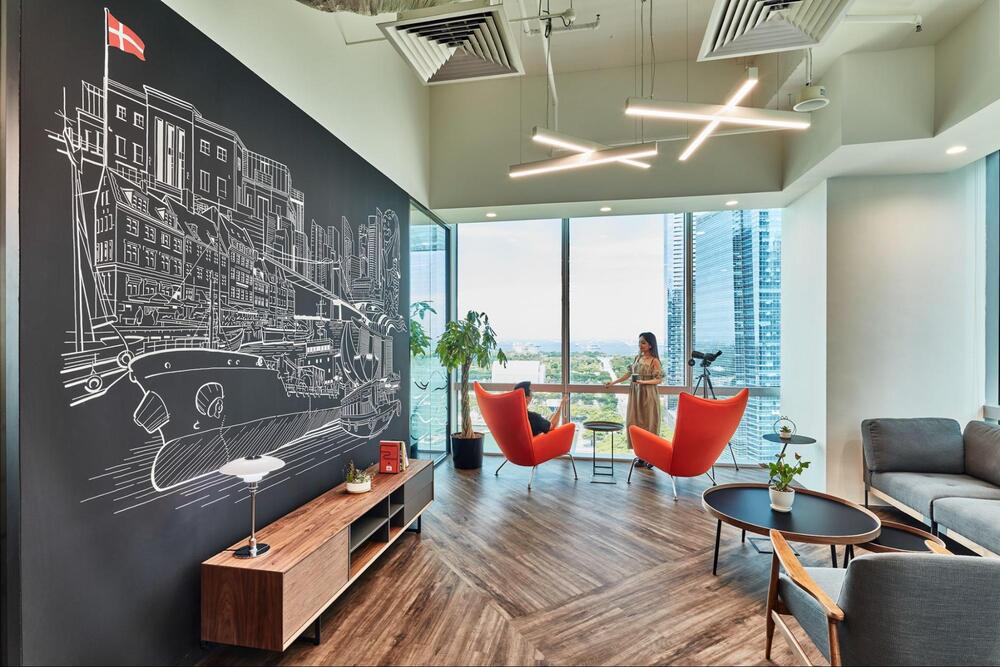
Dark grey office interiors for spaces
1.3 Grey and White Office Ideas
Combining grey and white remains one of the most reliable strategies in office design. Many organisations adopt grey and white office ideas because they create a structured environment that supports concentration and spatial clarity.
White increases brightness, while grey introduces visual stability. Together they form a palette that works across many office layouts.
Modern grey and white office ideas for a professional workplace
1.4 Grey with Natural Wood Accents
Many modern offices combine grey surfaces with natural wood. This approach softens the neutrality of grey while maintaining a professional tone. Designers frequently recommend this palette when clients request balanced grey office design ideas.
Wood introduces warmth and material variation. At the same time, grey maintains visual order.
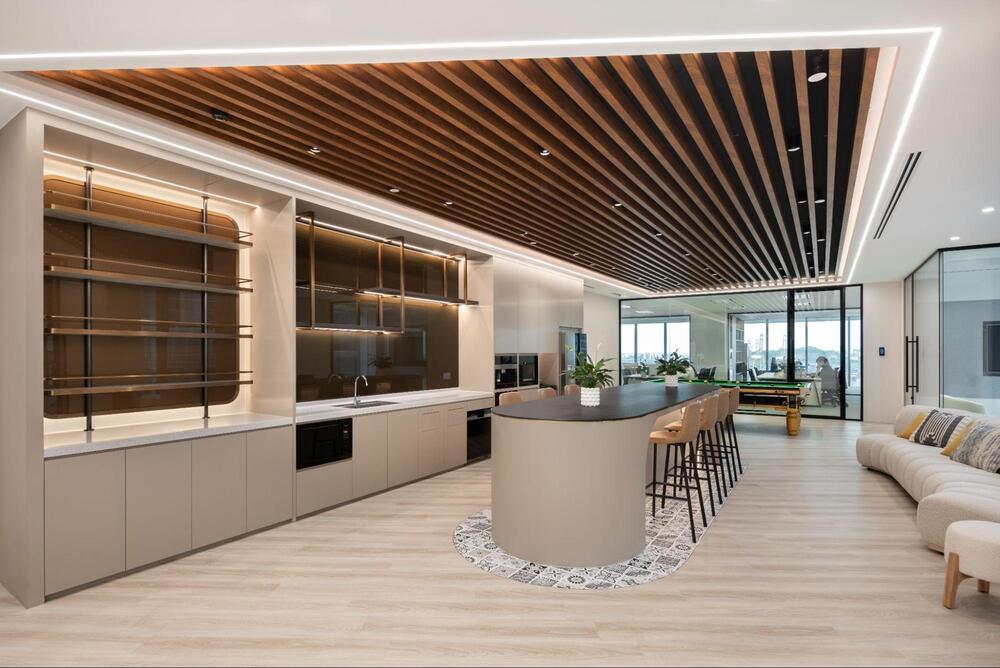
Grey office design with natural wood accents
1.5 Grey and Bold Accent Colors
Bold accents transform neutral offices into energetic work environments. Many companies adopt this method when implementing dynamic grey office design ideas.
Grey acts as a neutral base that supports brighter colours without overwhelming the workspace. Accent tones help define departments, guide circulation, and reinforce brand identity.
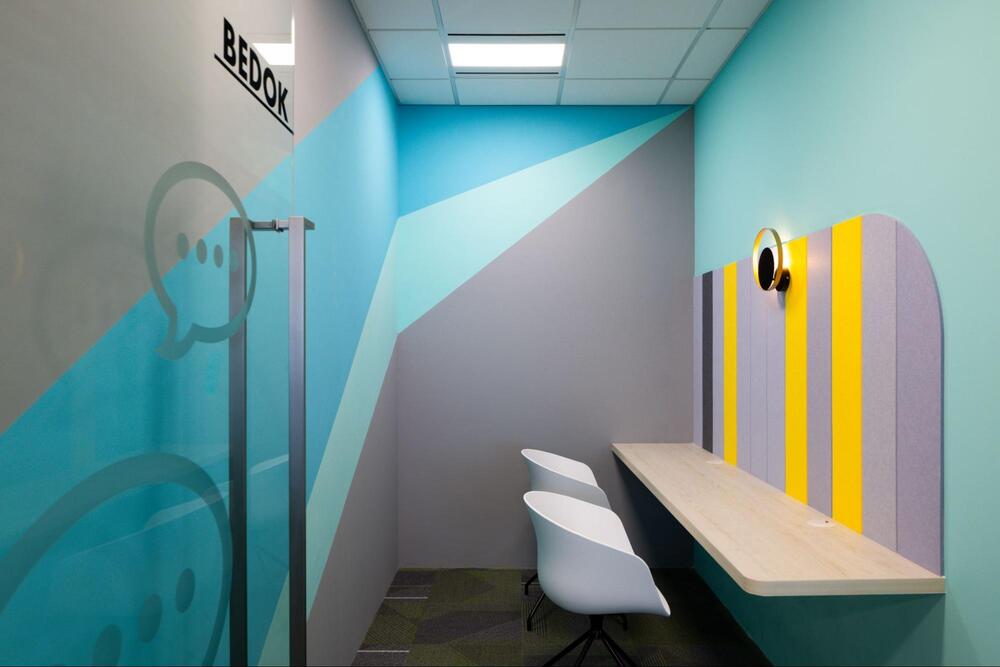
Grey office ideas with bold accent colours for brand identity
2. Grey Office Ideas for Different Workspaces
A successful grey office design requires more than choosing a colour palette. Designers must adapt grey tones to the function of each workspace. Different zones within an office support different tasks. Reception areas focus on first impressions.
2.1 Grey Reception Area
The reception area forms the first physical interaction between visitors and a company. The design of this space effectively communicates the brand’s identity and professionalism. A well-planned reception therefore, plays a central role in modern grey office ideas.
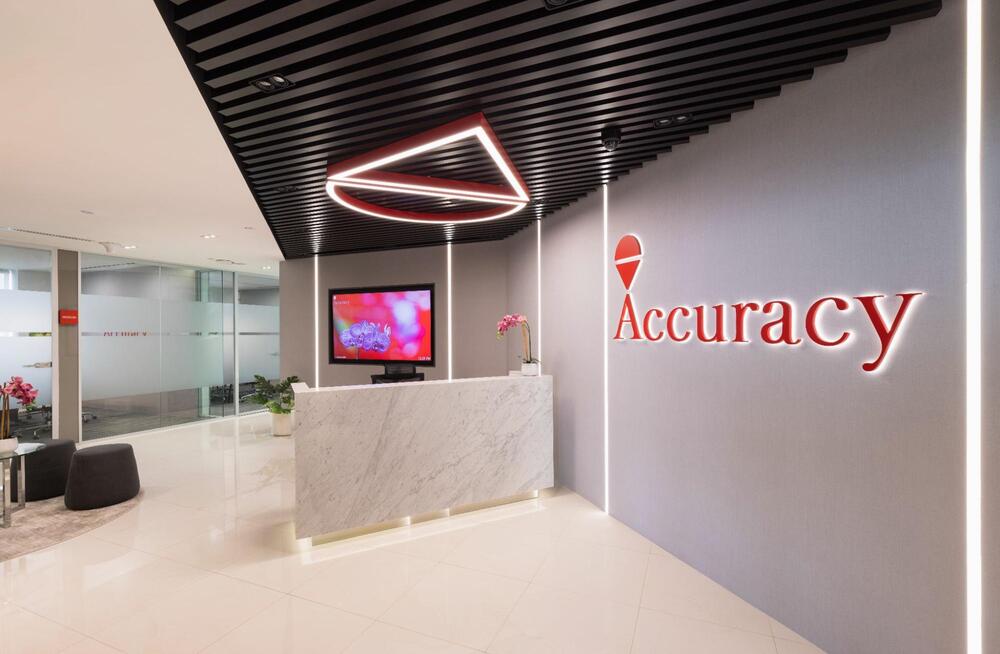
Grey office reception with lighting features
Grey works well in reception areas because it creates a neutral base that highlights materials, lighting, and branding elements. Designers often combine grey with stone, metal, or wood to create depth.
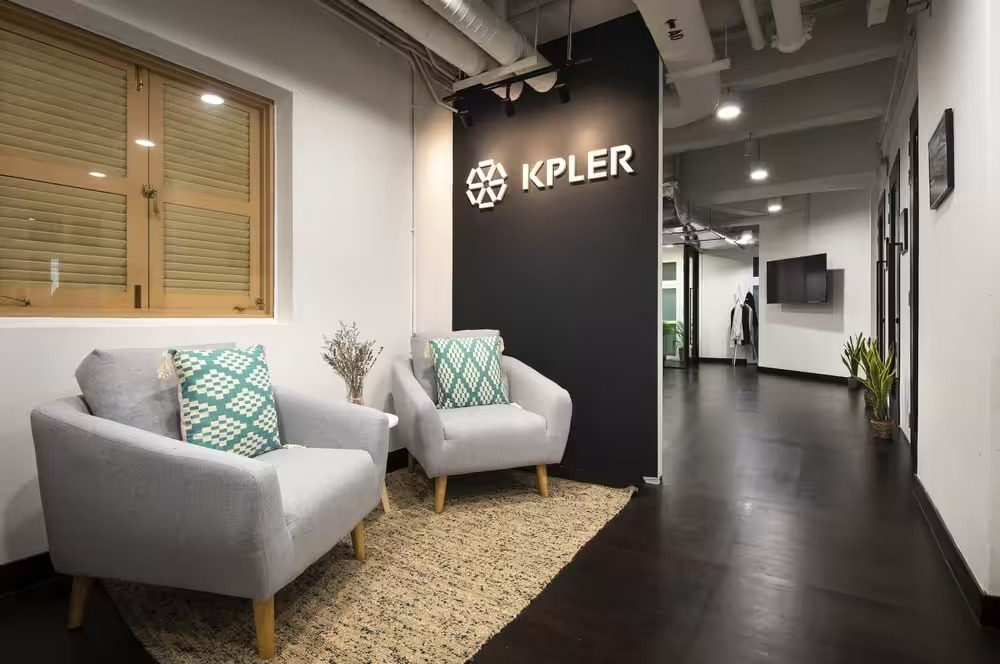
Modern grey reception area design for corporate offices
2.2 Grey Open Workspace
The open workspace is the core of daily office activity. Employees spend most of their time in this area. The design must therefore support focus, comfort, and collaboration. Neutral palettes such as grey often provide the most effective solution.
A balanced grey office design helps maintain visual calm while allowing departments to personalise their workspace.
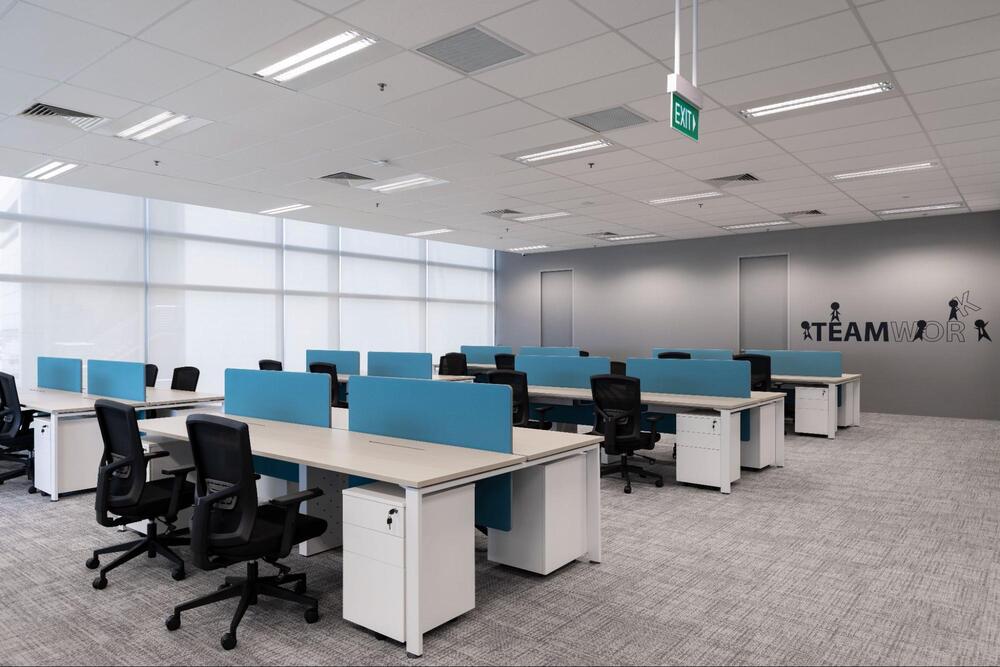
Modern grey office workstations in an open workspace layout
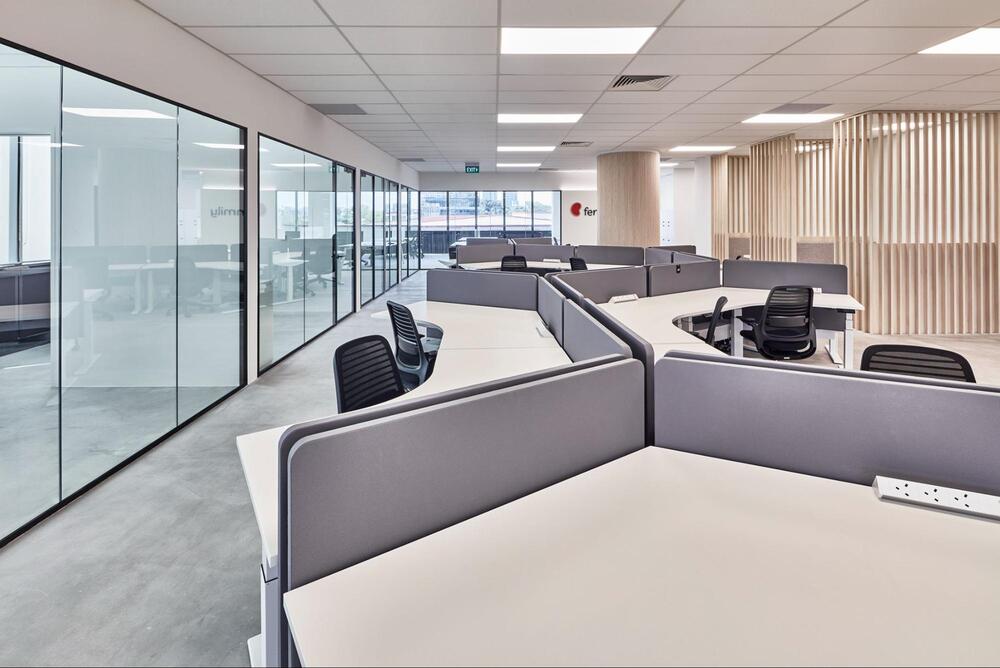
Neutral grey office design supporting employee productivity
2.3 Grey Meeting Rooms
Meeting rooms support discussion, planning, and decision making. The environment must therefore reduce distractions and improve concentration. A controlled grey office design helps achieve this goal.
Grey tones absorb visual noise and allow participants to focus on conversation and content.
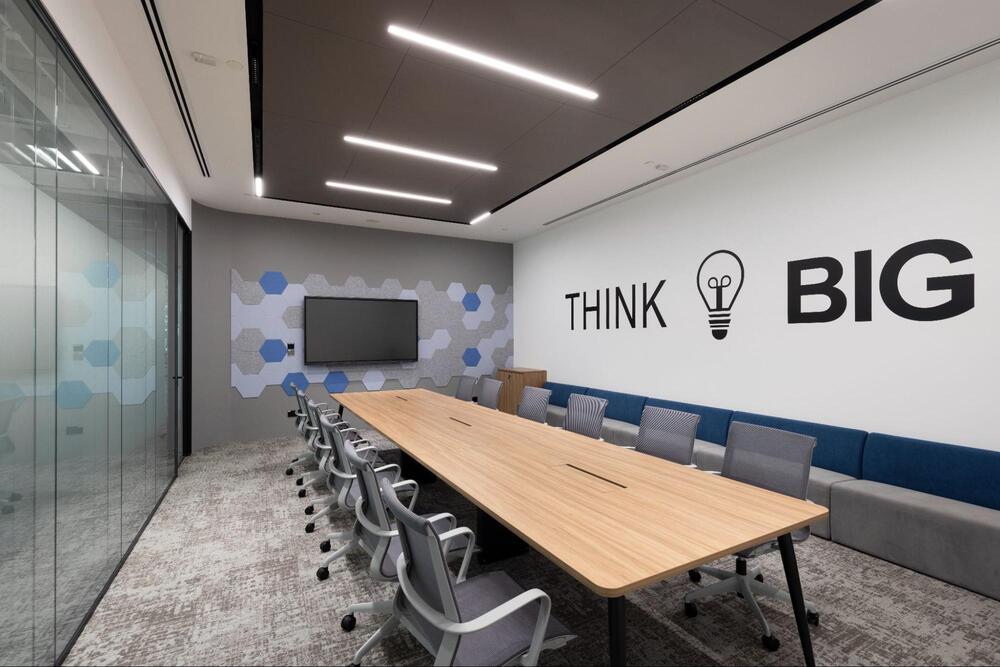
Professional grey meeting room with acoustic panels and glass partitions
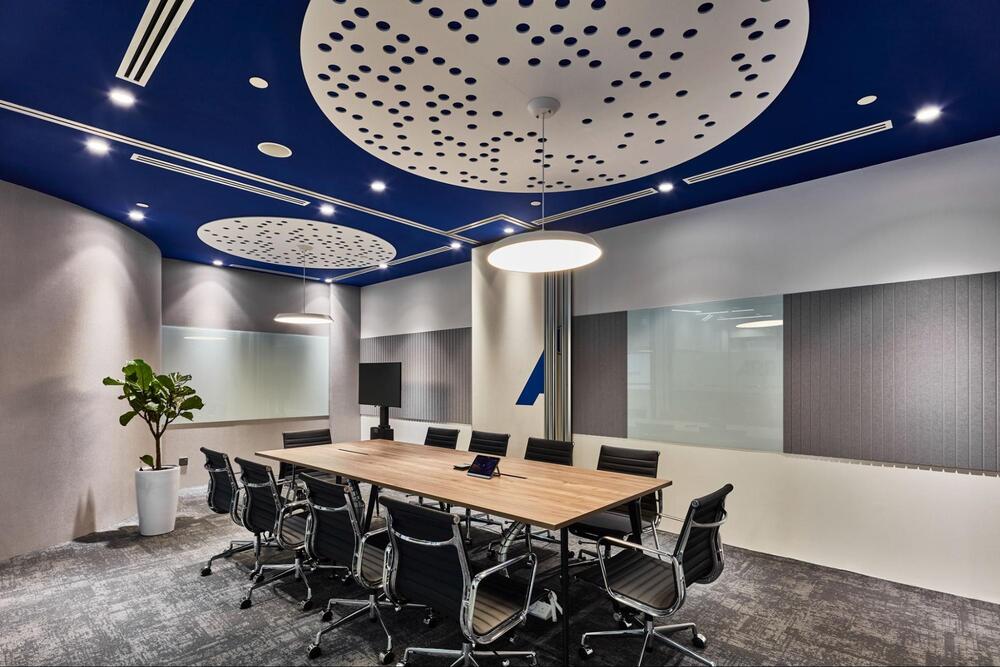
Grey and blue office ideas for modern conference rooms
2.4 Grey Executive Office
Executive offices represent leadership within the organisation. The design must therefore communicate authority, privacy, and trust. Darker grey palettes often support these goals.
A well-structured executive office can also inspire strong grey office design ideas across the company.
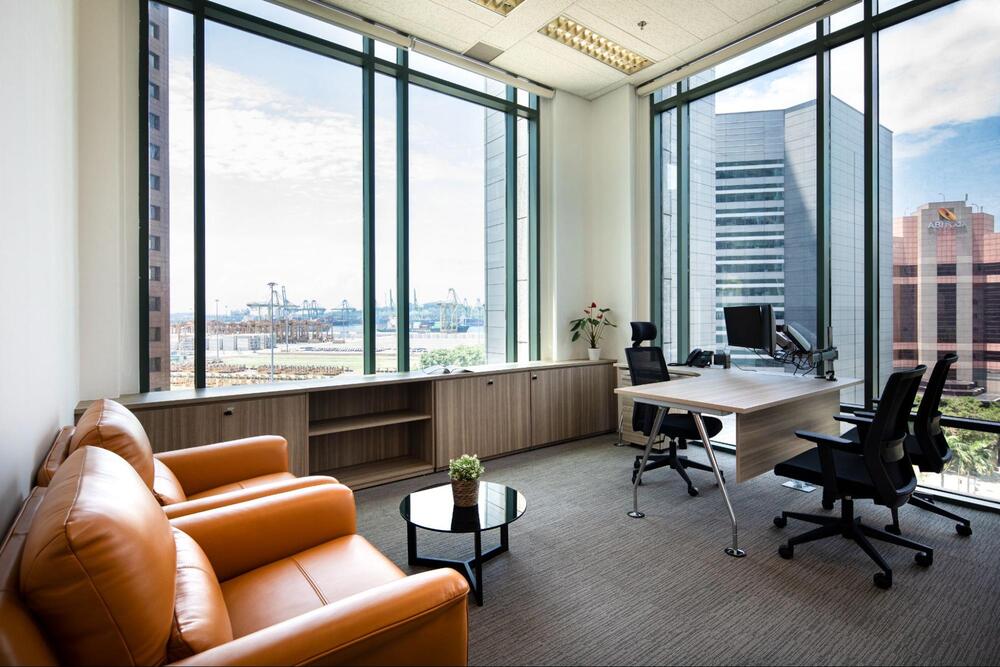
Premium dark grey executive office design with wood finishes
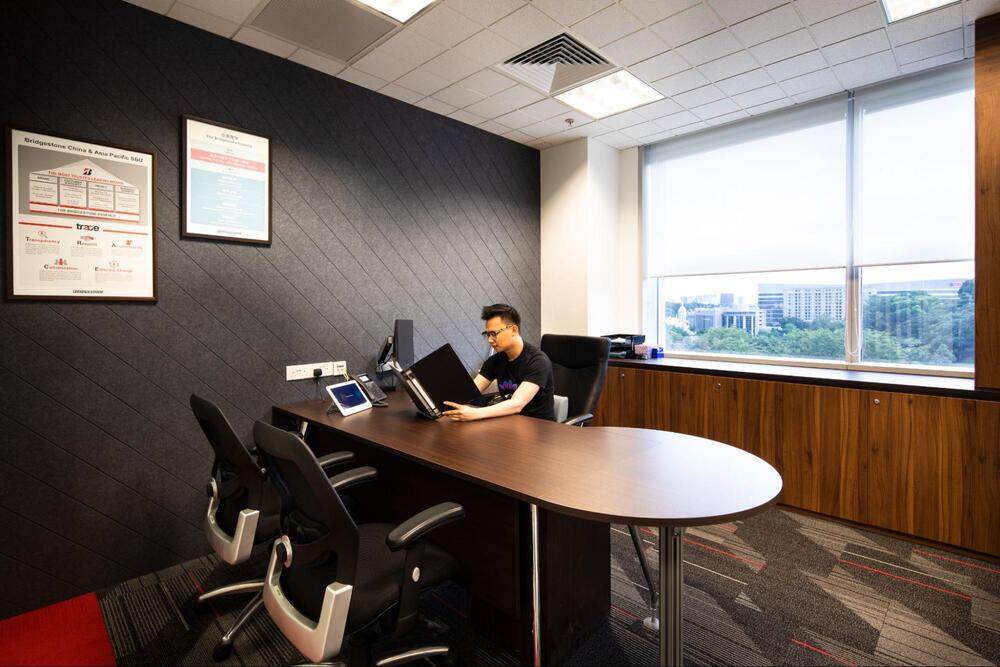
Grey and black office ideas for leadership workspaces
2.5 Grey Breakout and Collaboration Areas
Breakout areas support informal meetings, social interaction, and creative discussion. These spaces should feel relaxed while remaining consistent with the overall grey office design.
Neutral grey tones provide a flexible base for these dynamic zones.
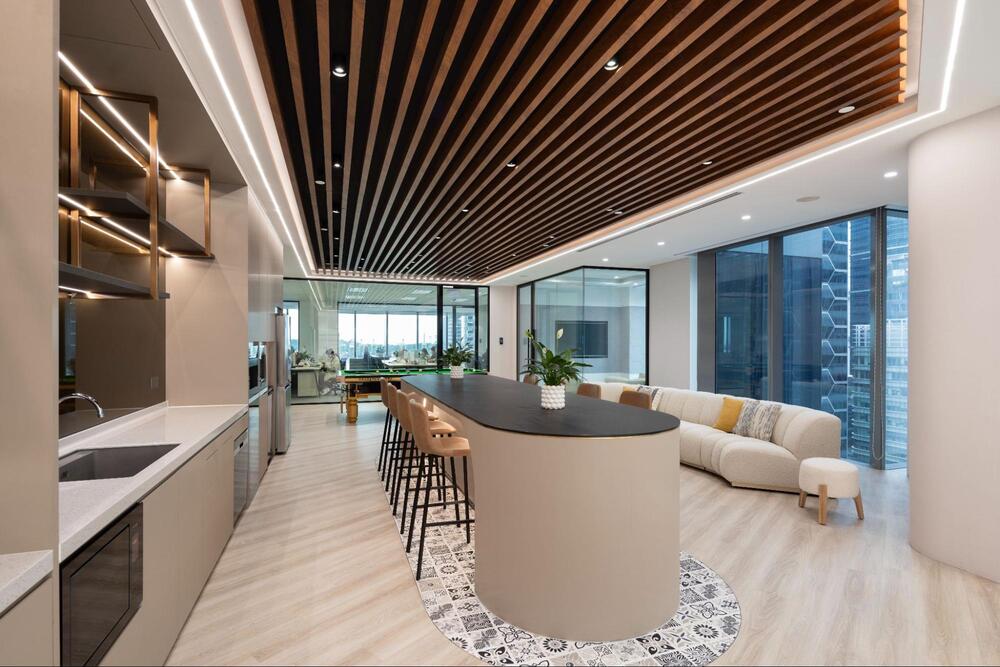
Creative breakout area with soft grey office design
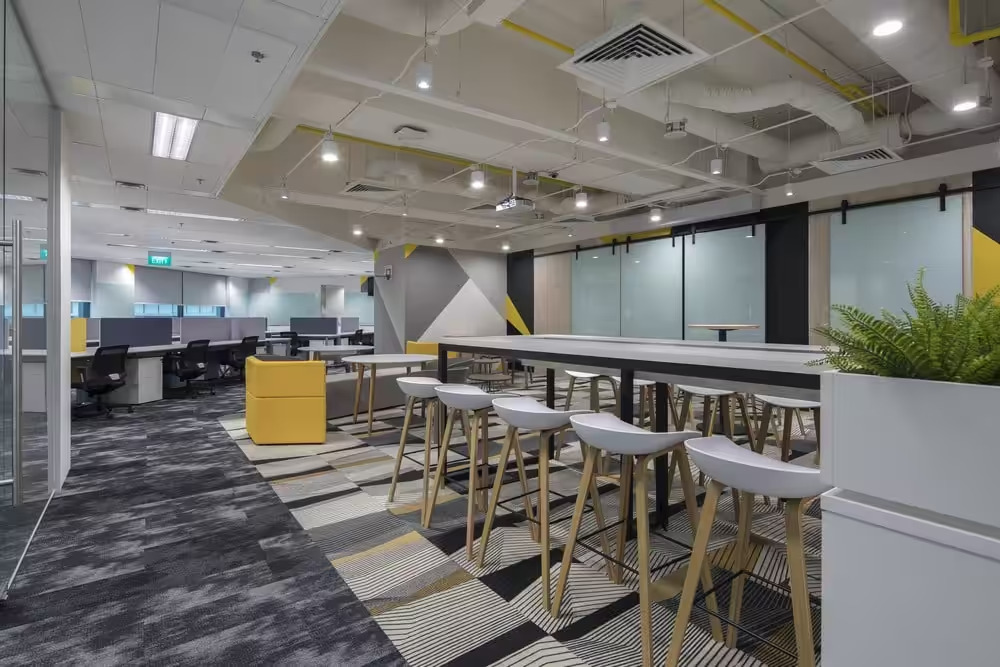
Grey and yellow office ideas for informal collaboration spaces
3. Tips for Designing a Grey Office Without Making It Feel Dull
Use Layered Lighting
Grey surfaces absorb more light than lighter colours. Without proper lighting, the office may appear darker than expected. The tip is layered lighting. Designers combine multiple light sources to create depth and visual balance. A common mistake is relying only on overhead lighting. This approach creates flat illumination and reduces visual contrast.
To prevent this problem:
- Avoid a single lighting source across the office.
- Avoid placing workstations in poorly lit areas.
- Avoid using dark grey surfaces without additional lighting support.
Add Texture and Contrast
Texture plays a key role in preventing neutral interiors from appearing monotonous. Large flat grey surfaces may lack visual interest if no contrast is present. The tip is introducing texture and material variation within the office environment.
Designers typically combine several materials, such as:
- Fabric acoustic panels
- Wood wall cladding
- Stone reception surfaces
- Metal shelving or frames
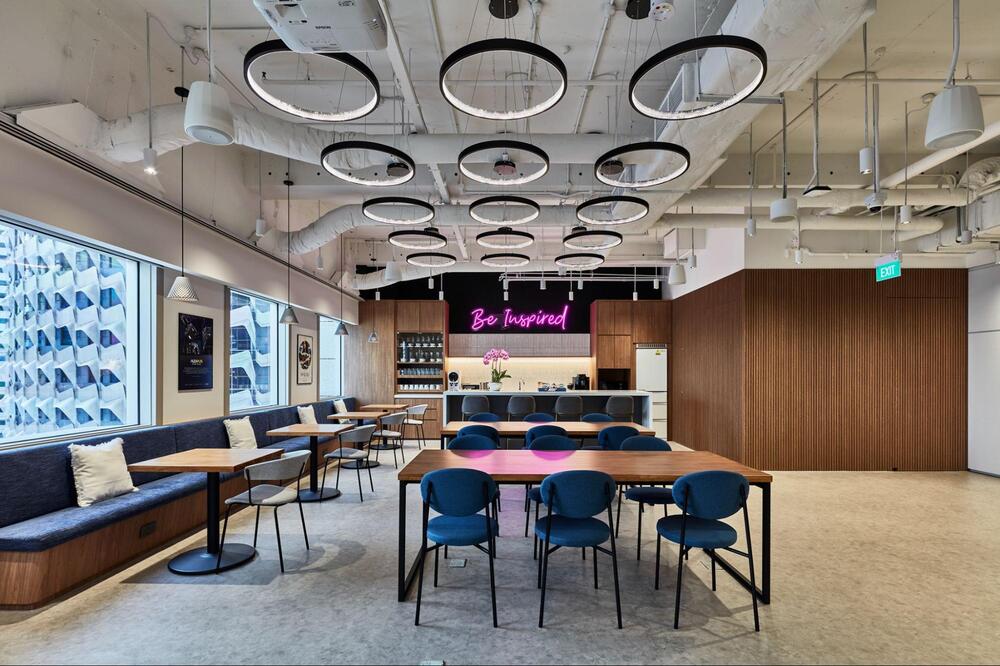
Lighting strategy in modern grey office design
Introduce Plants and Biophilic Elements
Biophilic design integrates natural elements into interior environments. Plants soften neutral colour schemes and provide visual contrast against grey surfaces. The tip is adding greenery to balance neutral interiors.
An office that uses only grey, metal, and glass materials may feel cold and rigid. To avoid this issue:
- Avoid designing large spaces without natural elements.
- Avoid placing plants only in reception areas while leaving workspaces empty.
- Avoid using artificial décor that does not contribute to spatial balance.
Combine Multiple Shades of Grey
Another essential principle in professional grey office design is tonal layering. Designers rarely rely on a single grey tone. Instead, they combine several shades to create hierarchy.The tip is using multiple grey tones across the workspace.
Typical tonal combinations include:
- Light grey for walls and ceilings
- Mid-grey for workstations or partitions
- Dark grey for feature walls or executive spaces
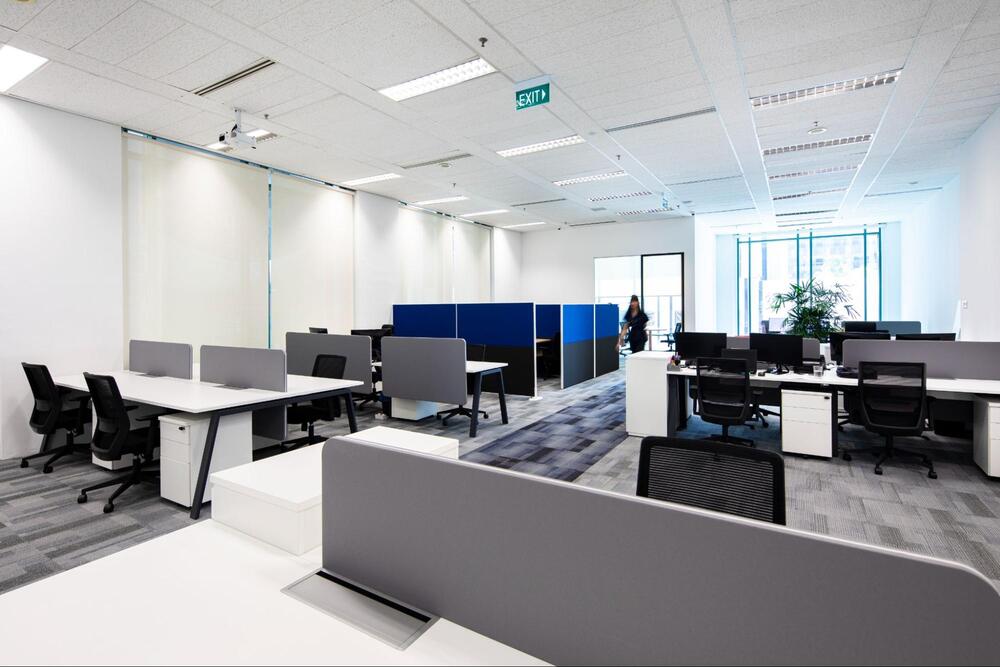
Using multiple grey tones in professional office interiors
4. How Professional Office Designers Create Balanced Grey Workspaces?
A well-executed grey office design requires more than selecting a neutral colour palette. Professional designers focus on spatial balance, material contrast, and lighting to ensure the workspace remains functional and visually comfortable. At OSCA Asia, the design process integrates architectural planning, workplace strategy, and interior execution to create offices that are efficient and visually balanced. This approach helps companies implement practical grey office design ideas without creating spaces that feel dull or overly minimal.
Strategic colour balance in grey office design
Professional designers rarely use grey alone. Instead, they combine it with controlled accent colours to create contrast and visual structure. This approach allows businesses to adopt different grey office ideas depending on brand identity and workplace function.
At OSCA Asia, designers evaluate company culture, lighting conditions, and space layout before selecting a colour system. This ensures that every grey office room idea aligns with operational needs and brand positioning.
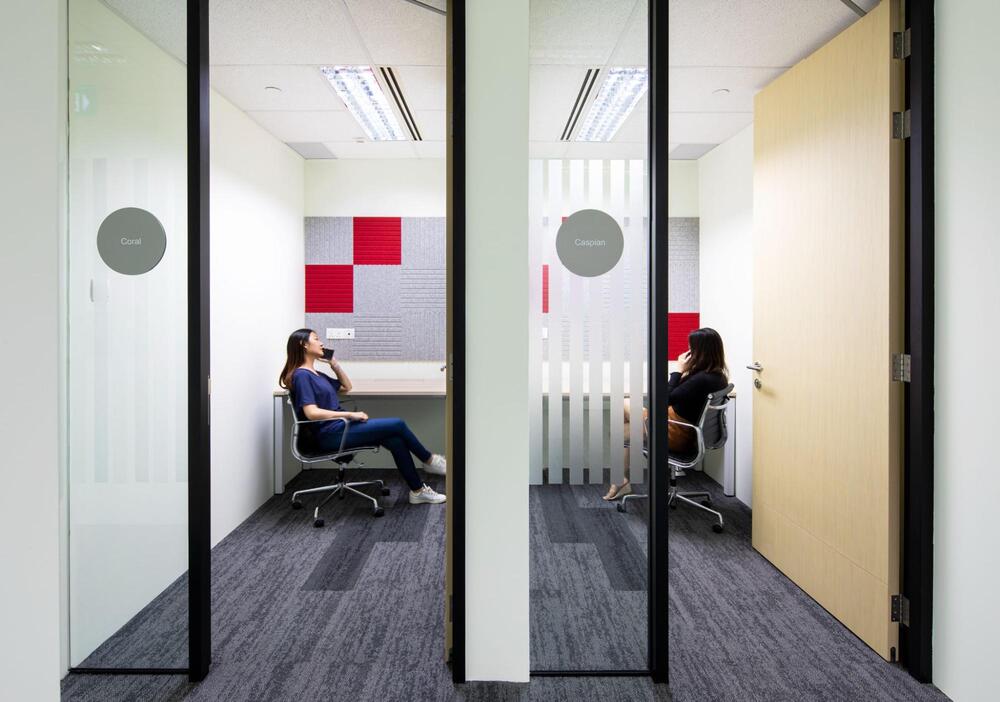
Balanced grey office design implemented by OSCA Asia
Material selection that prevents visual monotony
A balanced grey office design depends on material diversity rather than colour variation alone. Professional office designers combine different surfaces to maintain depth across the workspace.
OSCA Asia specialises in integrating architectural materials with office furniture systems. This integrated design approach ensures that every element, from workstation layout to meeting room finishes, supports a cohesive grey office design.
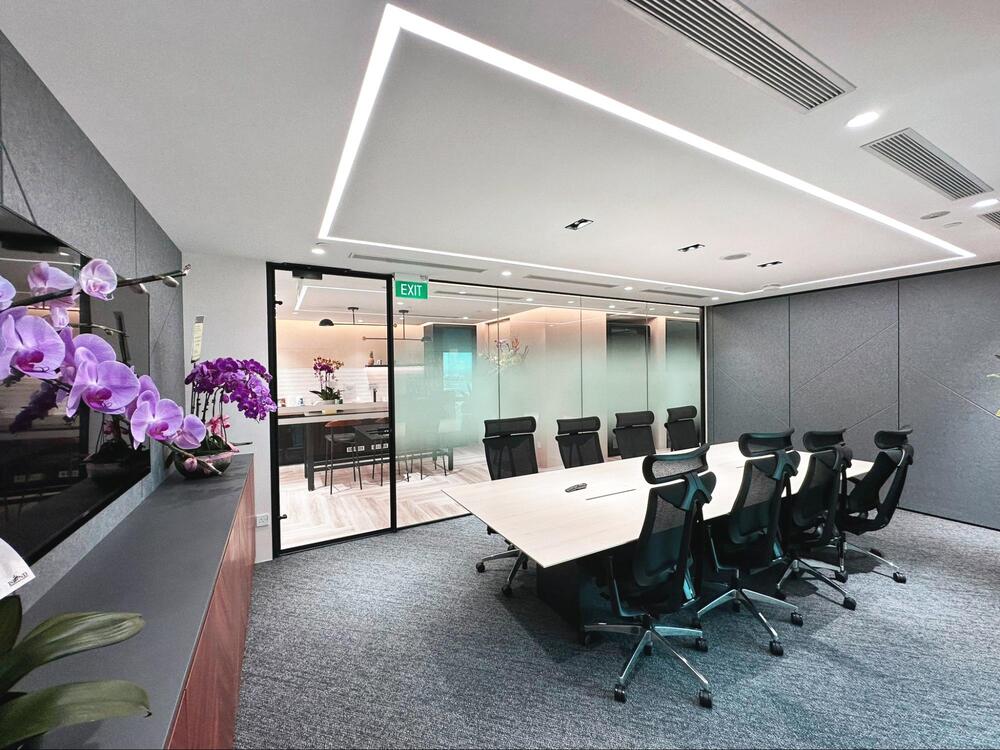
Grey and black office ideas in corporate interiors
Lighting planning for grey workspaces
Lighting plays a critical role in making grey interiors functional. Without proper lighting, even well-planned grey office ideas can appear flat or dim.
OSCA Asia integrates lighting design early in the project planning stage. By coordinating lighting with materials, workstation placement, and circulation routes, the company ensures that grey office design ideas maintain clarity across the entire workspace.
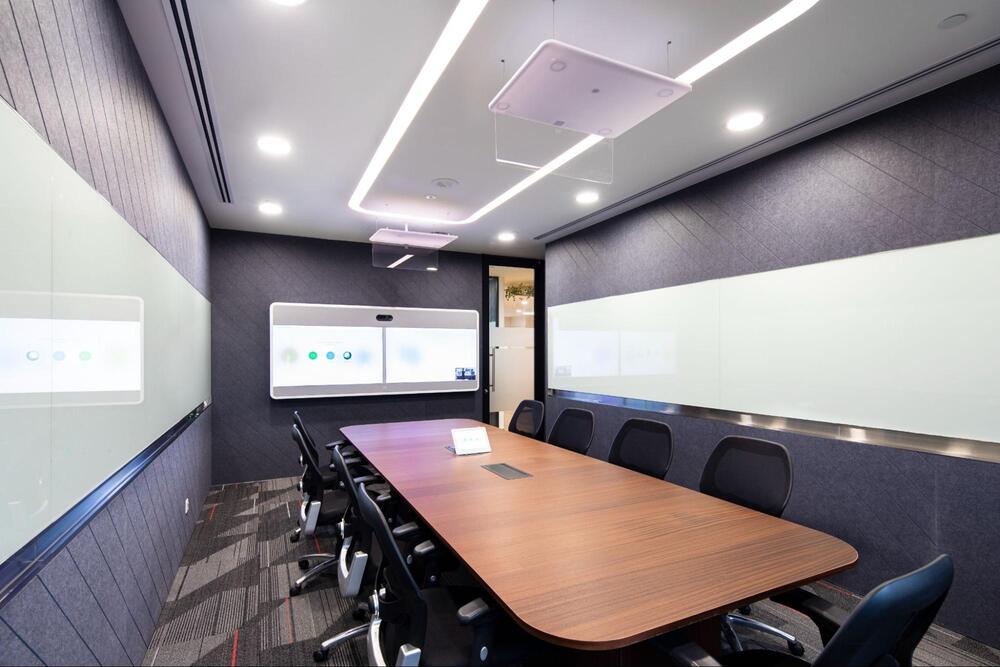
Grey office room ideas for team discussion areas
OSCA Asia’s expertise in grey office workspace design
Successful grey office design requires both technical planning and aesthetic control. OSCA Asia provides a full service that covers:
- Workplace strategy and space planning
- Interior design and architectural detailing
- Custom office furniture integration
- Turnkey office construction and project management
This integrated capability allows OSCA Asia to transform standard grey office ideas into structured work environments that support productivity and long-term business growth.
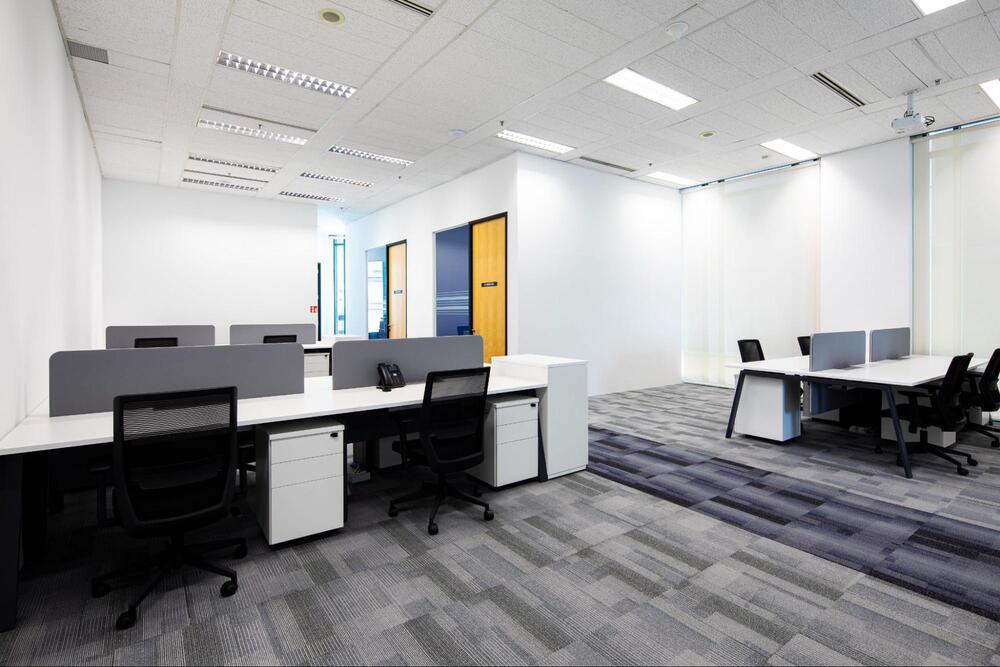
Grey office ideas in modern workplace design
Experienced designers understand how to translate simple grey office ideas into structured environments that support productivity and daily operations. At OSCA Asia, the design process focuses on integrating workplace strategy, architectural planning, and interior construction into one cohesive system. Contact now!