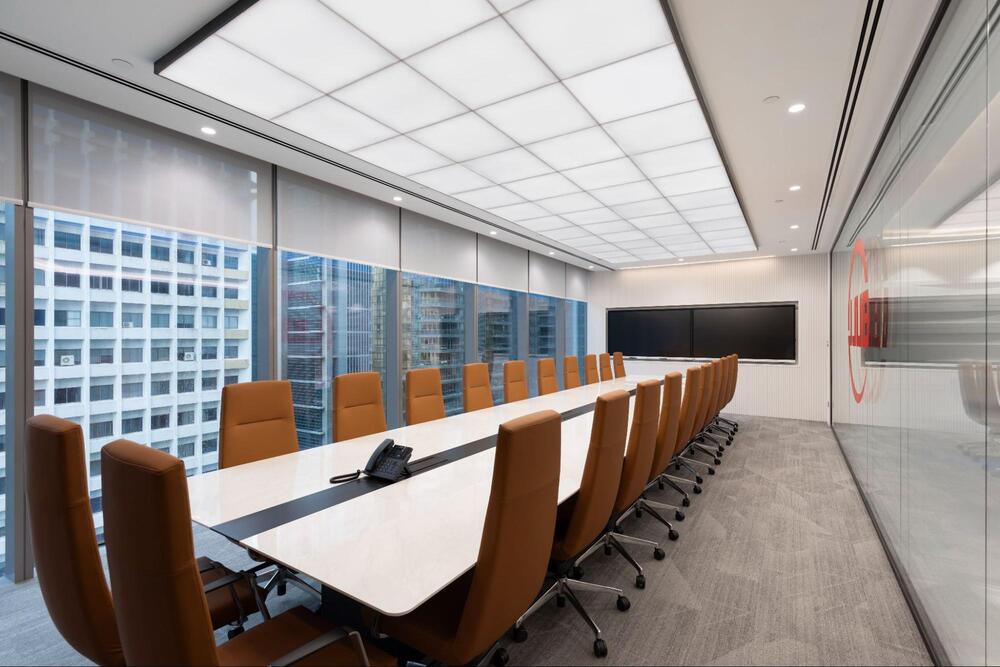
Hybrid work has fundamentally changed how organisations plan and use office space, making flexible offices a core strategy for agility and cost efficiency. In Singapore, rising rents and evolving workforce expectations are accelerating demand for future-ready flexible workspaces that are adaptable to change. This guide from OSCA Asia highlights the key benefits, workspace models, and flexible office layout trends that shapes today’s workplace. Drawing on Singapore case studies, it shows how well-designed flexible office workspaces can enhance performance and overall employee experience.
1. Introduction to Flexible Offices and Benefits
Flexible offices are modular workspaces designed to adapt to ever-changing business needs. Rather than being tied down by fixed seating and costs, businesses can choose from a-variety of work settings, including hot desks, private studios, shared offices, and on-demand meeting rooms – typically under short or medium-term contracts.
This flexibility allows organizations to scale their office footprint, reconfigure layouts, and support fully remote teams, hybrid working models, or project-based work without overly pricey renovations or excess space.
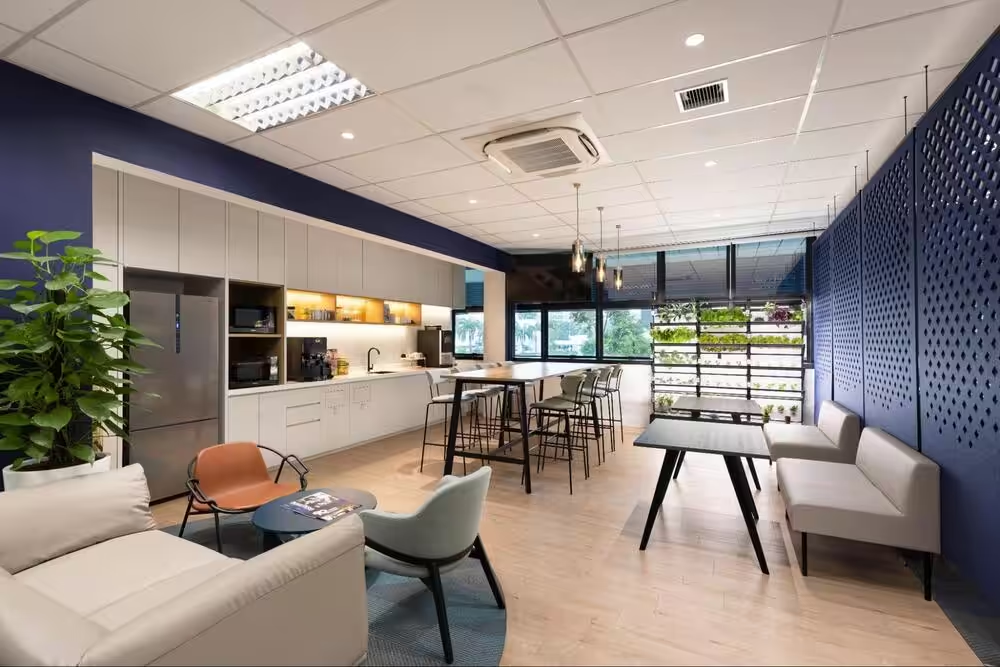
Flexible offices reshape how teams work, scale, and collaborate
In Singapore, flexible work is surging because of deep structural and cultural shifts. A 2024 KPMG CEO Outlook survey found that 64% of global CEOs expect hybrid work to remain the dominant model, and many are recalibrating office footprints to support more fluid, activity-based workplace design. Demand for agile, short-term workspaces is accelerating not just in Singapore, but also around the world. JLL reports that 43% of large enterprises plan to increase their use of flexible space by 2025 as part of long-term portfolio strategies, driven by the need for scalability and cost resilience.
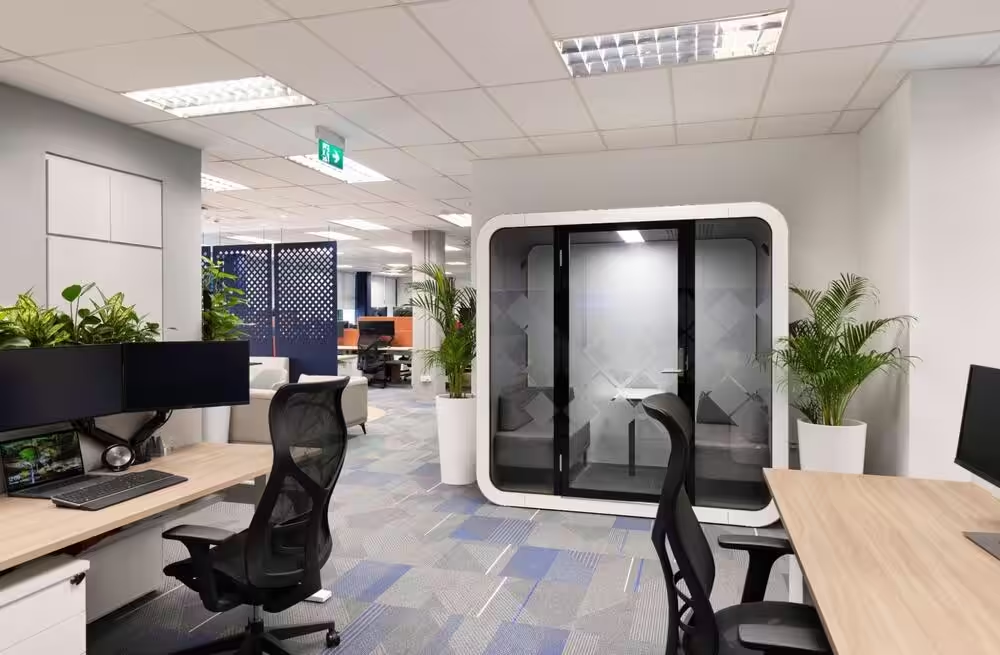
Smart flexible layouts cut waste and match real office usage
Benefits of Flexible Workspaces for Companies in Singapore:
- Optimised real-estate spend: Companies pay only for the space they actually use, avoiding underutilised desks and oversized long-term leases.
- Space that fits hybrid rhythms: Layouts and seating flex with fluctuating in-office attendance, ensuring collaboration areas are available without leaving rows of empty desks.
- On-demand scalability: Teams can instantly secure extra rooms, project studios, or temporary hubs for short-term needs – no capital expenditure, no renovation downtime.
- Location agility & faster setup: Businesses can enter prime districts or new neighbourhoods quickly, supporting client proximity, hiring, or market testing without multi-year commitments.
- Outsourced workplace operations: Reception, IT support, cleaning, utilities, and meeting-room infrastructure are handled by the operator, reducing internal workload and stabilising opex.
- Boosted employee experience: Modern flexible spaces offer amenities, focus zones, collaboration areas, and wellness facilities that support hybrid work patterns and strengthen talent retention.
- Built-in resilience: Access to multiple centres across the operator’s network provides instant backup locations, improving business continuity during disruptions.
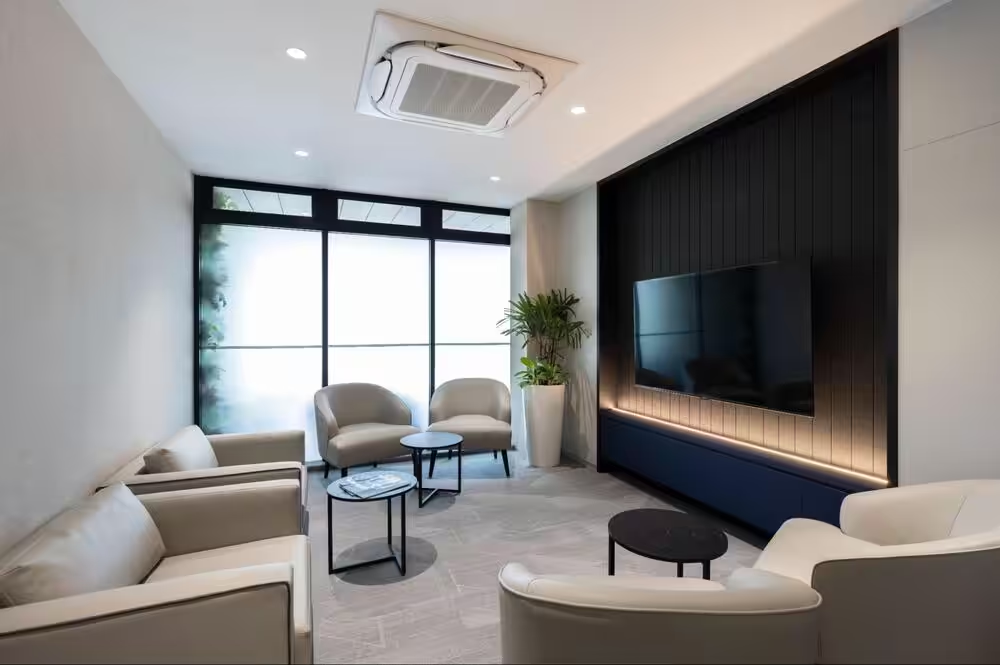
Agile workspace models help companies stay resilient and future-ready
2. Types of Flexible Workspaces
As flexible offices become more deeply integrated into modern workplace strategies, companies now have access to a variety of workspace formats designed to support different work styles and operational needs. The following models represent the most widely adopted options today.
2.1. Coworking Spaces
Coworking spaces are shared, community-driven work environments where individuals and companies operate alongside one another in open or semi-open settings. These spaces typically offer hot desks, dedicated desks, meeting rooms, breakout areas, and plug-and-play infrastructure that allows teams to start work immediately with zero setup required.
This format suits freelancers, startups, creative teams, and agile project groups that value flexibility, cost efficiency, and a social atmosphere. Companies often choose coworking to avoid long leases, support hybrid teams, or house small satellite units. The mix of convenience, community events, and ready-to-use amenities makes coworking one of the most accessible flexible workspace models.
2.2. Serviced Offices
Serviced offices are private, fully equipped suites that companies can move into immediately. All essentials: utilities, cleaning, IT setup, front-desk services, meeting rooms are bundled into a single monthly fee, removing the administrative load of managing an office.
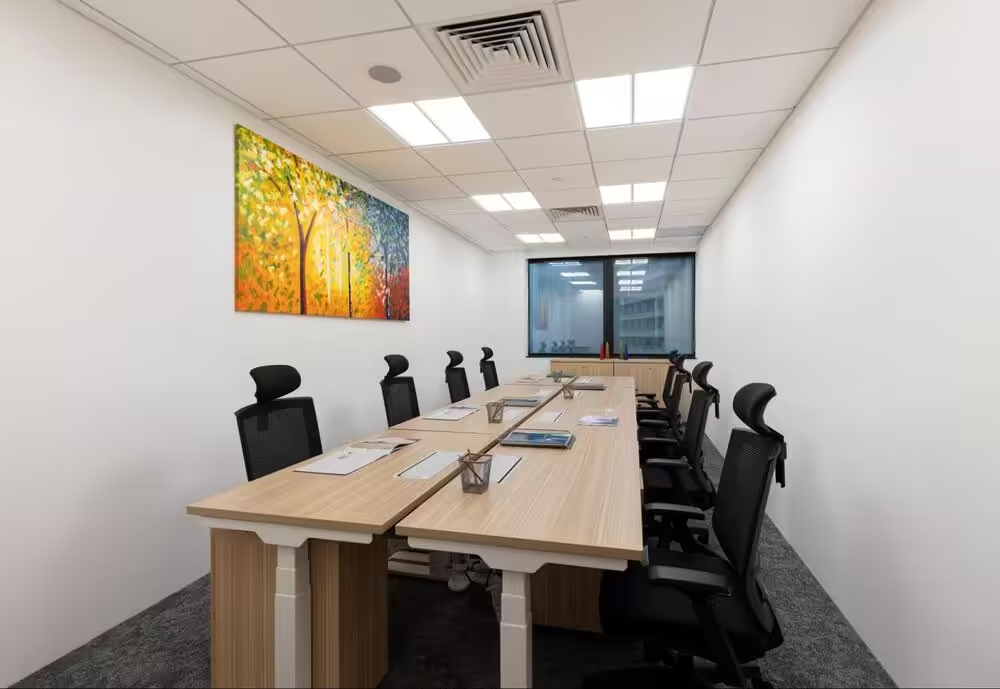
Private, ready-to-use office suites that deliver stability, privacy, and zero setup hassle
This model suits MNCs, professional-services firms, and teams that need confidentiality, stability, or a polished client-facing environment without long leases. It offers the feel of a traditional office but with the agility to scale up or reduce space as headcount changes.
Serviced offices offer fully equipped, move-in-ready suites for teams needing privacy and professionalism
2.3. Hybrid/Activity-Based Workspaces Within Corporate Offices
Hybrid or activity-based workspaces embed flexibility directly into a company’s own office environment. Instead of fixed desks, the office layout is organized into purpose-driven zones – such as focus rooms, collaboration areas, project studios, quiet libraries, and social spaces so employees choose where to work based on the task.
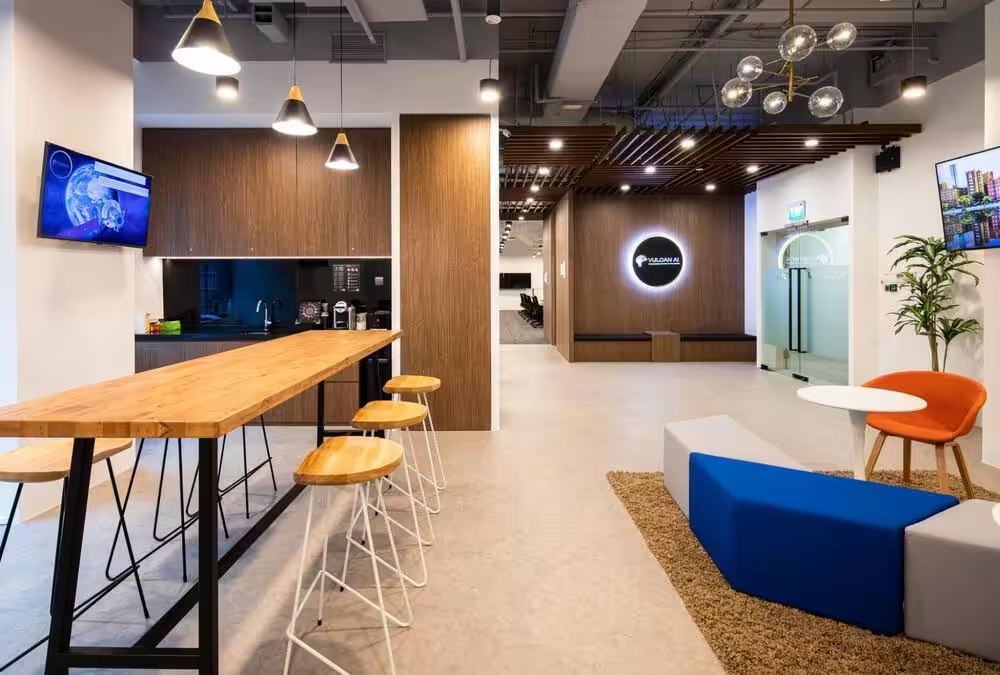
Hybrid/Activity-Based Workspaces Within Corporate Offices
This model suits mid-size and large enterprises modernising their workplace strategy. It reduces underutilised space, supports hybrid attendance patterns, and gives employees more autonomy over how they work. For companies with fluctuating in-office traffic, ABW turns the headquarters into a purposeful, high-value destination rather than a mandatory desk-bound environment.
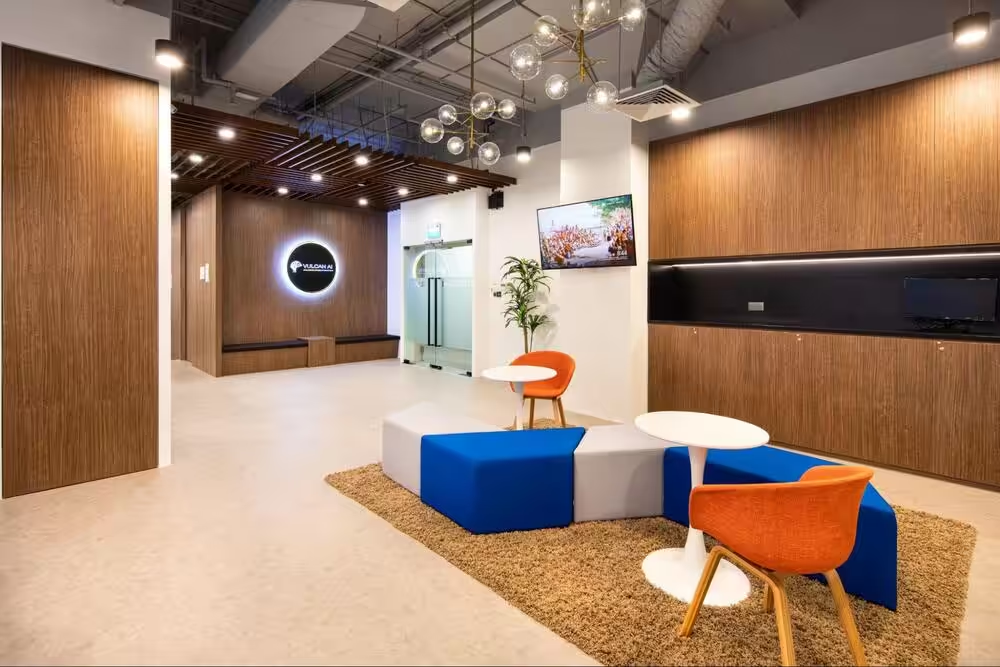
Activity-Based Workspaces are well-suited for large enterprises undergoing significant workplace transformation, enabling greater flexibility and collaboration among employees
2.4. Hot Desking vs Assigned Seating
Hot desking gives employees the freedom to sit anywhere, making it ideal for hybrid teams with fluctuating attendance and helping companies minimize unused space. It supports mobility and cross-team interaction but can feel less personalised or challenging for roles needing privacy.
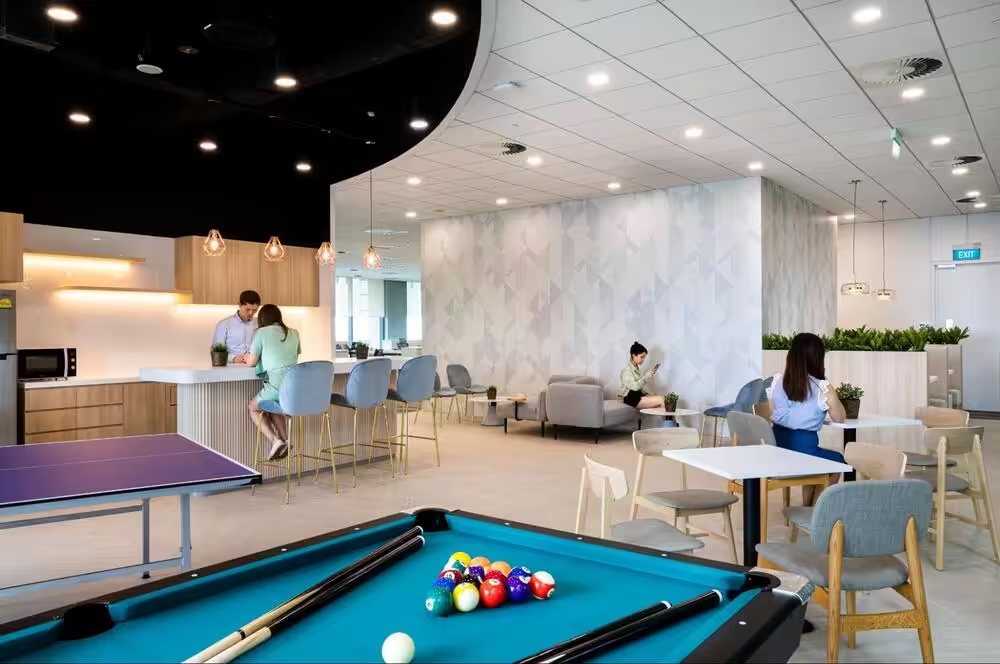
Hot Desking
Assigned seating, meanwhile, provides each employee with a fixed workstation, better for teams handling confidential tasks, specialised equipment, or frequent in-person collaboration. However, it creates more empty desks on hybrid days and typically requires a larger footprint.
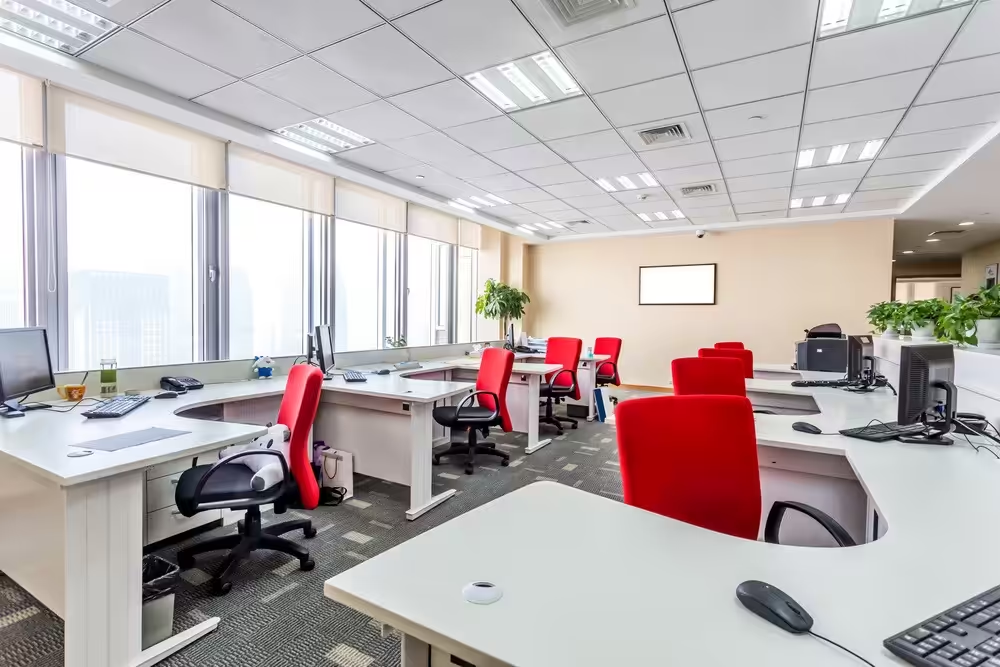
Assigned Seating
3. Key Features of an Effective Flexible Workspace Office
An effective flexible workspace is defined by its ability to adapt-physically, technologically, and experientially-to different teams, tasks, and work modes. Instead of relying on a single layout, high-performing flexible office workspace design supports change through the day, across projects, as organisations grow.
The following features are commonly found in high-performing flexible office workspace design:
- Modular & Movable Furniture: Reconfigurable desks, movable partitions, and multi-purpose seating allow the same floorplate to shift between open-plan collaboration, de-densified arrangements, or focused individual setups. This modularity keeps teams agile and ensures the workspace can evolve with projects, team sizes, and daily workflow.
- Technology-Enabled Workstations: Smart booking systems for desks and meeting rooms prevent bottlenecks in hybrid schedules, while reliable AV tools support high-quality virtual collaboration. Cloud-based access, high-speed connectivity, and shared digital resources help employees switch seamlessly between individual focus zones, breakout areas, and remote work environments.
- Wellness & Sustainability Integration: Biophilic design, natural lighting, and acoustic treatments help counteract the distractions of open-plan layouts. Ergonomic furniture, quiet rooms, and phone booths offer healthier working postures and reduce stress. Many flex spaces extend wellness further with fitness rooms, showers, bike storage, and community wellness programs.
- Collaboration & Community Spaces: A mix of shared amenities-including breakout lounges, meeting rooms, rooftop terraces, kitchens, and event spaces-creates opportunities for teamwork, informal interaction, and networking. These areas complement quiet zones and help balance the social and focused aspects of modern work.
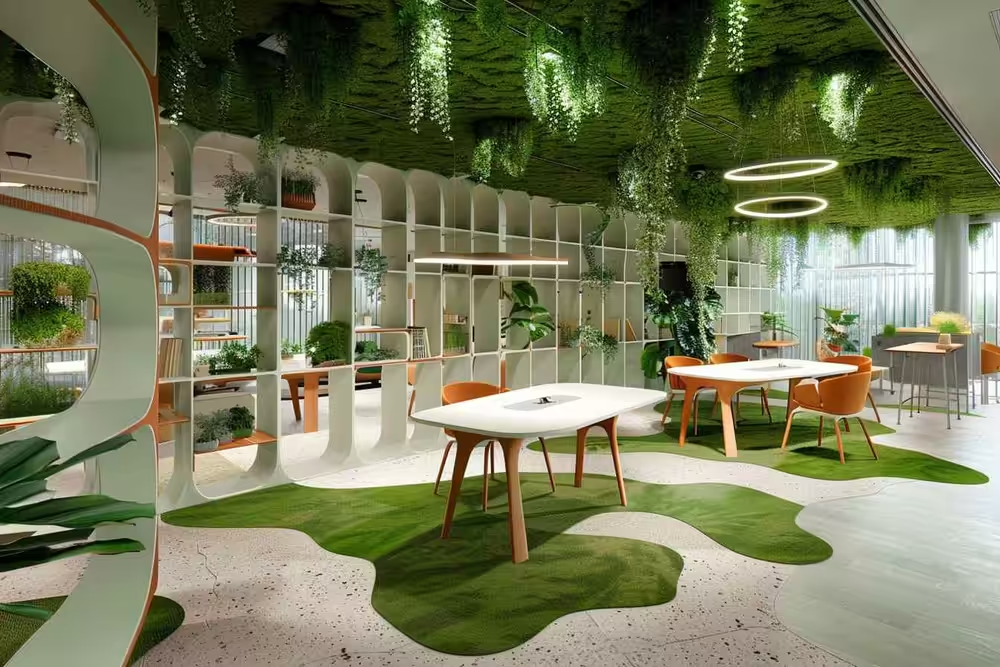
Wellness & Sustainability Integration in office workspace design offer healthier working postures and reduce stress
4. Flexible Office Layout Trends in Singapore
Singapore’s high-density environment and premium office rents are pushing companies to re-evaluate how to maximize space through smart, adaptable flexible office layout strategies. Key trends include:
Hospitality-inspired workspaces
Offices adopt hotel-like aesthetics with warm lighting, soft furnishings, and lounge-style seating to create a welcoming, premium experience. This design fosters comfort, enhances employee satisfaction, and encourages informal interaction across teams.
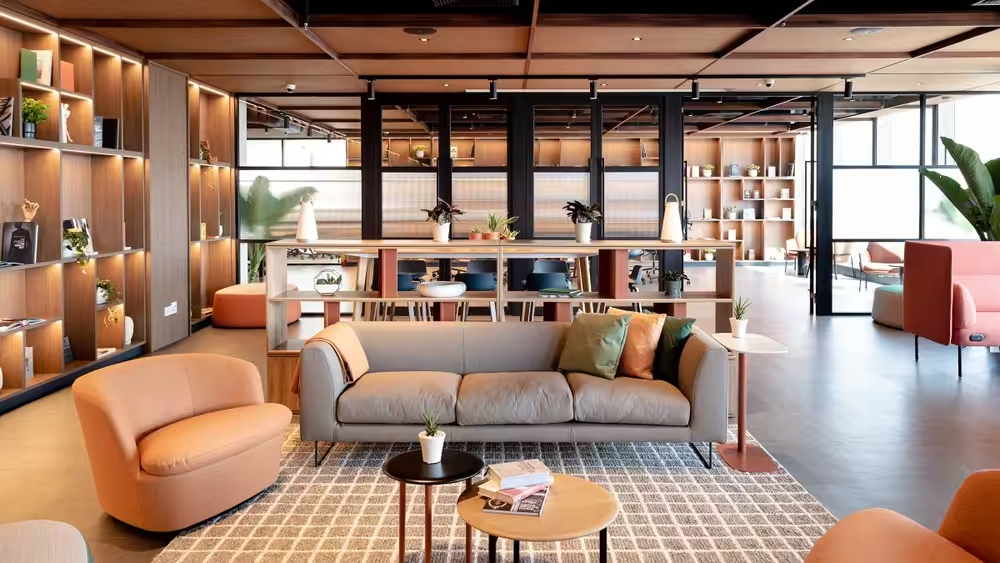
Hospitality-inspired workspaces fosters comfort, enhances employee satisfaction
Multi-purpose zones
Spaces are designed to transition quickly between collaboration, training, events, or quiet work. Movable partitions, modular furniture, and open layouts ensure companies can scale or reconfigure based on daily operational needs.
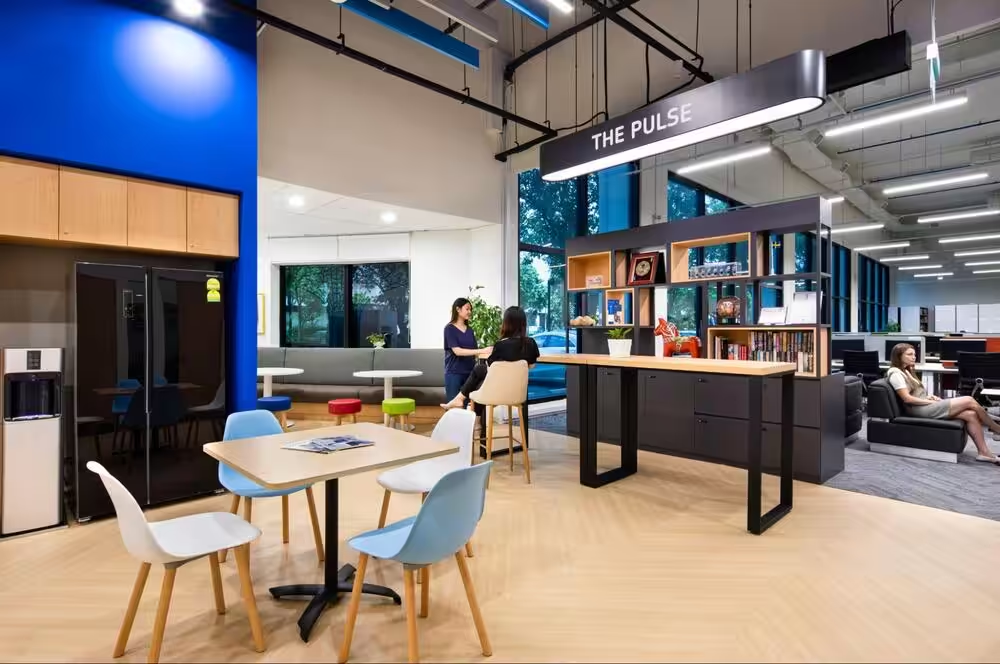
Multi-purpose zones
High-tech collaboration rooms
Meeting spaces are fully equipped with high-speed connectivity, unified video-conferencing tools, and interactive screens. These tech-enabled rooms support seamless communication across hybrid teams and reduce friction in cross-border collaboration.
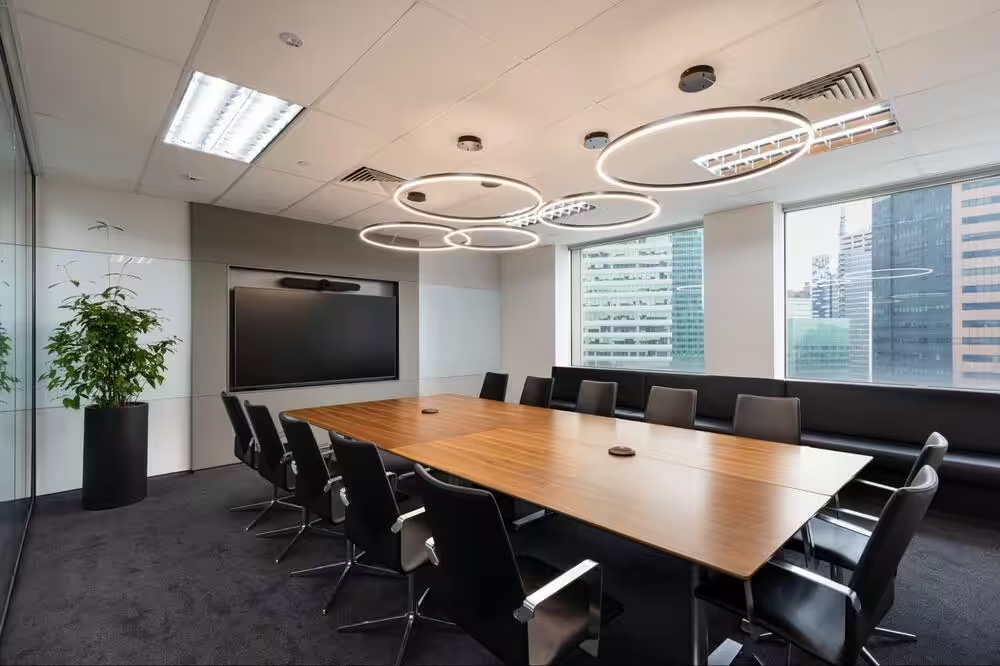
High-tech collaboration rooms
Biophilic & sustainable materials
Natural light, greenery, acoustic wood panels, and eco-friendly finishes enhance wellness while reducing environmental impact. This approach improves indoor air quality and helps create a calm, restorative atmosphere in high-density business hubs.
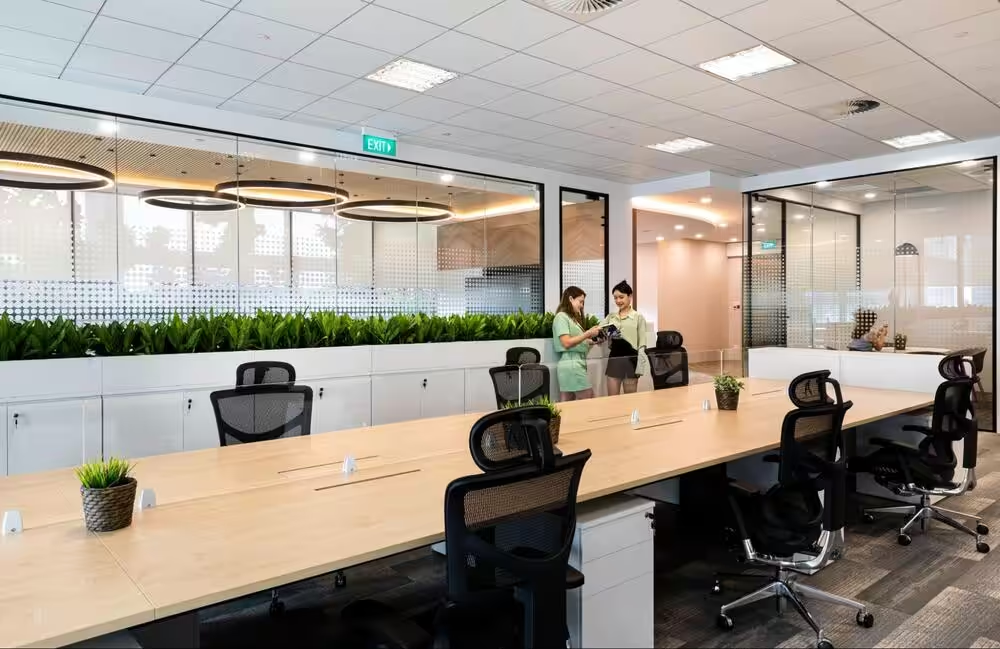
Biophilic & sustainable materials improve indoor air quality
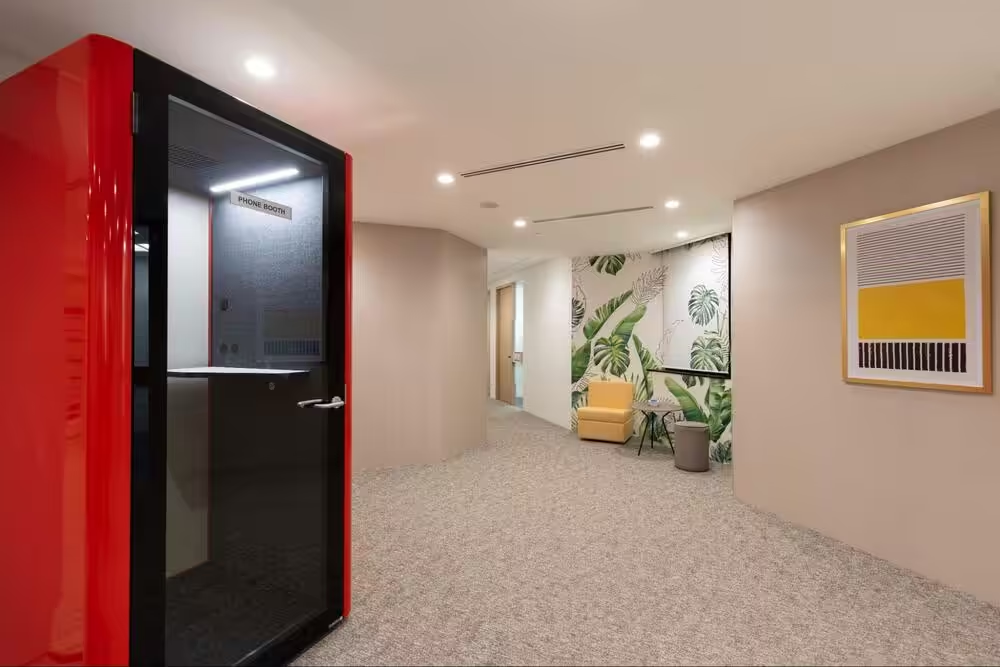
Touchdown spaces & focus pods
Compact workpoints such as phone booths, pods, and quick-stop desks allow employees to transition between tasks without committing to a full workstation. These zones support deep focus, private calls, and short bursts of productivity in hybrid-heavy offices.
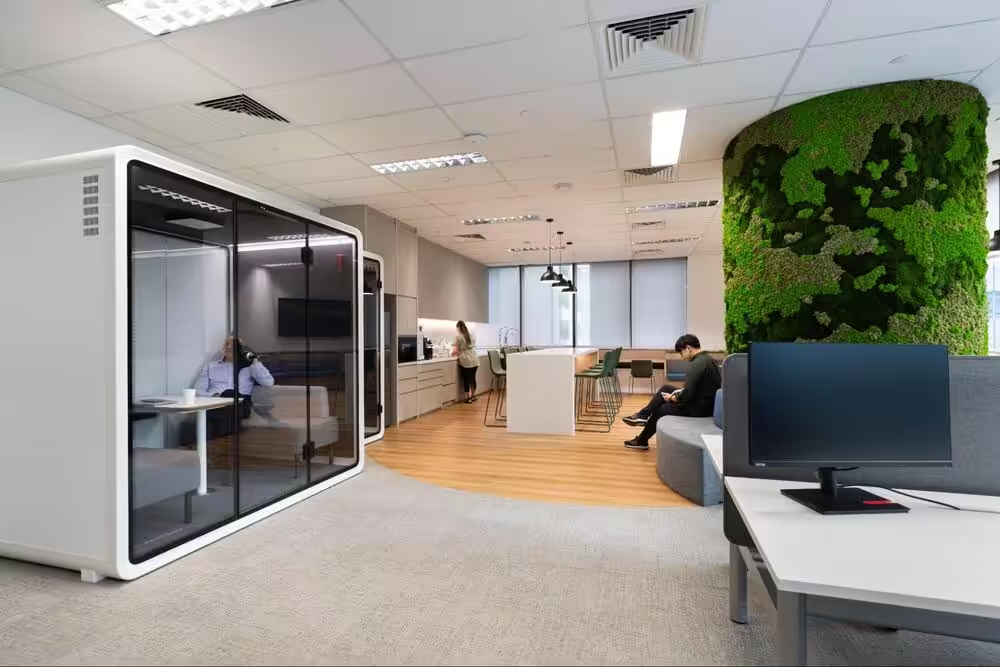
Touchdown spaces & focus pods
5. Case Studies of Flexible Workspaces in Singapore
With over 15 years of specialised experience and more than 350 workplace projects across Asia for global brands in finance, technology, gaming, logistics, maritime, and professional services, including OPPO, HP, Bridgestone, Traveloka, China Telecom, ARRI, OKG, Xsolla, Lufthansa, Chanel, Euromonitor,… OSCA is recognised as one of Singapore’s leading design-and-build partners for future-ready workplaces.
Its capabilities are anchored in four core strengths:
- Strategic workplace intelligence: Deep expertise in workplace strategy, change management, feasibility studies, and hybrid-enablement ensures every project is grounded in data, user needs, and long-term business goals.
- Human-centric, brand-driven design: The team crafts environments that enhance wellbeing, express brand identity, and support modern work patterns, from ABW layouts to collaborative and wellness-focused spaces.
- Technical excellence and reliable project delivery: MEP expertise, procurement, construction management, and robust quality control allow OSCA to deliver complex projects on time, on budget, and with consistent technical performance.
- Seamless end-to-end service: From concept to construction to ongoing support, OSCA provides a unified experience that reduces client risk, accelerates timelines, and ensures every detail remains aligned with operational needs.
Together, these strengths enable OSCA to turn complex requirements into agile, high-performing workplaces that evolve with the organisations they serve.
The following case studies demonstrate how OSCA transforms flexibility into intelligent, adaptable spatial solutions built for long-term growth and collaboration.
5.1. Bunker Holding – Movable wall system for flexible meeting rooms
At Bunker Holding’s Singapore office, OSCA designed a workplace that combines Scandinavian warmth with high adaptability. The centrepiece is the boardroom fitted with movable wall systems, allowing the room to expand or contract depending on meeting size or event needs.
Movable walls maximise space while maintaining strong acoustic privacy
This solution enables the client to convert one large boardroom into multiple smaller collaboration rooms within minutes, maximising every square metre in a compact 4,800-sqft floor plate. To ensure acoustic performance despite the modular layout, OSCA implemented double-glazed partitions and high-STC materials, proving that flexibility and privacy do not need to be mutually exclusive.
Flexible boardroom expands or divides in minutes for any meeting need
5.2. Traveloka – Collaborative zones & open workspaces
Traveloka’s office is built around the idea of fluid collaboration, with OSCA creating a series of open workstations and shared zones connected through bold graphics and brand colours. Rather than relying on fixed seating or rigid departmental blocks, the layout supports hybrid work by offering touchdown benches, informal discussion corners, and open collaboration tables.
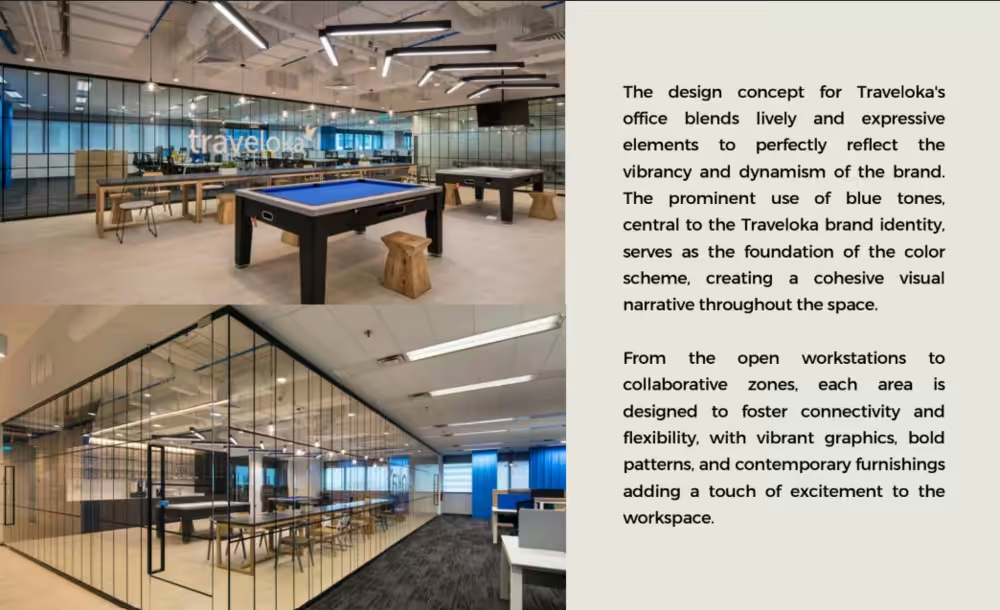
Open, brand-led zones support fluid teamwork and fast project cycles
These zones allow teams to assemble organically for rapid project cycles while still maintaining space for individual focus work. The result is an energetic, high-mobility workspace that mirrors Traveloka’s fast-moving digital culture.
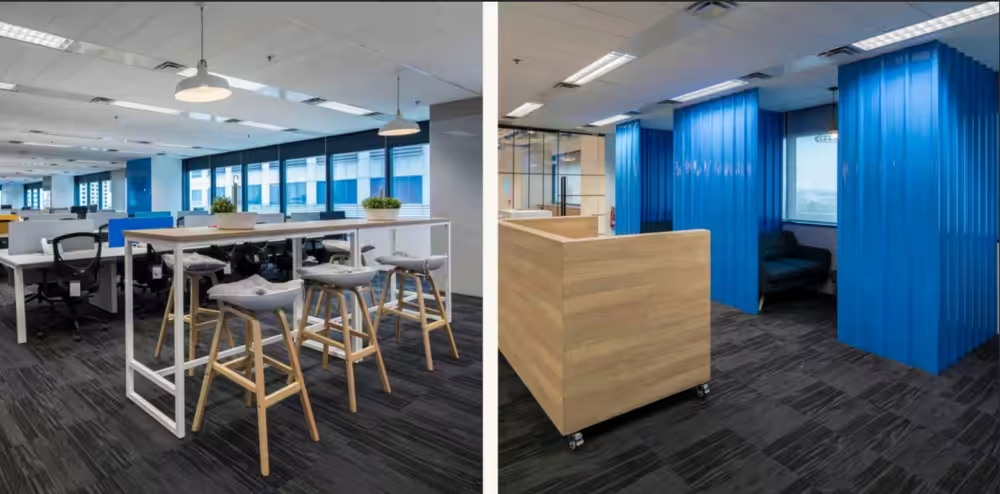
Hybrid-friendly workpoints let teams gather, focus, or collaborate freely
5.3. Accuracy – Branding-driven flexible layout
Accuracy’s office demonstrates how flexibility can coexist with strong brand identity. OSCA used the client’s geometric logo forms as repeating architectural accents while keeping the spatial layout intentionally open and reconfigurable.
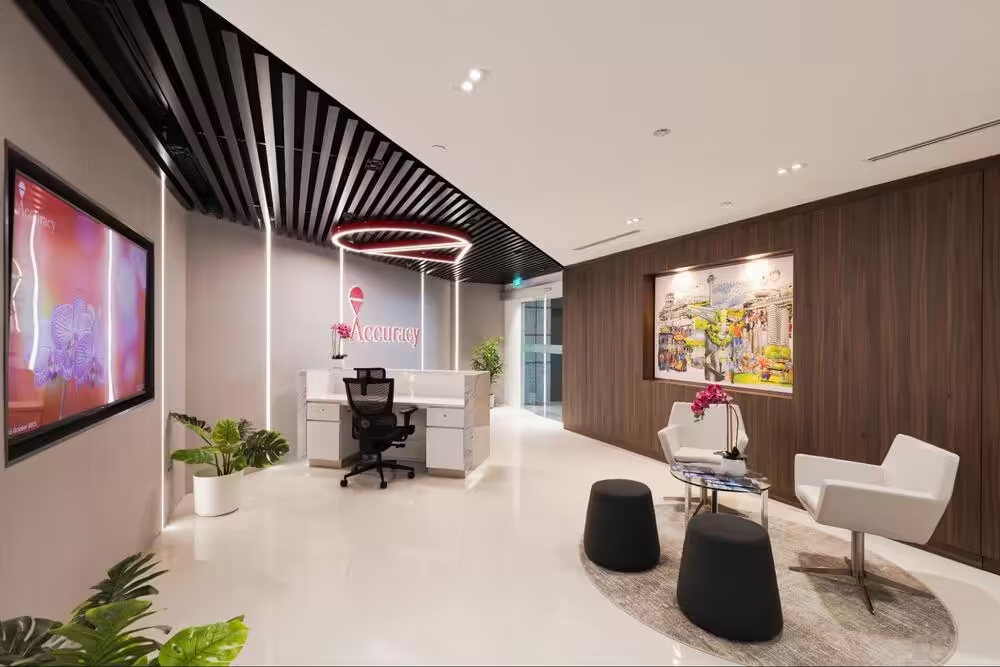
Geometric brand forms shape a flexible, reconfigurable office layout
Lightweight partitions, modular furniture, and clean circulation paths allow teams to adjust the space as headcount or work modes evolve. The design balances precision-a core element of Accuracy’s brand-with adaptability, creating a workplace that supports both structured collaboration and dynamic team growth.
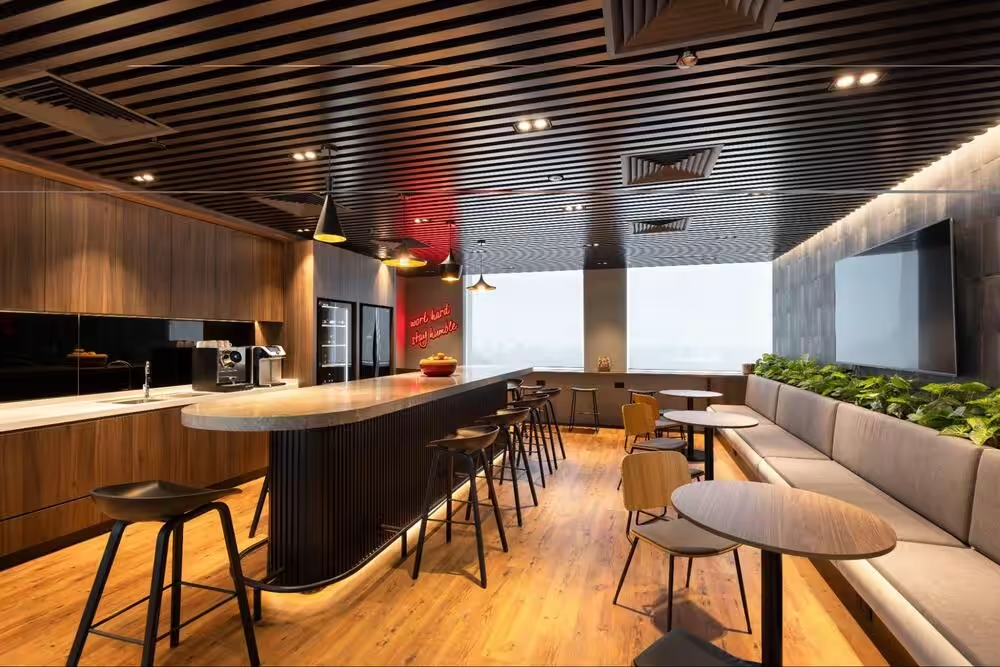
Lightweight modules let teams adapt the workspace as they grow
Flexible offices have become essential as hybrid work, evolving talent expectations, and spatial pressures continue to reshape Singapore’s workplace landscape. If your organisation is ready to create a flexible, future-ready workspace, OSCA Asia delivers end-to-end support – from workplace strategy and design through to construction and delivery.
Start your workspace transformation by speaking with our team today:
- Email: sg@osca.asia
- Phone: +65 6336 1800
- Website: osca.asia