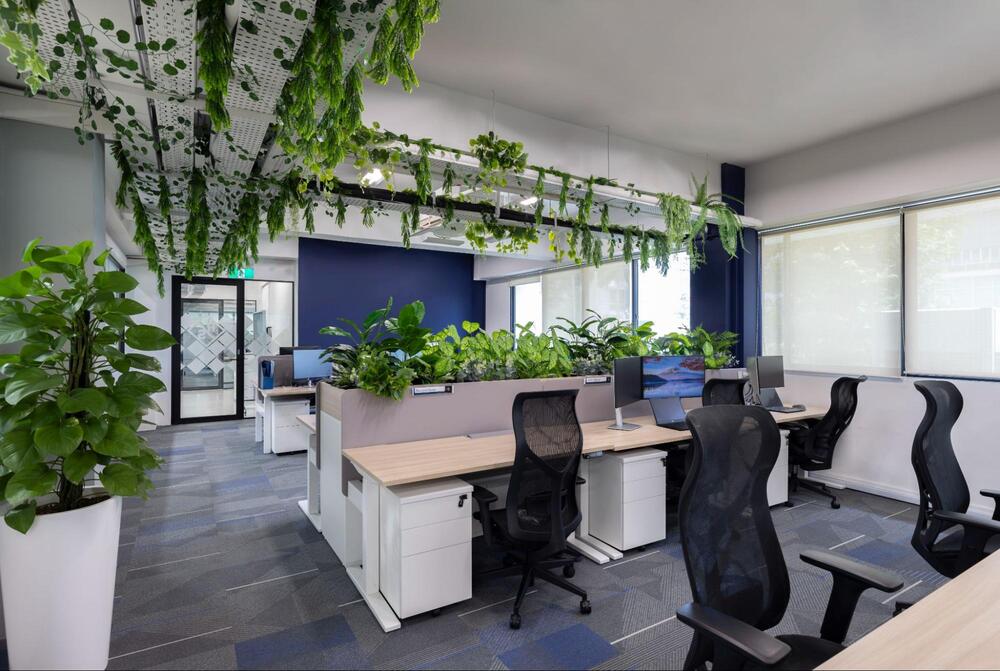
As workplace expectations continue to evolve, businesses are rethinking how office environments can better support employee well-being, productivity, and long-term sustainability. One of the most influential trends shaping modern workplace strategy is the rise of the biophilic design office. In this guide, OSCA explores what biophilic office design is, why it matters now and in the future, and how businesses can successfully apply it to enhance workplace performance.
1. What is a biophilic design office?
A biophilic design office is a workplace that integrates natural elements, environmental patterns, and human-centered spatial planning to strengthen the connection between employees and nature. The concept is based on the idea that people perform better, think more clearly, and feel healthier when they work in environments that reflect the natural world.
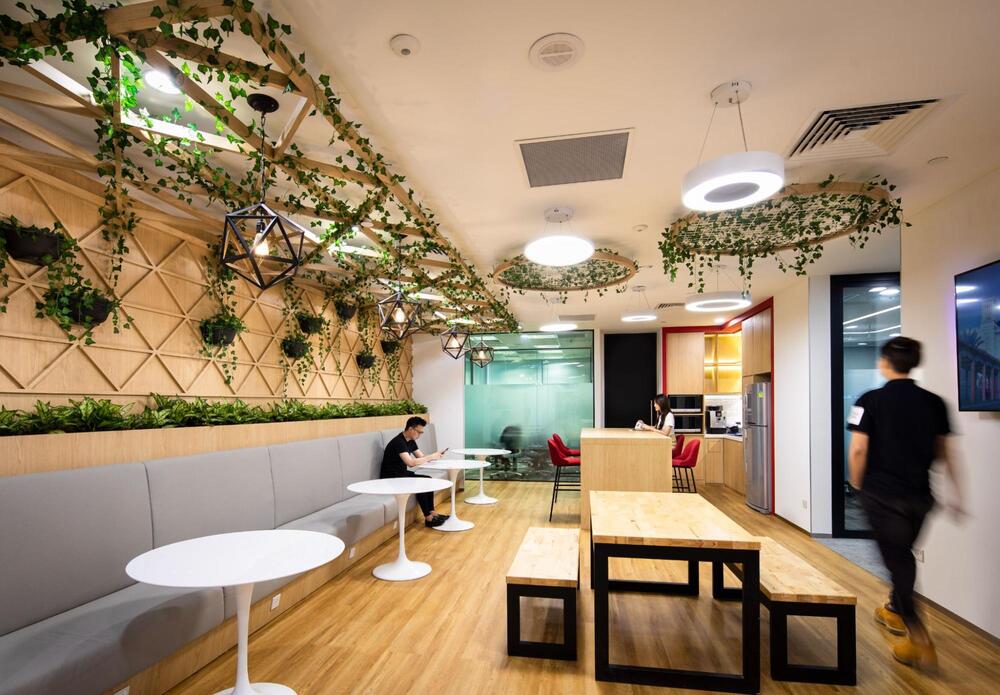
Overview of a modern biophilic design office
The foundation of biophilic design in office environments comes from the concept of biophilia. This theory was introduced by psychologist Erich Fromm and later expanded by biologist Edward O. Wilson. It explains that humans have an instinctive desire to connect with nature because human development evolved in natural environments over thousands of years. Environmental psychologists and workplace researchers have since studied how built environments affect human behavior. Their findings show that offices with access to natural light, greenery, ventilation, and organic materials often help reduce stress and improve focus. This research has shaped the way designers apply biophilic office interior design in commercial spaces today.
Although many people use the terms interchangeably, a green office and a biophilic design office are not the same. Both support healthier workplaces, but they focus on different priorities.
| Green office | Biophilic office |
| Focuses on sustainability and reducing environmental impact | Focuses on human connection to nature within the workspace |
| Prioritizes energy efficiency and eco-friendly operations | Prioritizes employee wellness and sensory experience |
| Includes recycled materials and sustainable systems | Includes natural light, greenery, textures, and spatial flow |
| Often measured by environmental certifications | Often linked to wellness and workplace performance outcomes |
A green office may reduce carbon footprint through energy-saving systems and sustainable materials. However, it may not create an immersive natural experience for employees. In contrast, biophilic office design combines sustainability with human-centered design to improve both environmental performance and workplace experience.
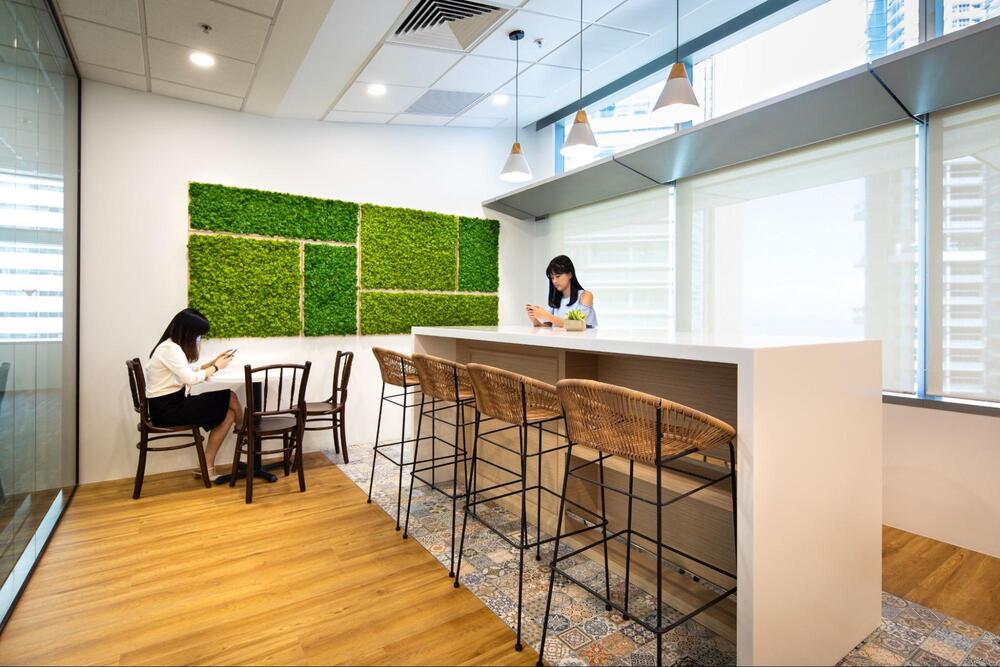
Natural elements in contemporary office interiors
2. Why biophilic office design matters in 2026?
The growing demand for biophilic design in the workplace is driven by three major business priorities: employee wellness, performance improvement, and environmental responsibility.
Enhancing employee well-being
Employee health remains one of the strongest reasons businesses invest in biophilic office interior design. Many workers spend more than eight hours per day indoors under artificial lighting and in enclosed spaces. Over time, this can increase stress, mental fatigue, and discomfort.
Research and workplace studies consistently show that biophilic design in office settings can help:
- Lower stress levels throughout the workday
- Improve mood and emotional stability
- Support mental recovery during breaks
- Reduce symptoms of workplace fatigue
- Improve indoor air quality and comfort
Boosting productivity and creativity
Beyond wellness, office biophilic design directly supports workplace performance. In 2026, businesses expect offices to drive measurable outcomes, including stronger focus, collaboration, and innovation. A carefully planned biophilic office space improves productivity by creating an environment where employees can focus better and think more clearly. Exposure to natural elements helps reduce cognitive overload, which can improve concentration during demanding tasks.
Supporting ESG and sustainable workplace goals
Sustainability is now a major factor in workplace planning. In 2026, companies are under greater pressure from stakeholders, investors, and employees to meet ESG goals. As a result, biophilic office design is increasingly used to support both sustainability and employee engagement objectives.
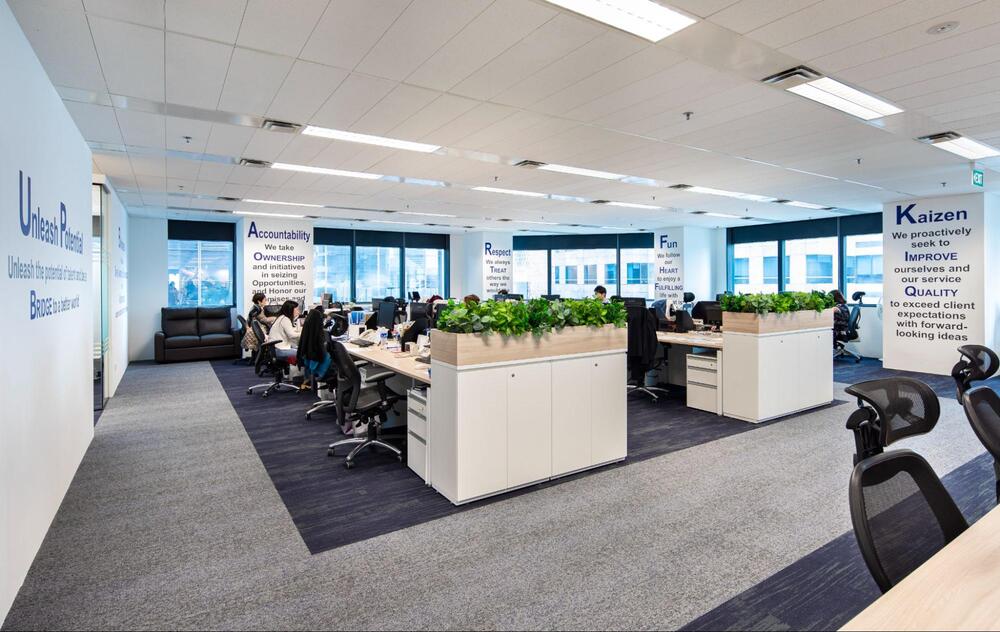
Employee wellness in a biophilic office environment
3. Key elements of a successful biophilic design office
To build an effective biophilic office space, businesses must combine architectural planning, environmental performance, and interior strategy. Below are the core elements that define successful biophilic office interior design in modern workplaces.
3.1 Natural light optimization
Natural light is one of the most valuable components of biophilic design in the workplace because it affects energy, mood, and concentration. Offices with poor daylight exposure often feel enclosed and can contribute to eye strain, fatigue, and low employee engagement.
To improve natural light in a biophilia office, workplace planners should:
- Position workstations near perimeter windows
- Use glass meeting rooms instead of solid enclosed walls
- Remove visual barriers that block daylight movement
- Apply open-plan layouts to distribute light evenly
- Use reflective finishes to extend brightness into deeper areas
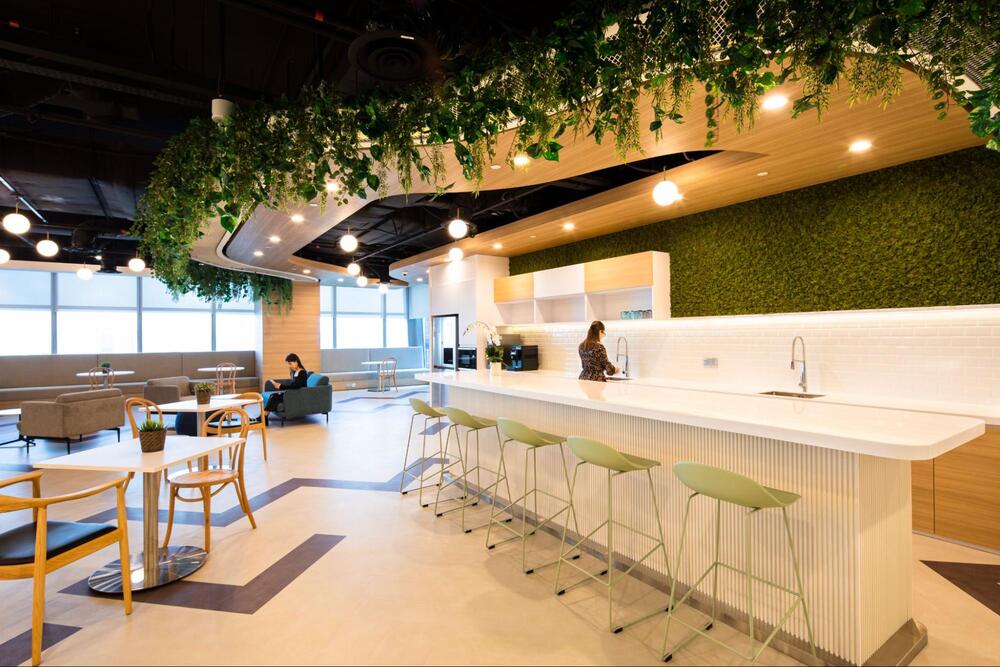
Open layout office maximizing daylight exposure
3.2 Indoor plants and green walls
Greenery remains one of the most recognizable elements of office biophilic design, but placement and integration matter more than quantity. Instead of scattering random plants throughout the office, businesses should use greenery to support zoning, circulation, and visual balance.
Effective plant integration includes:
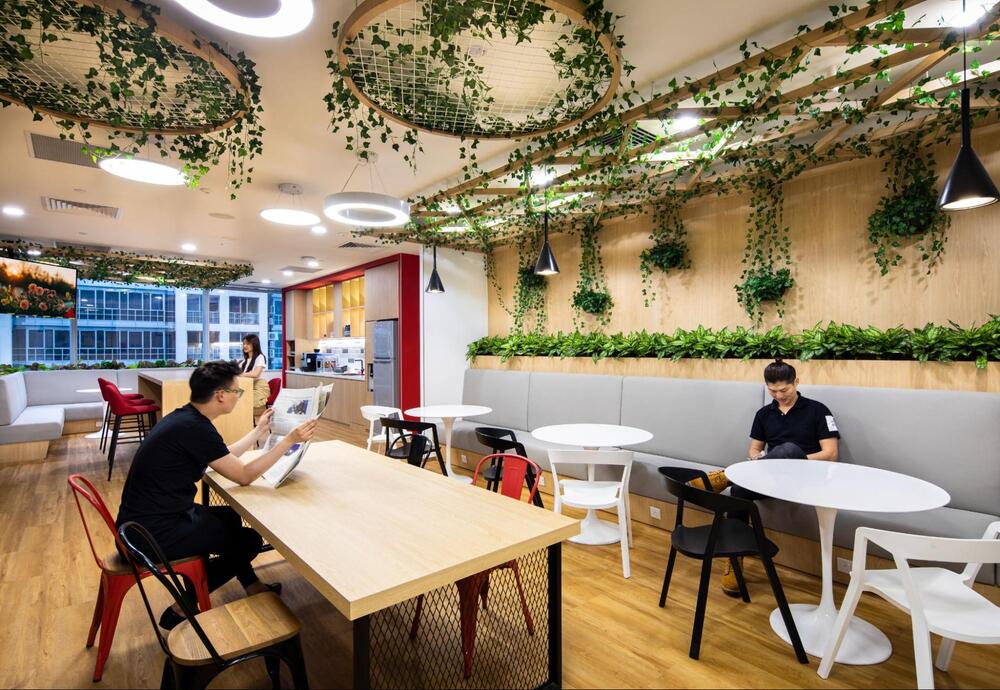
- Positioning modern office plants around shared work zones
- Installing vertical green walls in reception areas
- Using planter dividers between workstations
- Adding suspended greenery in breakout spaces
- Creating indoor landscape focal points for communal areas
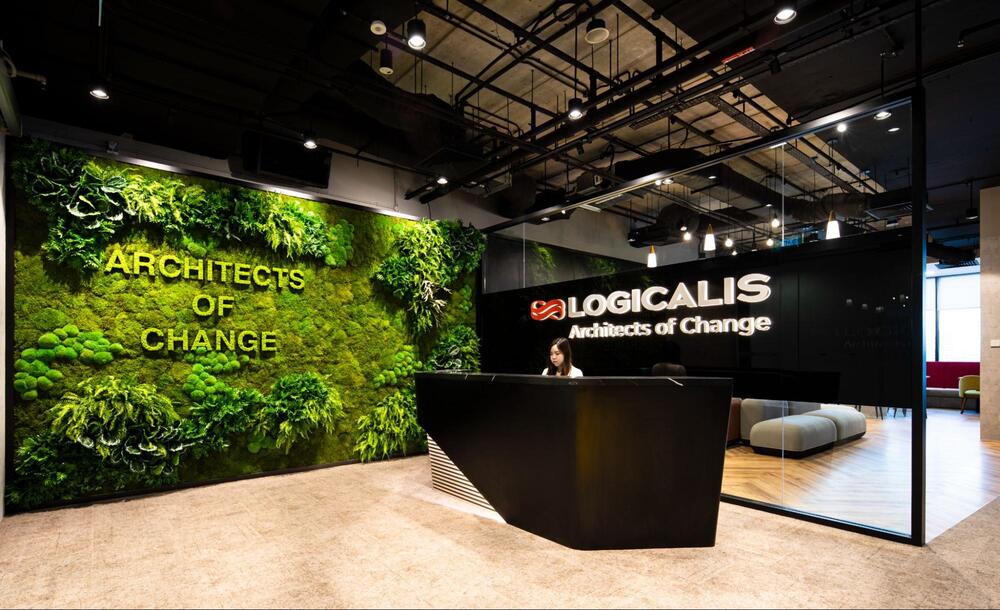
Indoor green wall feature in office interior design
3.3 Natural materials and textures
Material choice is essential in biophilic office interior design because employees interact with surfaces throughout the day. Natural textures create a more grounded and comfortable workplace experience by reducing the sterile feeling often found in commercial interiors.
Designers often incorporate:
- Timber desks, wall finishes, and flooring
- Stone textures in communal areas
- Recycled wood and eco-conscious furniture
- Linen, cotton, or woven upholstery fabrics
- Matte and textured finishes instead of glossy synthetics
Natural wood and stone materials in office interiors
3.4 Air quality and ventilation
Fresh air and ventilation are critical to the performance of any biophilic design office. Without proper airflow, even visually attractive spaces can become uncomfortable and unhealthy.
To improve air quality, businesses should implement:
- HVAC systems with fresh air circulation controls
- Air purification systems integrated into building services
- Layouts that encourage open airflow between zones
- Operable windows where building regulations allow
- Placement of modern office plants in high-density areas
Fresh air circulation in modern office design
3.5 Water features and sensory elements
A strong biophilic office design appeals to more than sight. Multi-sensory design creates a workplace that feels immersive and calming by engaging hearing, touch, and movement.
Sensory-focused features may include:
- Decorative water walls or fountains
- Nature-inspired acoustic soundscapes
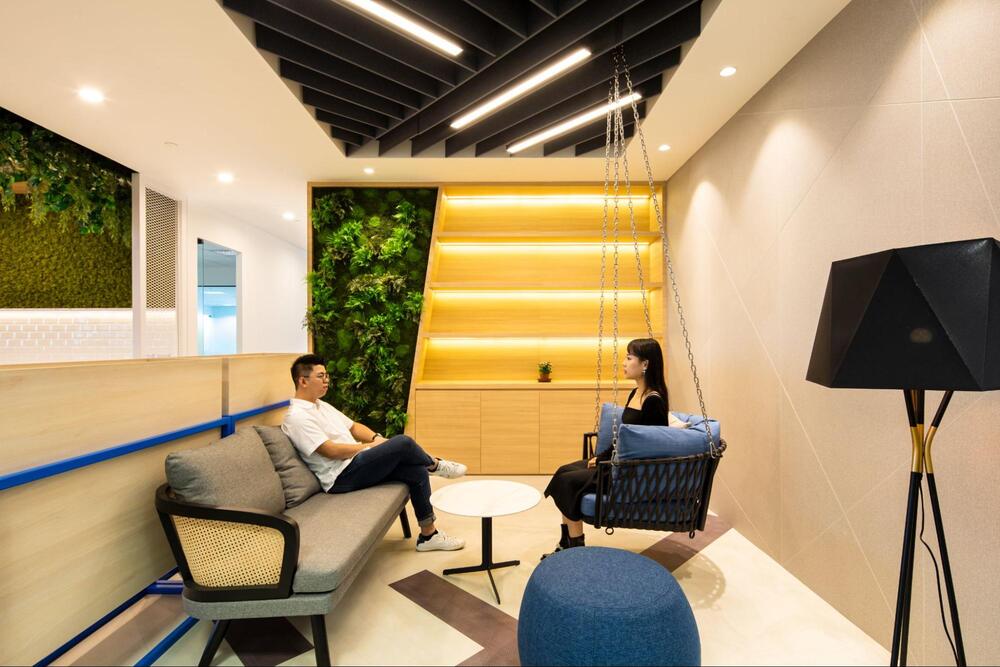
- Textural flooring transitions between zones
- Dynamic lighting that mimics daylight cycles
- Soft natural scent zoning in wellness areas
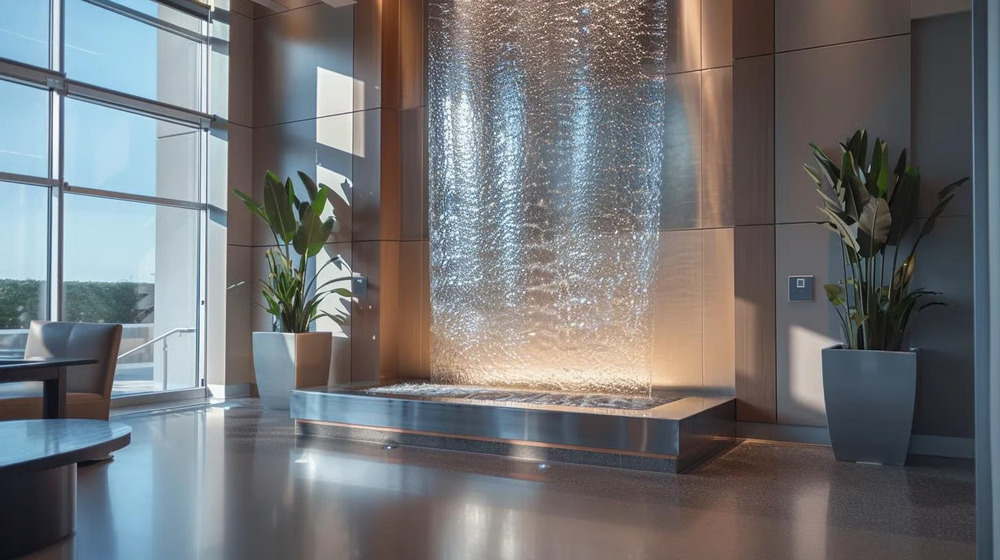
Water feature integration in biophilic workspace design
4. Types of biophilic office design
4.1 Direct nature integration
Direct nature integration refers to bringing real natural elements into the office environment. This is the most visible and widely recognized form of biophilic design in office planning because employees can physically see and interact with living or environmental features throughout the workplace.
Common direct integration methods include:
- Installing modern office plants around workstations and shared zones
- Building vertical green walls in receptions or breakout areas
- Maximizing window access for natural daylight
- Incorporating water features such as fountains or indoor water walls
- Allowing natural ventilation through operable windows or airflow systems
This method works well because it creates an immediate connection between employees and nature. Real greenery and daylight improve visual comfort while helping reduce the sterile atmosphere often found in corporate interiors.
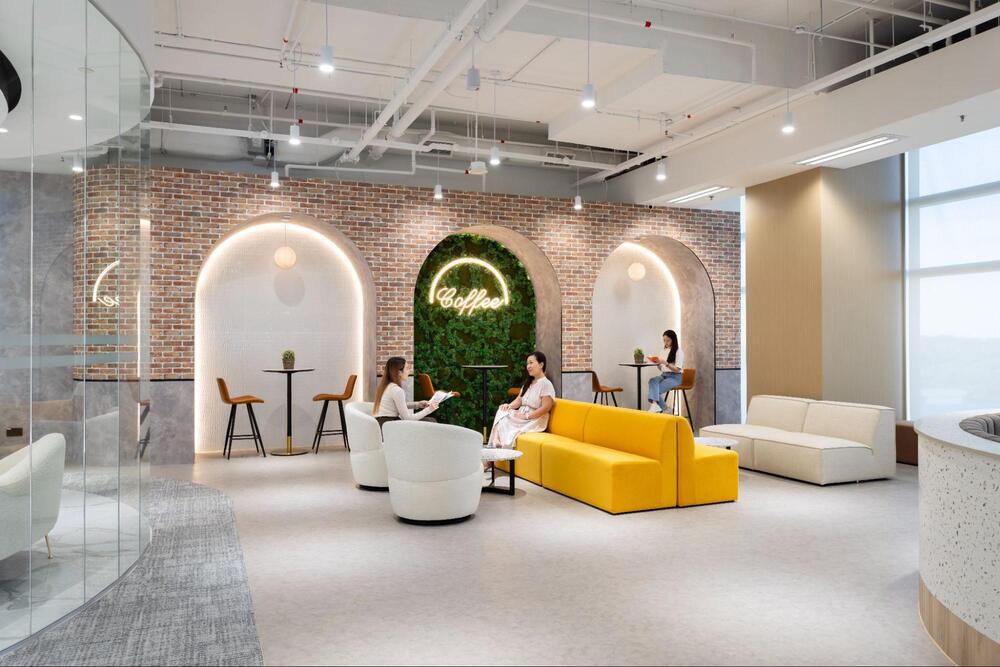
Direct nature integration in office interiors
When planning direct integration, businesses should:
- Select plant species suitable for indoor maintenance
- Place greenery where employees frequently gather or work
- Avoid overcrowding circulation areas with decorative planting
- Coordinate irrigation and maintenance systems early in design planning
- Combine greenery with lighting and airflow improvements for stronger impact
Healthy ventilation planning in biophilic office spaces
4.2 Indirect nature inspiration
Indirect nature inspiration uses design elements that reference nature without including actual living components. This approach is ideal for offices with limited access to natural light, maintenance constraints, or building restrictions.
Instead of live elements, designers apply:
- Natural materials such as timber, stone, bamboo, and cork
- Organic textures and woven finishes
- Nature-inspired patterns in walls, flooring, and fabrics
- Earth-tone or plant-inspired color palettes
- Curved forms and organic architectural shapes
Indirect strategies help reinforce biophilic office interior design even when live greenery or water features are not practical. This design approach supports visual and emotional comfort by mimicking the patterns and textures people naturally associate with outdoor environments.
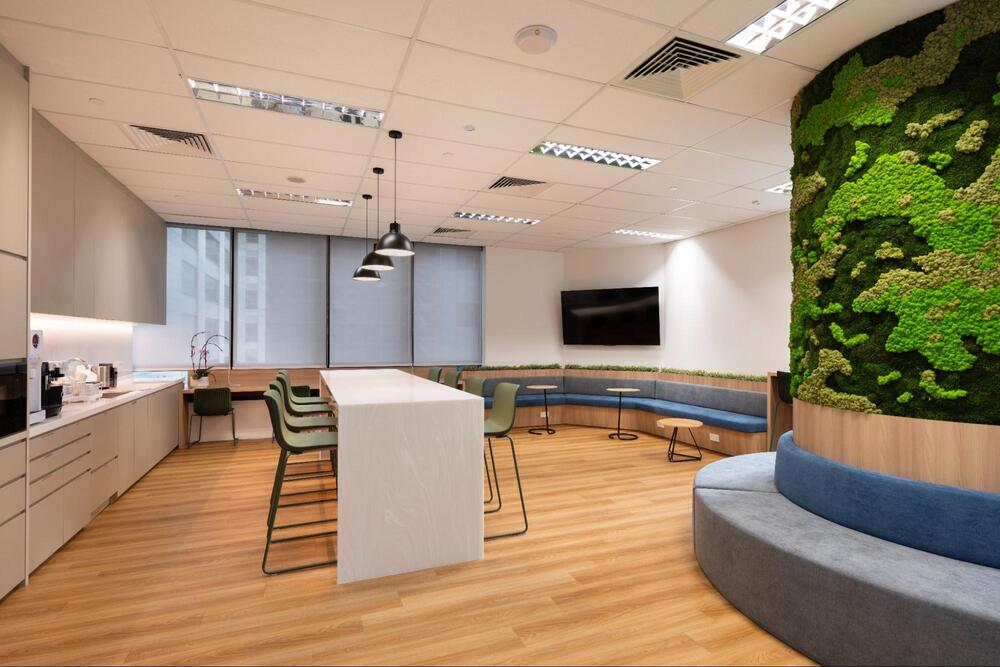
Indirect nature-inspired office design elements
Businesses should implement indirect nature inspiration by:
- Using authentic materials rather than synthetic imitations
- Applying natural textures across high-contact surfaces
- Combining patterns with restrained branding to avoid visual clutter
- Selecting finishes that balance warmth with durability
- Coordinating materials across furniture, flooring, and wall treatments
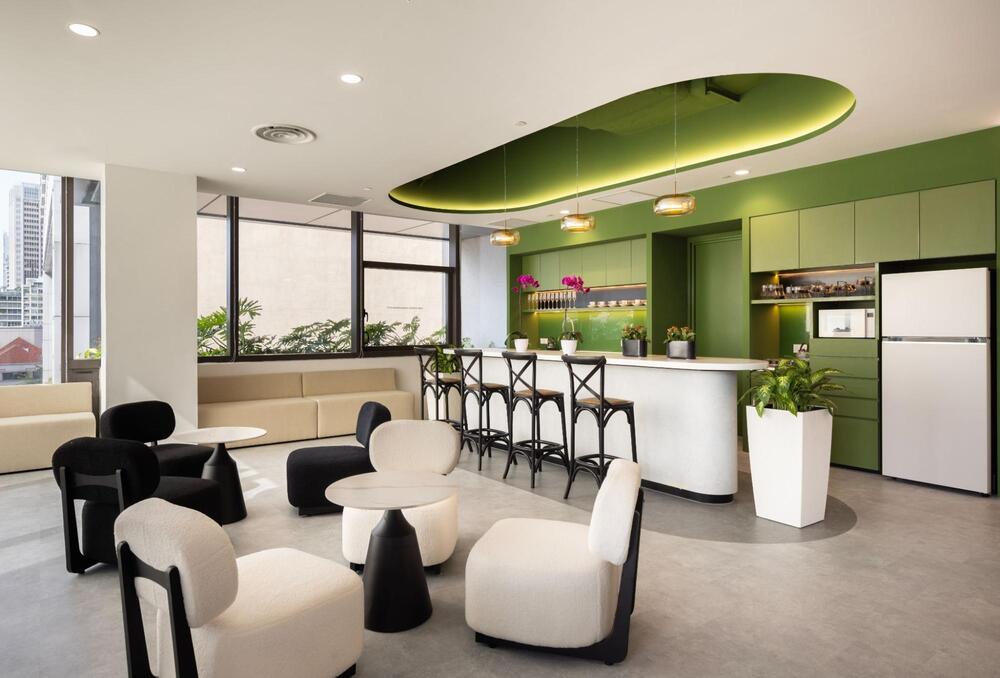
Organic textures in biophilic office design
4.3 Space and place-based design
Space and place-based design focuses on shaping the office layout to reflect how people move through and experience natural environments. Rather than adding decorative elements, this strategy adjusts workplace planning itself to improve flow, openness, and comfort.
Examples include:
- Designing open pathways that mimic natural movement patterns
- Creating layered zones for focus, collaboration, and relaxation
- Building quiet retreat areas for privacy and mental recovery
- Using varied ceiling heights to create spatial diversity
- Positioning communal hubs around natural focal points
This planning strategy improves the experiential side of biophilic design in the workplace because it helps employees feel less confined and more comfortable moving through the office.
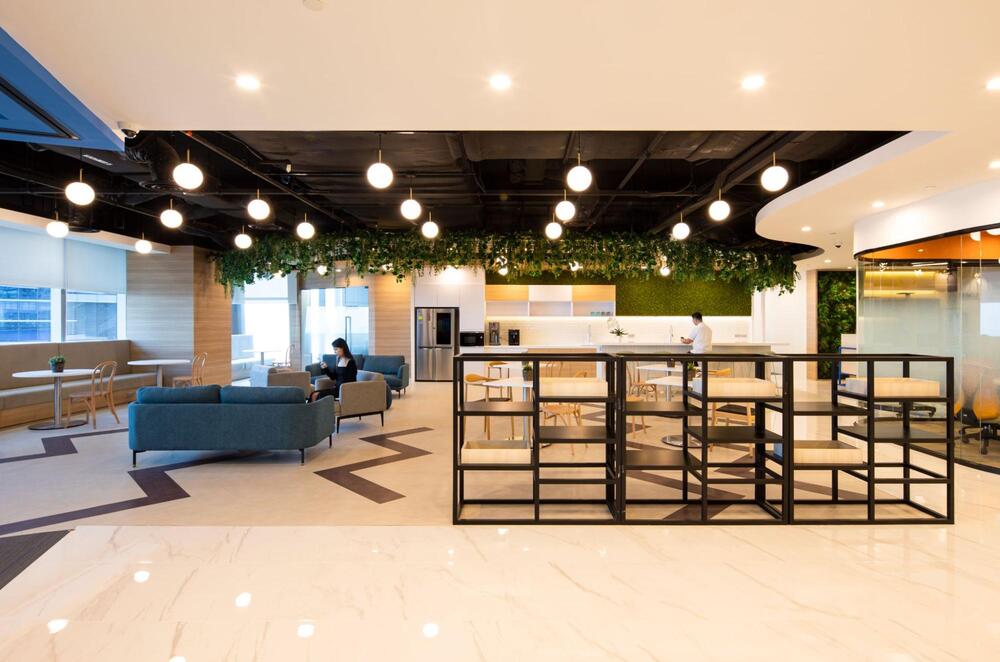
Spatial planning for biophilic office layouts
To apply this effectively, designers should:
- Study employee workflows before planning layout zones
- Separate quiet workspaces from high-traffic collaboration areas
- Ensure sightlines remain open across key office pathways
- Integrate breakout areas naturally within circulation routes
- Design transitions between spaces to feel fluid and intuitive
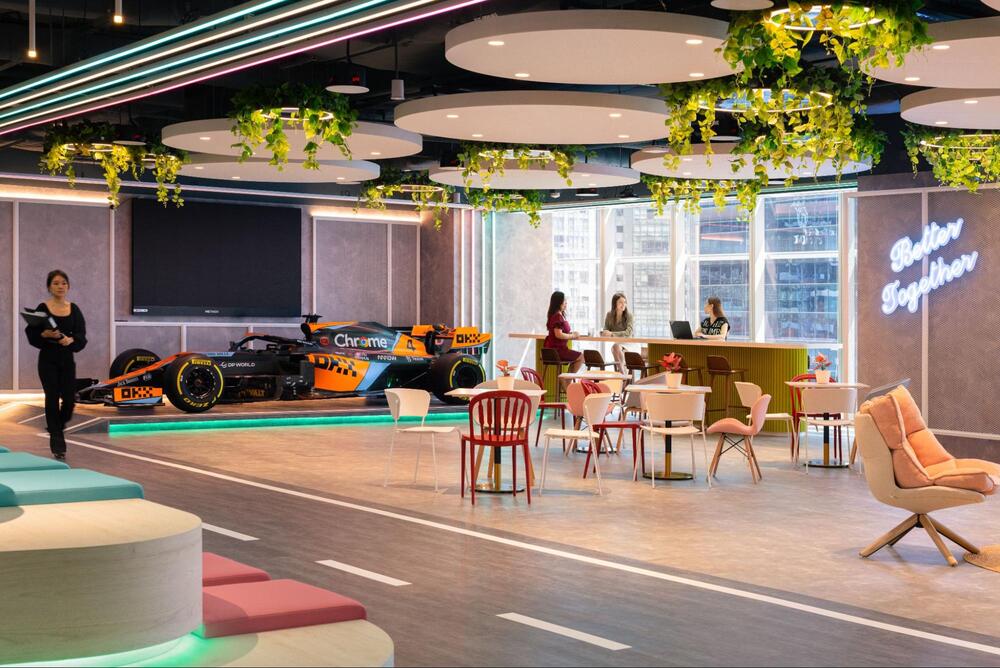
Modern office plants in collaborative workspaces
5. How does OSCA apply biophilic design in office projects?
As a commercial interior design and build specialist, OSCA applies biophilic design in the workplace through a structured process that combines workplace strategy, interior design, technical planning, and construction delivery.
Human-centric design planning from the start
OSCA begins every biophilic office interior design project with workplace analysis and strategy development. Before creating layouts or selecting materials, the team studies the client’s workflow, culture, employee needs, and business goals. This ensures that the final office design supports both people and performance.
The planning process includes:
- Reviewing employee movement and departmental workflow
- Identifying collaboration and focus zone requirements
- Assessing natural light access across the floorplate
- Studying ventilation and MEP limitations
- Evaluating future scalability and operational flexibility
This data-driven approach helps OSCA design biophilic office space solutions that align with both wellness standards and business performance objectives.
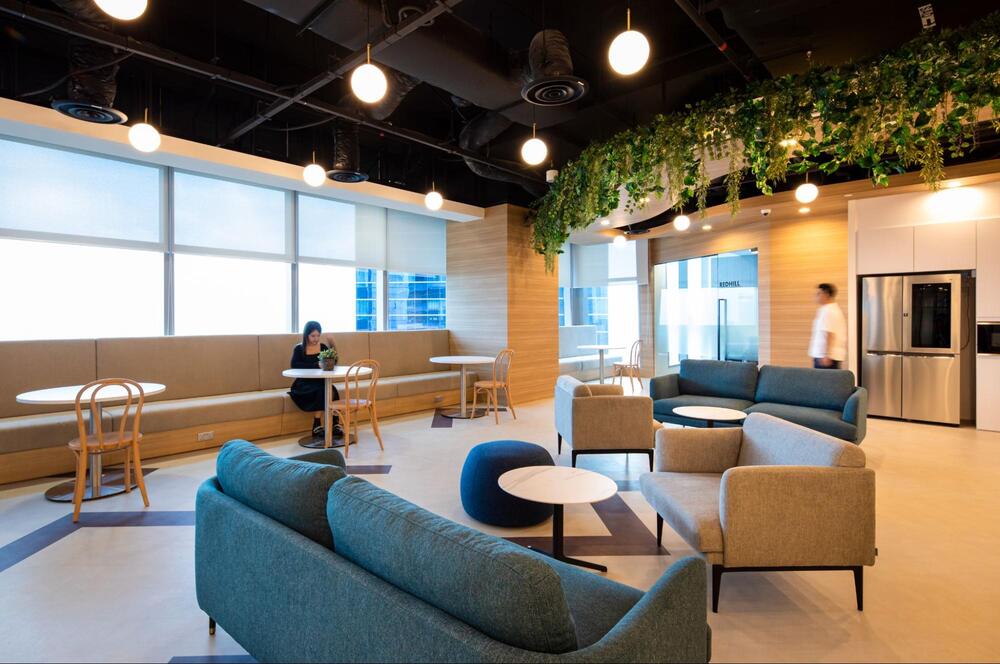
OSCA’s biophilic office design approach
Integrating natural light and spatial flow
One of the first principles OSCA applies in biophilic design in office planning is maximizing daylight and openness. The team designs layouts that improve visual flow and allow natural light to reach deeper into the workplace. This layout strategy creates brighter and more breathable office environments while improving how employees experience the space throughout the day.
Selecting materials that support wellness and sustainability
Material specification is another critical part of OSCA’s office biophilic design process. The team carefully selects finishes and furnishings that reflect natural textures while supporting durability, maintenance, and sustainability targets.
Typical material strategies include:
- Timber and wood-look finishes for warmth and texture
- Stone-inspired surfaces in collaborative areas
- Eco-friendly and recycled materials where suitable
- Acoustic fabrics with woven organic textures
- Matte finishes to reduce glare and visual fatigue
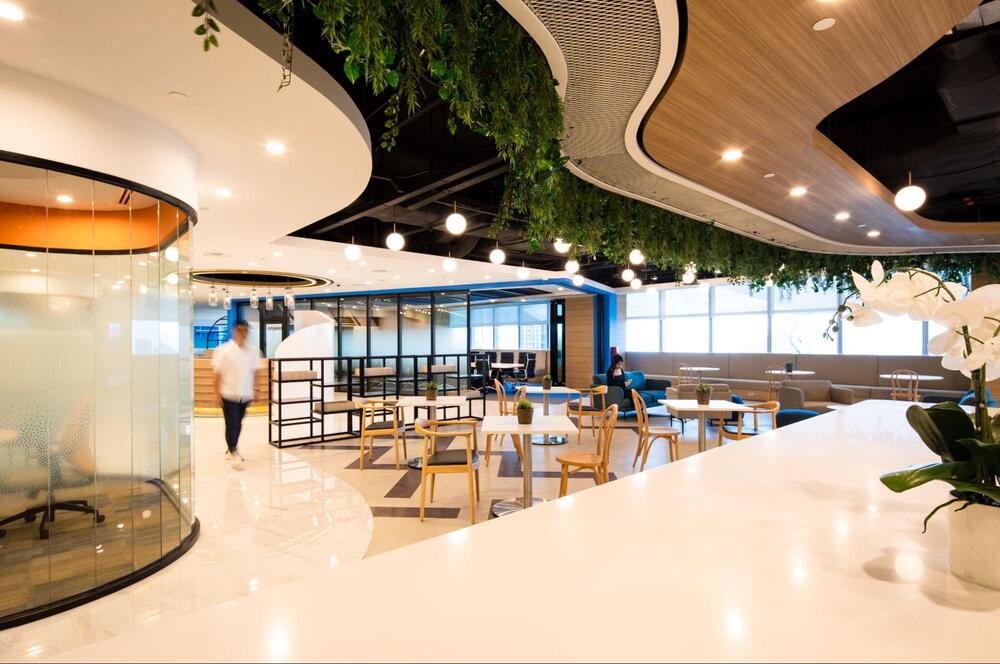
OSCA workplace strategy for human-centric offices
Delivering through end-to-end design & build expertise
What differentiates OSCA is its full-service Design & Build model. Rather than separating concept design from execution, OSCA manages the full delivery process from strategy to construction. This ensures that all biophilic office design elements remain aligned from concept through handover.
OSCA’s integrated service includes:
- Workplace strategy and feasibility studies
- Human-centric design planning
- MEP and technical coordination
- Project and construction management
- WELL and LEED consulting support
This end-to-end structure reduces design gaps, improves execution quality, and keeps workplace goals aligned throughout the project lifecycle.
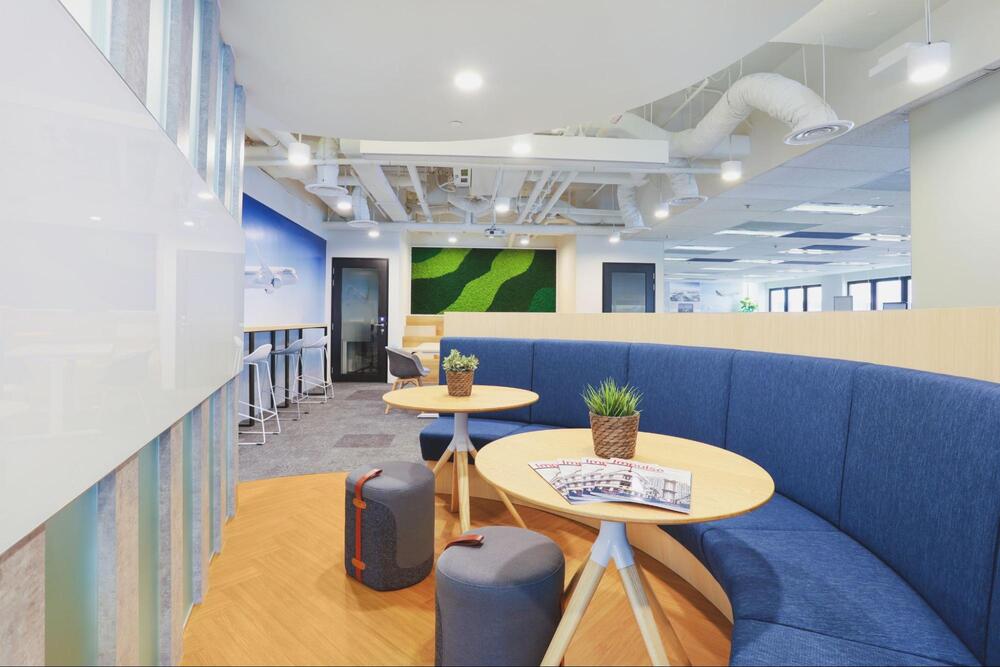
Biophilic office project designed by OSCA Asia
6. FAQs about biophilic design in the workplace
What if our office has no windows or natural light—can we still apply biophilic design?
Yes. A biophilic design office can still use circadian lighting, natural materials, greenery, and nature-inspired textures to create the benefits of biophilic design in the workplace even without windows.
Will biophilic features increase our office maintenance costs?
Not always. Many biophilic office design features, such as natural materials, lighting strategies, and preserved greenery, require little maintenance when planned properly.
Can biophilic design be integrated into a modern, tech-driven office without clashing with the aesthetic?
Yes. Biophilic office interior design can blend with modern workplaces by combining greenery, natural textures, and clean architectural lines to support both innovation and comfort.
How can we measure the impact of a biophilic design office on our employees and operations?
You can track the success of a biophilic office space through employee feedback, productivity levels, retention rates, absenteeism, and workplace wellness surveys.
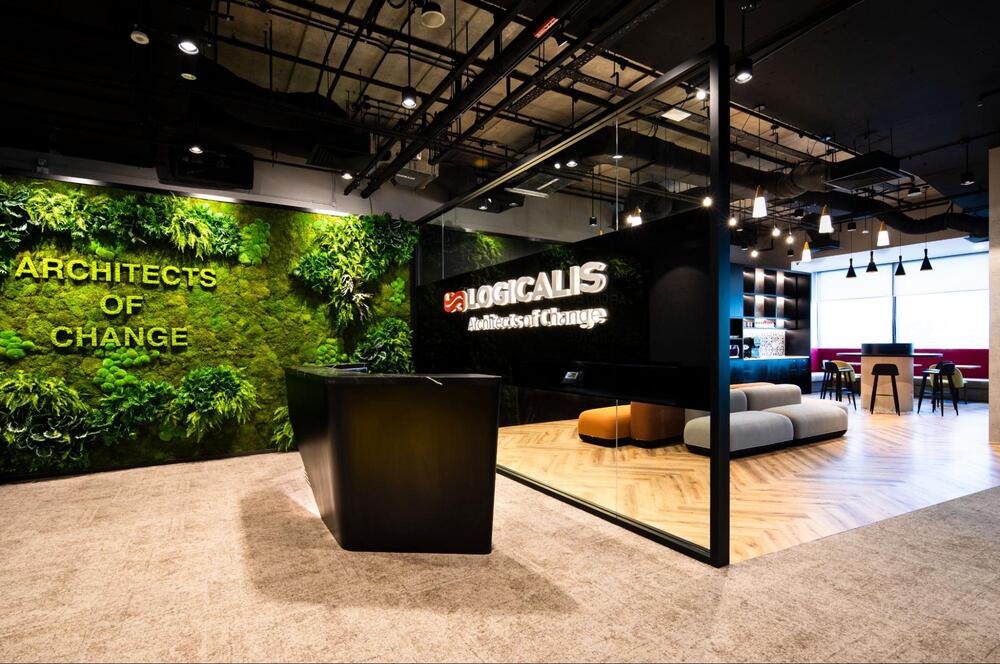
Smart biophilic solutions for offices without windows
A well-executed biophilic design office is more than an aesthetically pleasing workspace, it is a strategic investment in employee wellness, operational performance, and sustainable business growth. With expertise in workplace planning and design-build execution, OSCA helps businesses transform traditional offices into high-performing environments that balance nature, function, and brand identity.