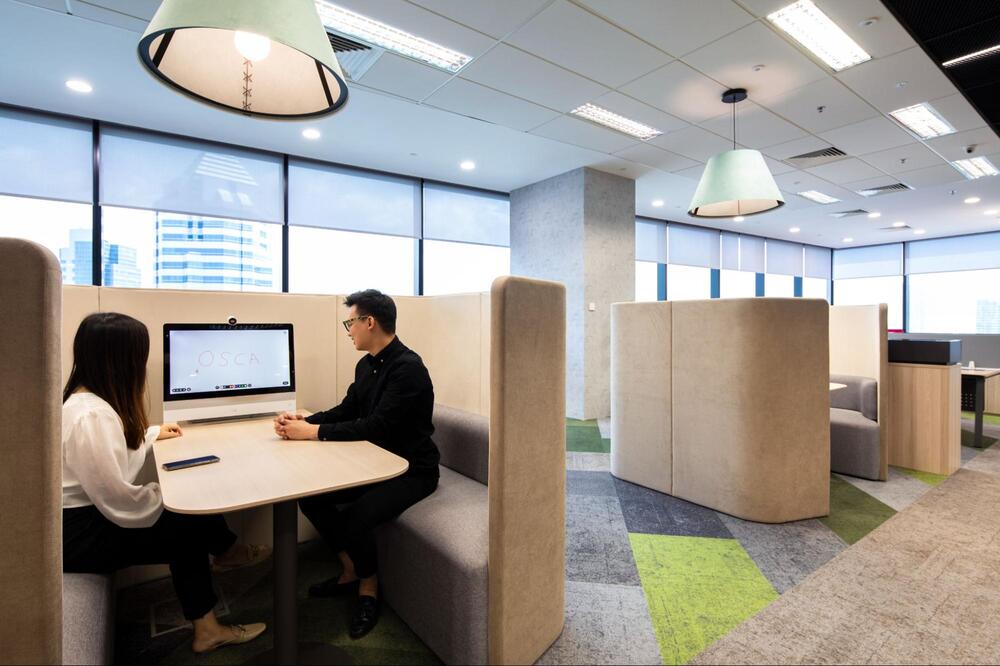
Noise is a common issue in modern offices. Open-plan layouts increase interaction but reduce focus. Many companies now use soundproof office furniture and acoustic office furniture to solve this problem without major renovation. This guide explains why acoustic solutions matter, what types to use, and how to apply them in a practical way. Let’s explore with OSCA in this article.
1. Why soundproof office furniture matters?
Noise is one of the main causes of lost focus in open-plan layouts. Many teams now use acoustic office furniture to solve this problem without changing the building structure.
Boost productivity
Noise reduces concentration and increases errors. Workers need quiet zones for deep work. Soundproof office furniture creates these zones without building walls. Acoustic office solutions help teams switch between tasks without disruption. This leads to faster output and better work quality.
Improve employee well-being
Noise affects stress levels and mental fatigue. Long exposure to noise can reduce job satisfaction. Acoustic furniture helps control this by reducing background sound. When employees have access to quiet areas, they recover faster and stay focused longer. This reduces burnout risk.
Enhance privacy
Privacy is critical for calls, meetings, and confidential work. Open offices often lack this. Soundproof furniture solves the issue without permanent construction. Acoustic office furniture allows teams to handle sensitive work without noise leakage. This is important for HR, finance, and management roles.
Support hybrid & Activity-based working
Modern offices support many work styles. Employees move between tasks during the day. Acoustic office solutions support this flexibility. This setup allows employees to choose the right space for each task. It improves efficiency and space utilization.
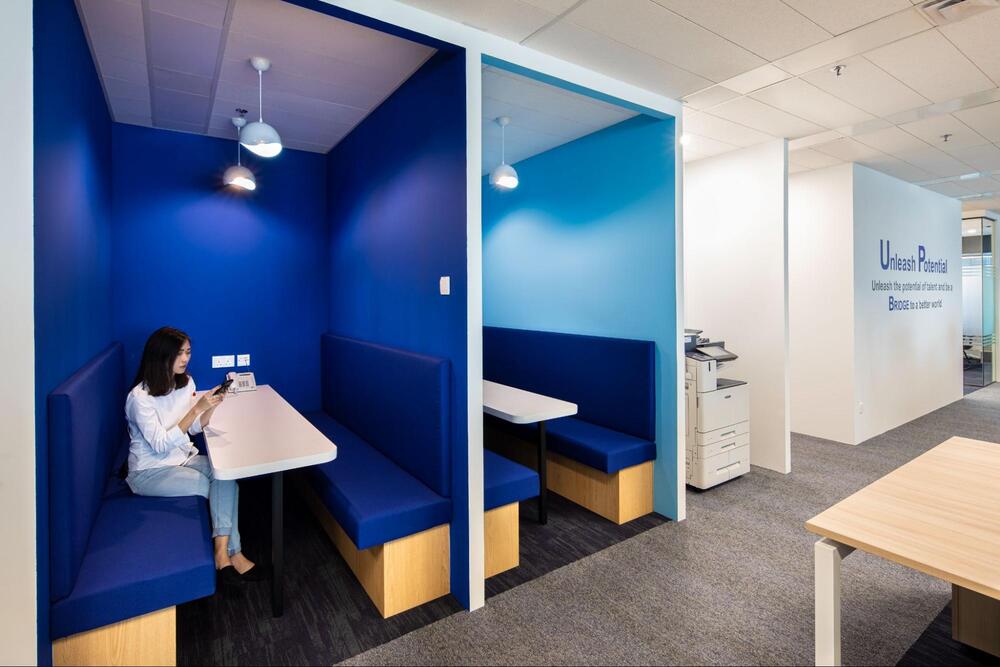
Acoustic furniture reducing noise in open office layouts
2. Types of soundproof office furniture
Soundproof office furniture includes a range of products designed to reduce noise, control echo, and create functional work zones. Each type serves a specific purpose. Choosing the right mix of acoustic office furniture and soundproof furniture helps you solve real noise problems without major renovation.
2.1 Acoustic pods & Phone booths
Acoustic pods and phone booths are enclosed units designed for individual or small group use. They are key elements in acoustic office solutions because they isolate sound without building permanent rooms.
To implement effectively:
- Place pods in open-plan areas where noise is high.
- Use single-user booths for calls and video meetings.
- Use small pods (2–4 people) for short discussions.
- Ensure power outlets and ventilation are included.
- Keep a distance from main walkways to reduce disturbance.
Benefits:
- Reduce noise leakage
- Improve call clarity
- Provide instant private space
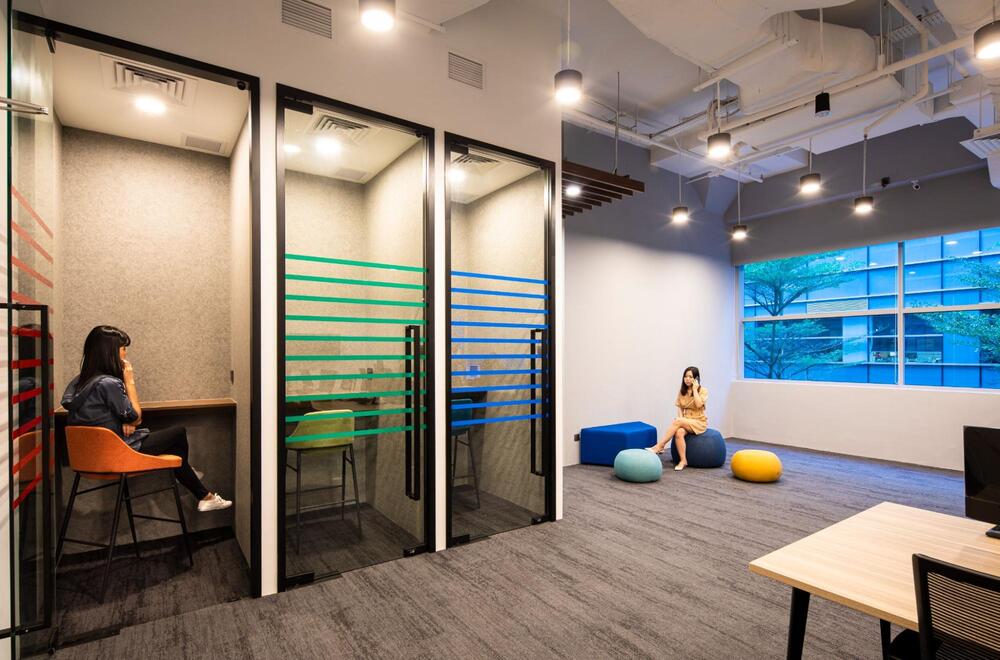
Acoustic phone booth for private calls in open offices
2.2 Soundproof meeting booths
Soundproof meeting booths act as small meeting rooms. They support team discussions without affecting the surrounding space.
Follow these steps:
- Identify teams that need frequent short meetings.
- Install booths near team zones for easy access.
- Choose sizes based on team count (4–8 people).
- Add screens or monitors for presentations.
- Set booking rules to manage usage.
Use cases:
- Project discussions
- Client calls
- Internal reviews
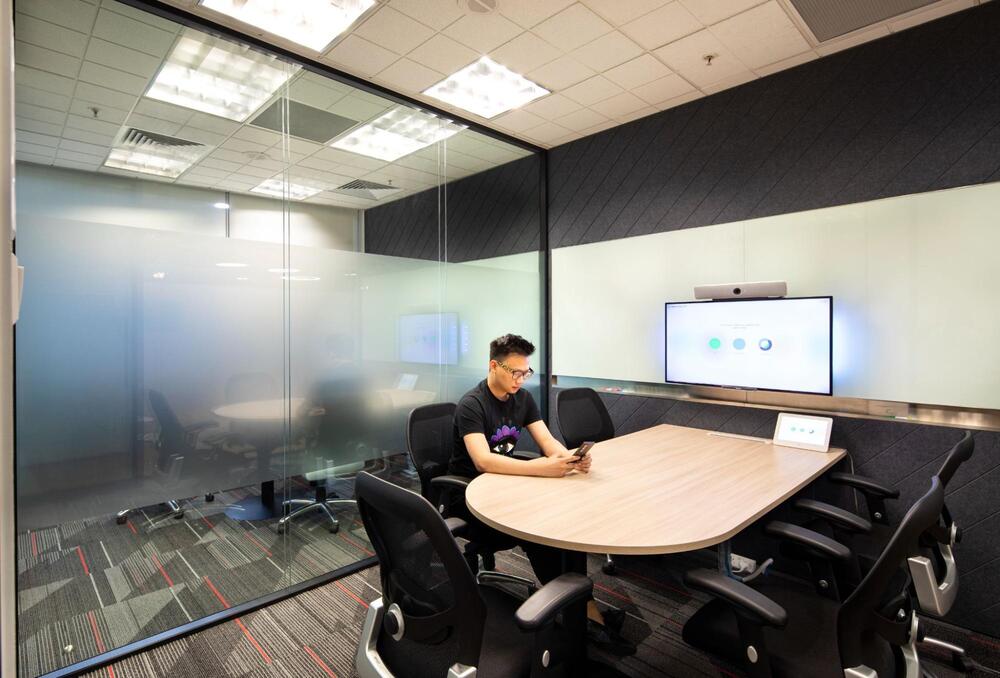
Soundproof meeting booth for small team discussions
2.3 Acoustic panels & Partition systems
Acoustic panels and partitions are one of the most flexible acoustic furniture office solutions. They absorb sound and reduce echo.
To apply them:
- Install wall panels near noise sources.
- Use desk partitions for desk soundproofing.
- Place freestanding panels between teams.
- Combine panels with soft flooring for better results.
Types include:
- Wall-mounted panels
- Desk dividers
- Movable partitions
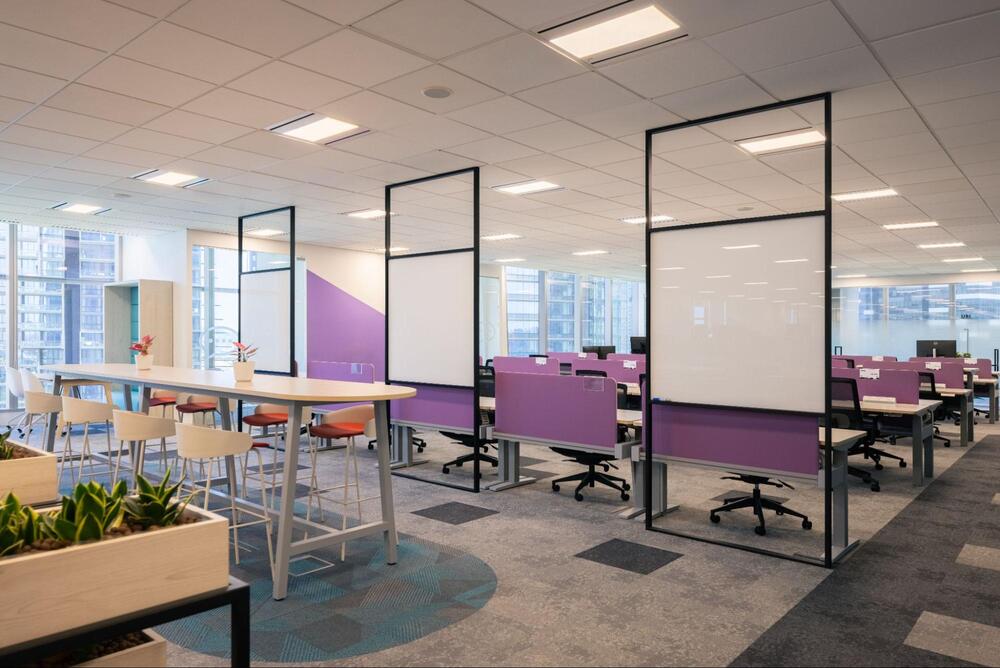
Acoustic wall panels reducing noise and echo in offices
2.4 Sound-absorbing office chairs and sofas
Sound-absorbing chairs and sofas use materials that reduce noise. They are useful in shared and informal spaces.
To use them well:
- Place them in the lounge and waiting areas.
- Combine with acoustic panels for better performance.
- Use high-back designs to block sound.
- Arrange seating to create semi-private zones.
Benefits:
- Reduce ambient noise
- Support informal meetings
- Improve comfort without adding noise
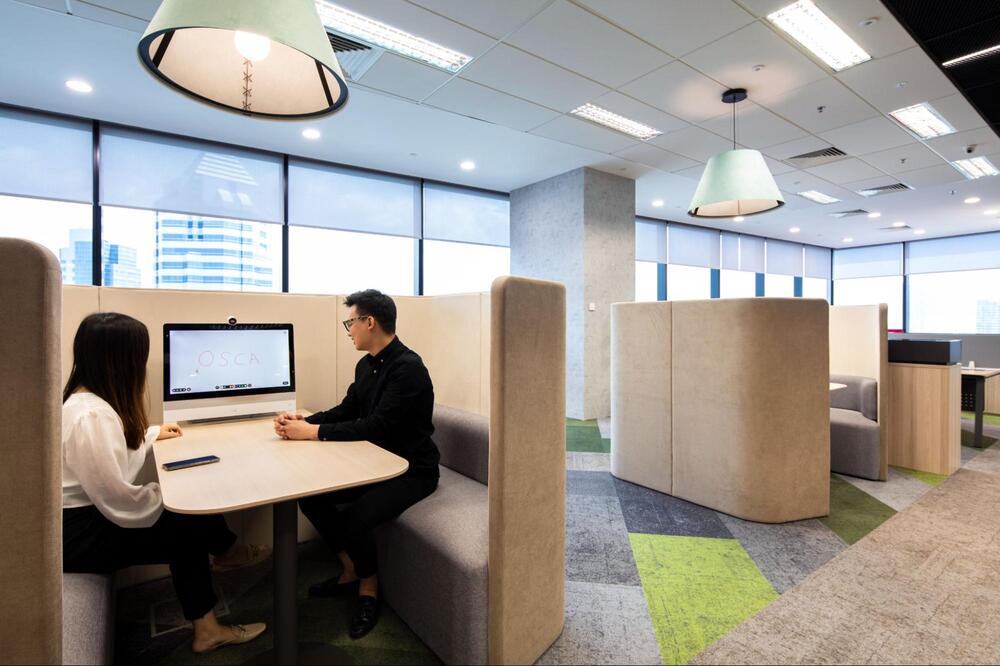
Acoustic lounge seating for informal office meetings
2.5 Acoustic desks & Workstations
Acoustic desks and workstations include built-in panels that reduce noise at the individual level. They support focused work in open offices.
Implementation steps:
- Install desks with side and back panels.
- Position desks away from main traffic paths.
- Combine with sound proof cubicles for high-focus roles.
- Add personal desk soundproofing screens if needed.
Key advantages:
- Improve concentration
- Reduce cross-noise between employees
- Easy to integrate into existing layouts
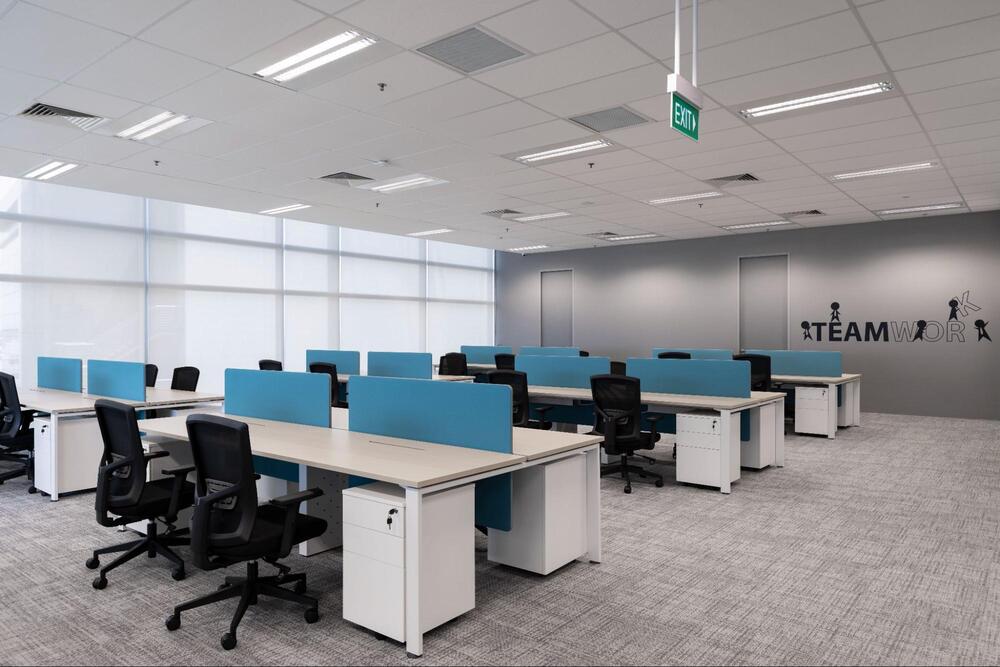
Office desks designed for noise reduction and productivity
2.6 Ceiling and hanging acoustic elements
Ceiling and hanging acoustic elements control noise from above. They reduce echo and improve overall sound quality.
To install:
- Identify areas with high echo (large open spaces).
- Add acoustic baffles or clouds to the ceiling.
- Position elements above workstations and meeting zones.
- Combine with wall panels for full coverage.
Common types:
- Baffles (vertical panels)
- Clouds (horizontal panels)
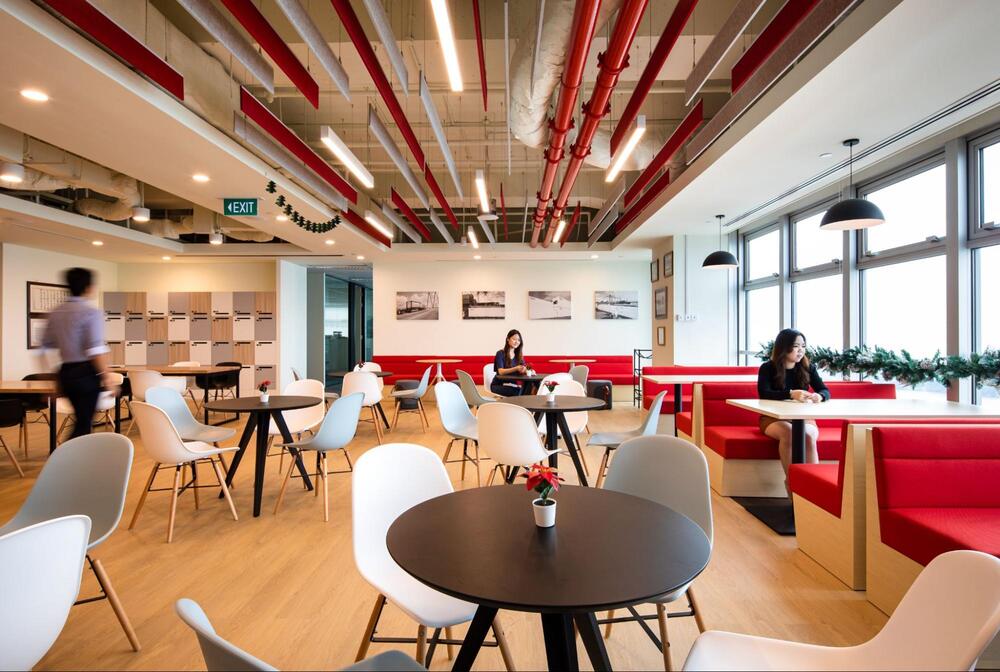
Ceiling acoustic baffles for large open office spaces
3. Design strategies to maximize acoustic performance
Acoustic performance does not depend on one product. It depends on how you plan, place, and combine elements. Soundproof office furniture works best when it is part of a clear strategy. This section explains how to design a workspace that controls noise and supports different work modes.
Zoning the workspace for noise control
Zoning is the foundation of acoustic design. It separates activities based on noise level. Without zoning, even the best soundproof furniture will not perform well.
You can create zones with the following steps:
- Identify key activities: focus work, collaboration, calls
- Assign each activity a dedicated area
- Place quiet zones away from entrances and walkways
- Use sound proof cubicles and pods for private tasks
- Use open areas for collaboration
Recommended zoning model:
- Quiet zone: deep work, supported by desk soundproofing and acoustic desks
- Semi-quiet zone: small group work with partitions
- Collaboration zone: open discussion areas
- Private zone: booths and enclosed pods
Key result: Noise is contained within each zone. Employees choose spaces based on their tasks.
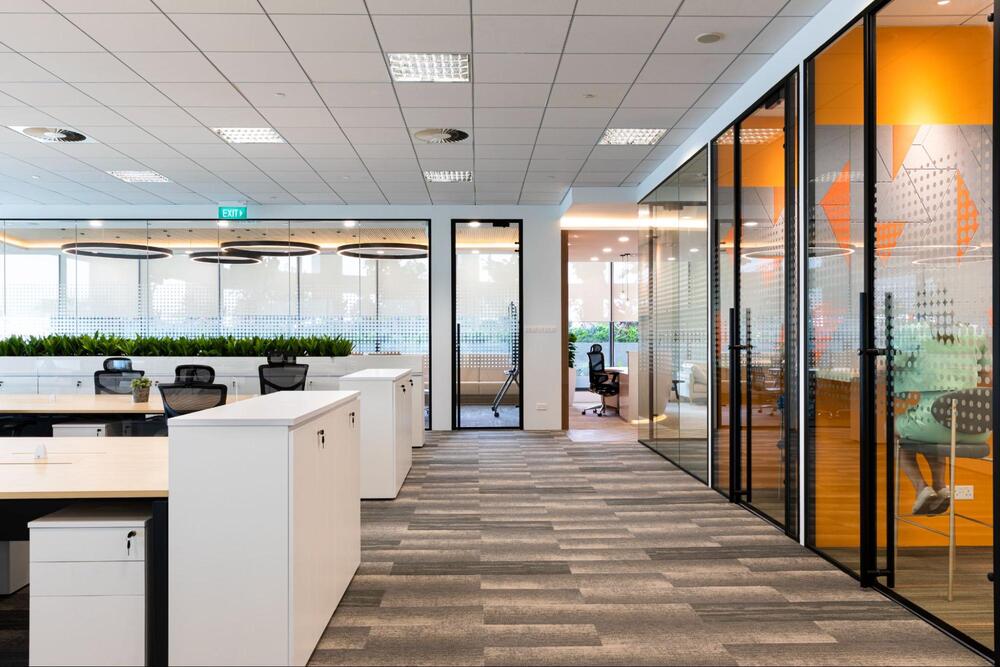
Office zoning strategy for acoustic performance optimization
Combine furniture with acoustic materials
Furniture alone cannot solve all acoustic problems. You must combine acoustic furniture with surface materials to control sound reflection and absorption.
Apply this method:
- Use acoustic office furniture such as pods and panels to block direct noise
- Install wall panels to absorb reflected sound
- Add carpet or soft flooring to reduce footstep noise
- Use ceiling baffles to control echo in large spaces
- Select upholstered seating to support sound absorption
Key result: Sound is managed at multiple levels: source, path, and reflection.
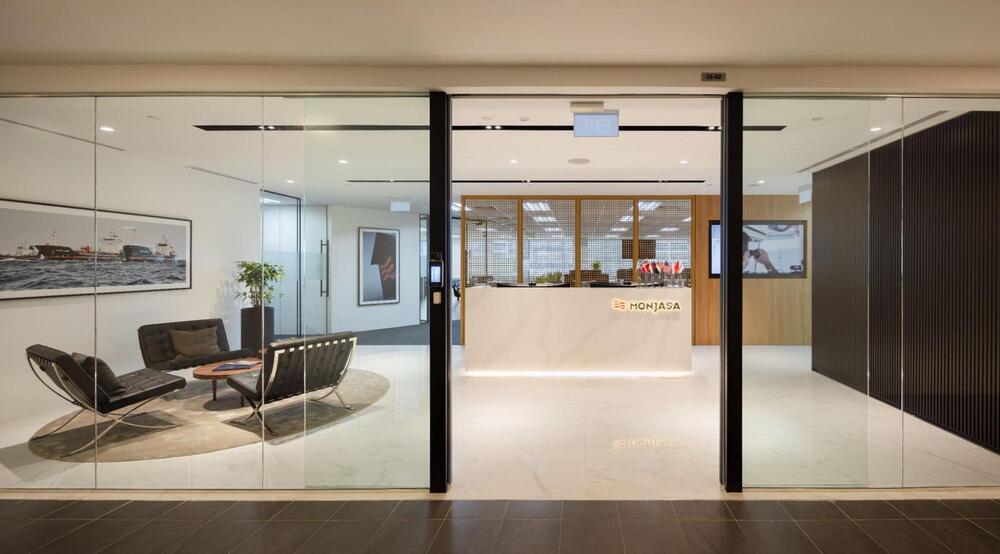
Combining acoustic furniture and materials for noise control
Optimize layout and circulation
Layout planning controls how sound travels through the office. Poor layout spreads noise across all areas. A clear layout limits noise movement.
Follow these steps:
- Place noisy functions (pantry, collaboration zones) at the edge of the office
- Keep quiet zones in deeper areas
- Avoid placing walkways through focus zones
- Use soundproof office furniture to create barriers along circulation paths
- Position sound proof cubicles away from main traffic routes
Layout principles:
- Separate high-noise and low-noise areas
- Reduce direct sound paths between zones
- Use furniture as acoustic buffers
Key result: Noise does not travel freely across the workspace.
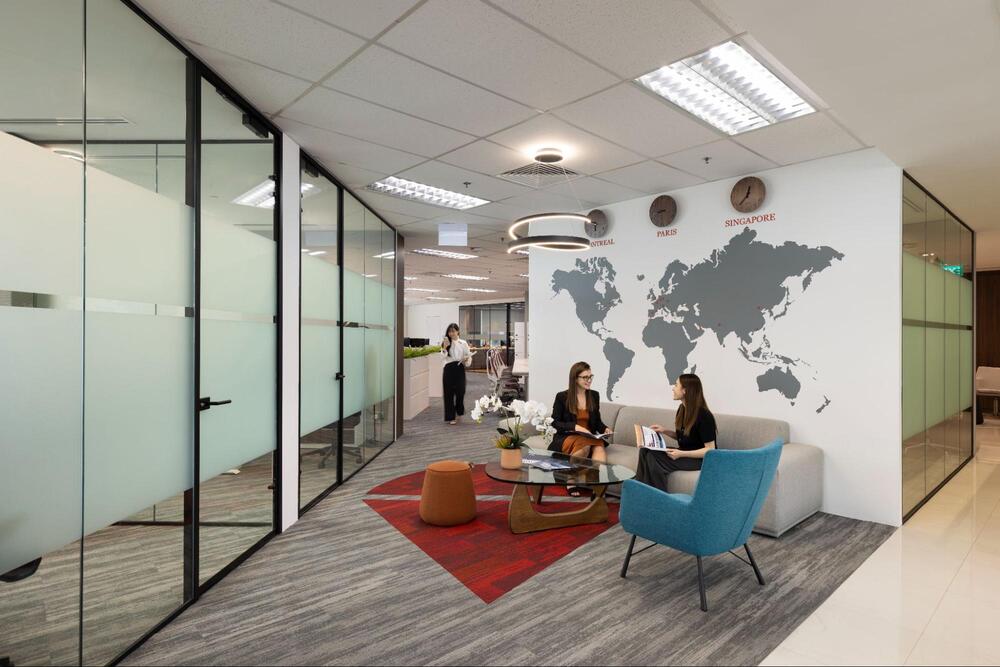
Smart office layout planning with soundproof furniture
Layer acoustic solutions for better performance
A single solution is not enough. Effective acoustic office solutions use multiple layers. Each layer handles a different part of sound control.
Build layers in this order:
- Layer 1: Soundproof furniture (pods, booths) for isolation
- Layer 2: Acoustic furniture office elements (panels, partitions) for blocking
- Layer 3: Surface materials for absorption
- Layer 4: Ceiling elements for echo control
Example setup:
- Install pods for calls
- Add desk partitions for desk soundproofing
- Use wall panels in meeting areas
- Install ceiling baffles in open zones
Key result: Noise is reduced at every stage, from source to environment.
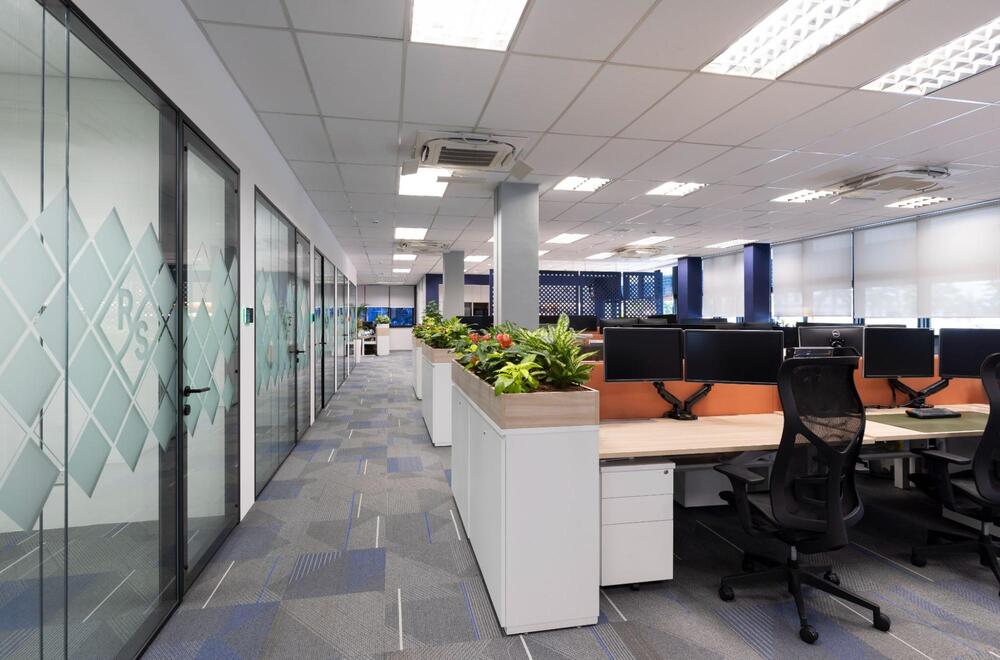
Layered acoustic office solutions for better sound management
4. Why work with OSCA for acoustic office design?
End-to-end design & build process
OSCA uses a structured workflow to deliver effective acoustic office furniture solutions. Each step is based on real project experience and industry standards.
- Step 1: Workplace Assessment
- Step 2: Concept Design
- Step 3: Detailed Design
- Step 4: Build & Installation
- Step 5: Post-Installation Review
This process ensures that soundproof office furniture is not used in isolation but as part of a complete system.
Proven experience in Singapore & Asia
OSCA has experience in designing workplaces across Singapore and Asia. These markets often require high standards for noise control, space efficiency, and compliance.
This experience allows OSCA to:
- Apply tested acoustic office solutions
- Avoid common design mistakes
- Deliver consistent results across different office types
For example, offices in dense urban areas often face external noise. OSCA integrates soundproof furniture with building elements to reduce this impact. This includes combining acoustic furniture with wall, ceiling, and flooring systems. Working with an experienced partner reduces uncertainty and improves project success rates.
Integrated acoustic office solutions
OSCA does not treat acoustic office furniture as standalone products. The team integrates multiple systems into one solution.
Key components include:
- Soundproof office furniture (pods, booths, desks)
- Acoustic panels and partitions
- Ceiling and flooring treatments
- Space planning and zoning strategies
This integrated approach ensures:
- Better noise control
- Efficient use of space
- Consistent user experience
Workplace strategy and sustainable design
OSCA combines acoustic design with workplace strategy. This ensures that the office supports real work patterns, not just aesthetics.
Steps used in strategy planning:
- Analyze how teams work daily
- Define required spaces and functions
- Align acoustic office furniture with business needs
- Plan for future growth and flexibility
Sustainability is also part of the process:
- Use materials with long life cycles
- Reduce the need for major renovations
- Optimize energy use through smart layouts
This approach ensures that soundproof furniture solutions remain effective over time.
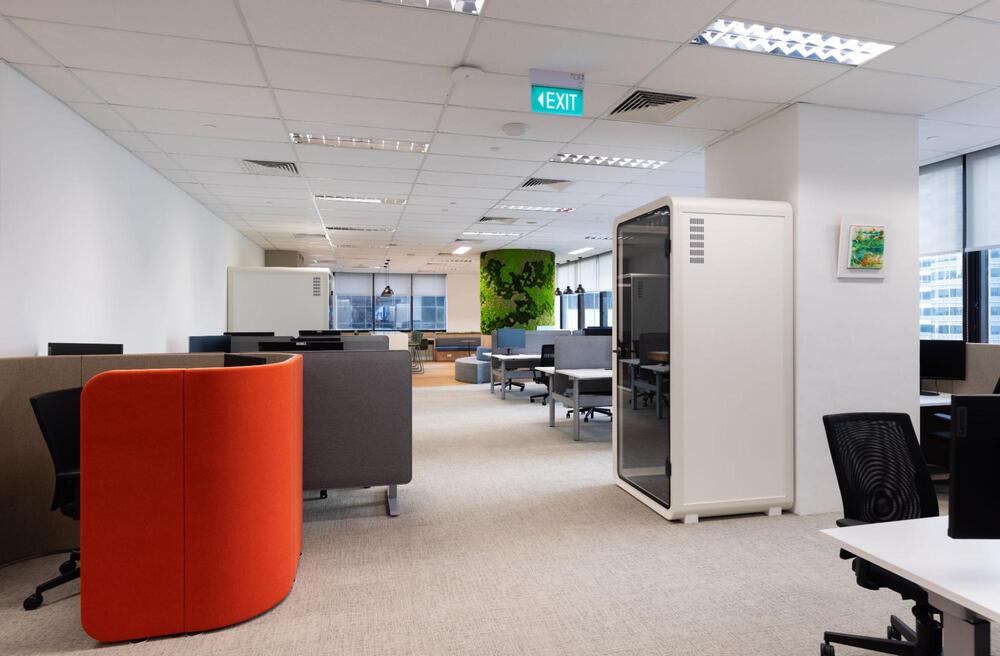
Real office project using soundproof office furniture by OSCA
Soundproof office furniture is not a single product. It is a system that includes acoustic office furniture, layout planning, and material selection. When you combine pods, panels, desks, and ceiling elements, you can control noise at every level. By applying the strategies in this guide and working with an experienced partner like OSCA, businesses can build effective acoustic office solutions that deliver consistent results and long-term value.