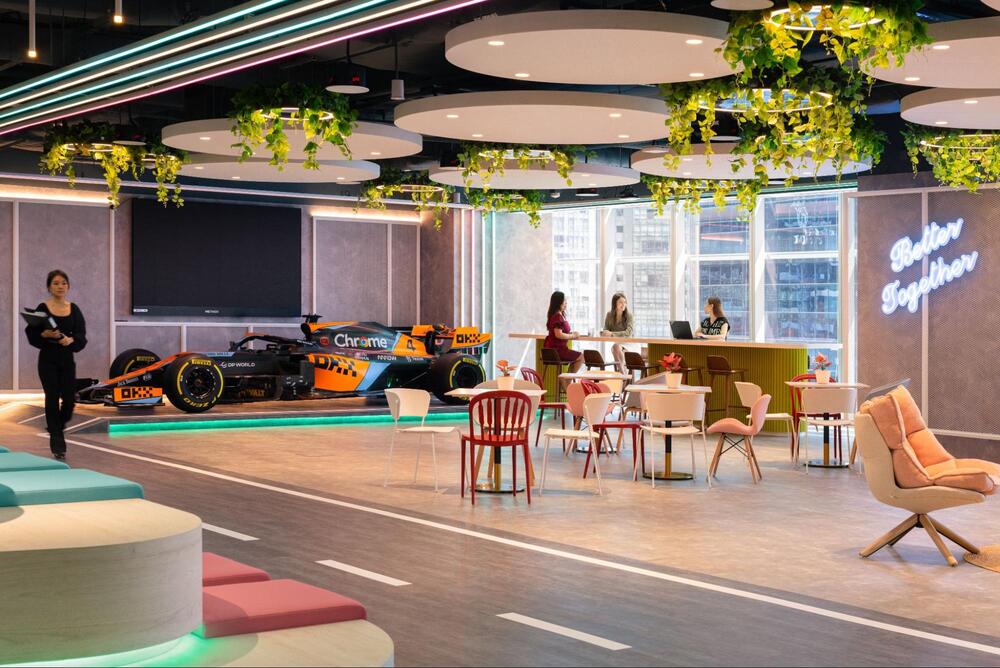
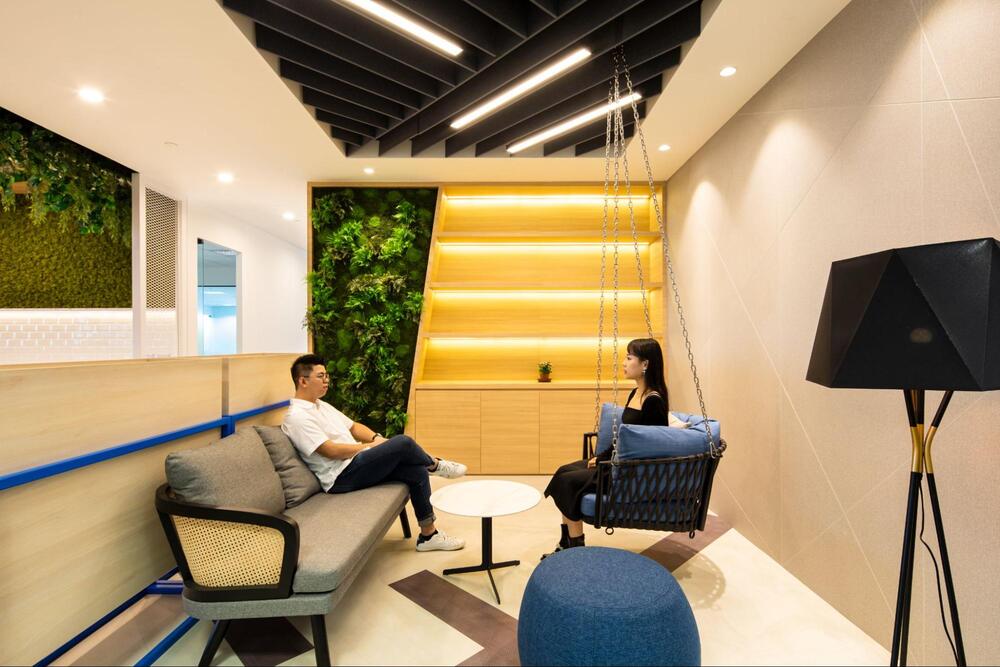
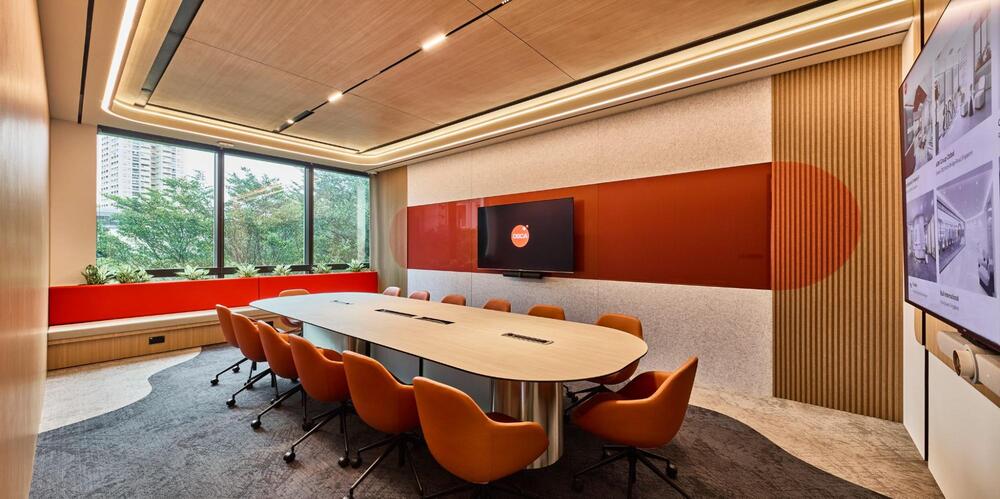
On the road to 2030, Singapore is witnessing workplaces transform at an unprecedented pace, as workplaces are being reshaped by sustainability targets, hybrid work models, and rapid technological advancement. These changes are driving a shift from traditional offices to dynamic, collaborative environments that reflect the broader future interior design trends 2030. In this guide, OSCA brings you key insights into the ideas and innovations that will define the next generation of workplace design.
Contents
- 1 1. Human-Centric Design
- 2 2. Ultra-Flexible & Multi-Functional Layouts
- 3 3. Biophilic 2.0: Beyond Plants
- 4 4. Sustainable Materials & Low-Carbon Construction
- 5 5. Immersive Tech Integration
- 6 6. Hospitality-Inspired Commercial Spaces
- 7 7. Data-Driven Space Planning & Digital Twins
- 8 8. Quiet & Acoustic-Optimised Interiors
- 9 9. Futuristic Aesthetics & Corporate Branding
- 10 10. Wellness-First Interior Design
- 11 11. OSCA – A Workplace Interior Design Studio at the Forefront of Future Trends
1. Human-Centric Design
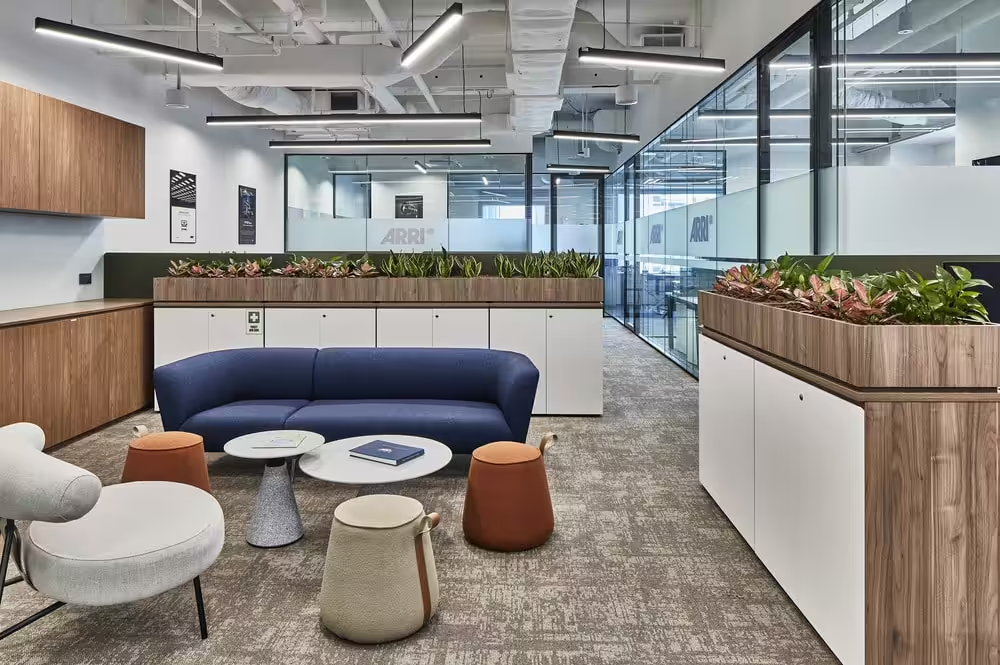
Human-centric design places people at the centre of the workplace, and as Singapore moves toward future interior design trends 2030, offices will increasingly prioritise wellbeing alongside productivity. Research from “Reinventing Hybrid Office Design Through A People-centric Adaptive Approach” shows that indoor environments directly influence health, satisfaction, and performance. Workspaces that provide privacy, good ventilation, natural light, low noise levels, and stable temperatures consistently lead to higher job satisfaction, stronger commitment, and reduced absenteeism.
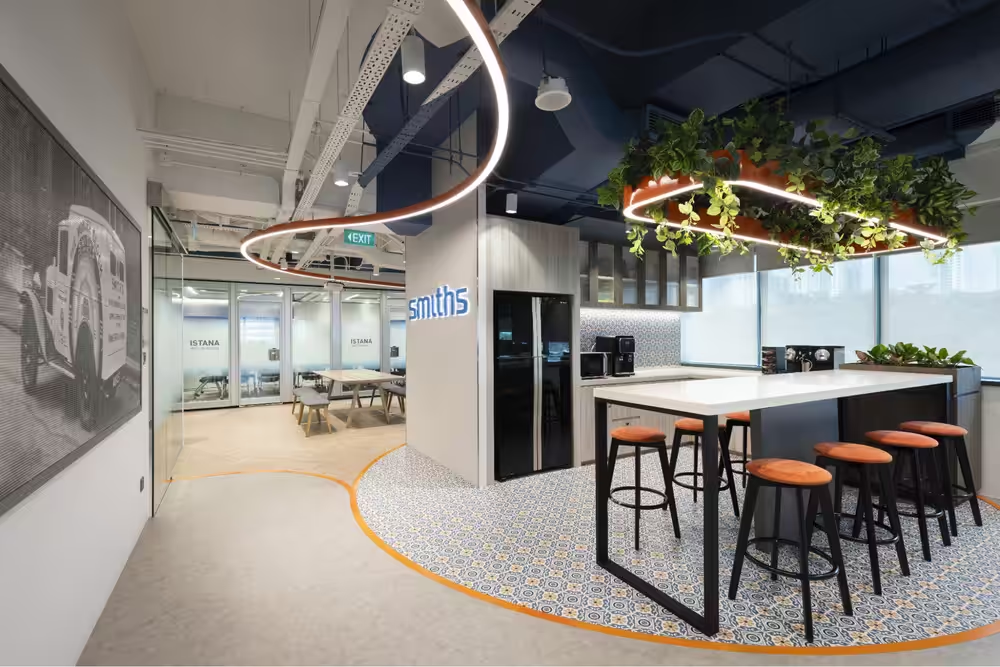
Looking ahead, offices will incorporate quiet zones for focused work, acoustic pods for distraction-free meetings, and wellness rooms where employees can reset and decompress. Sensory comfort will also take priority, with adjustable lighting, personalised climate controls, and ergonomic, flexible workstations becoming standard. Together, these elements create an environment where people can work more comfortably, maintain clarity, and genuinely thrive.
2. Ultra-Flexible & Multi-Functional Layouts
Flexible workplaces are replacing static office layouts as future workplace design trends increasingly prioritise agility. Moveable partitions, modular furniture and multi-purpose “hackable” spaces allow environments to shift seamlessly between focused tasks and larger team activities, which is especially valuable in space-limited Singapore. This adaptability gives employees greater autonomy while helping businesses optimise real estate costs. Looking towards 2030, offices are expected to adopt kinetic architecture, with walls and ceilings that adjust automatically to changing team needs, supporting Singapore’s evolving “Office as a Hub” model.
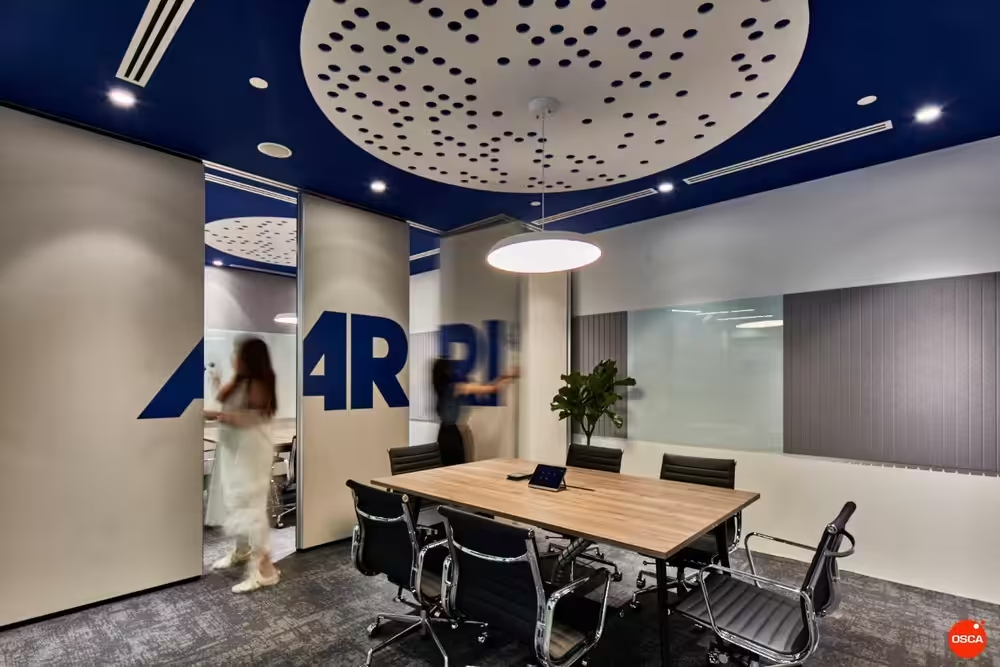
“Flexibility in Modular Furniture Systems in Open Offices, Famagusta, North Cyprus,” a research report, highlights that flexible and reconfigurable furnishings create more efficient and pleasant work environments compared with traditional fixed setups. These findings emphasise the importance of adaptable furniture as a core element of ultra-flexible, multi-functional office layouts.
3. Biophilic 2.0: Beyond Plants
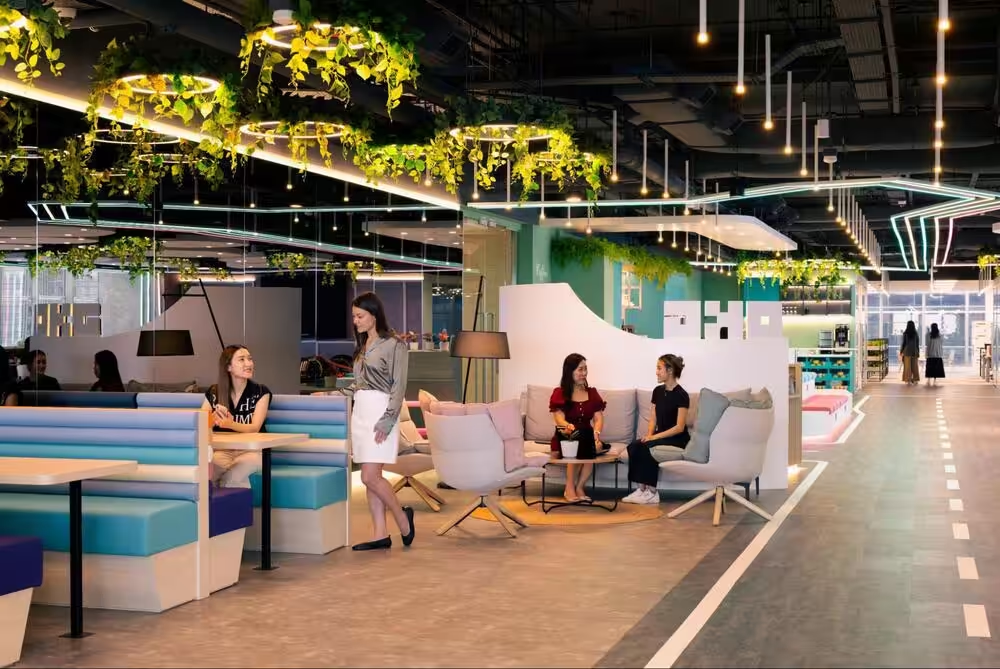
Biophilic 2.0 moves beyond simply adding plants, shifting towards nature-integrated interiors that actively support health, cognition and overall wellbeing. As employees spend most of their day indoors, future design trends are encouraging Singapore workplaces to embrace deeper biophilic features such as living facades, improved natural airflow and circadian lighting that aligns with the body’s natural rhythms.
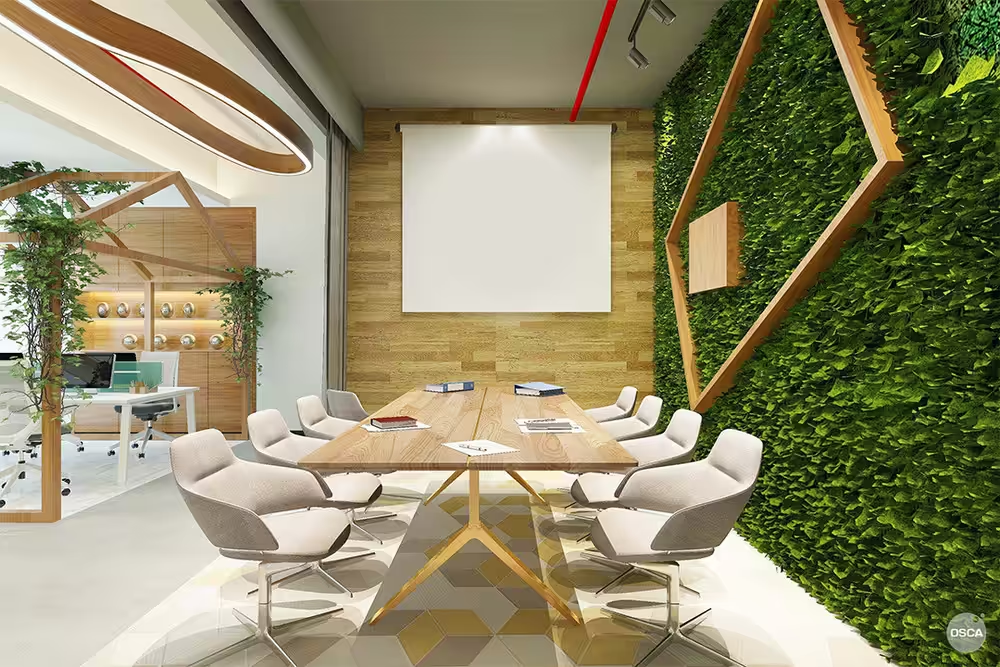
Research from “Biophilic Design And Office Planting: A Case Study Of Effects On Perceived Health, Well-being And Performance Metrics In The Workplace” reinforces this direction, showing that physical or visual access to greenery significantly improves focus, creativity and productivity, while the removal of plants leads to reduced attention and increased stress. With indoor gardens becoming more common across both HDB and commercial settings, biophilic solutions are now easier to implement.
4. Sustainable Materials & Low-Carbon Construction
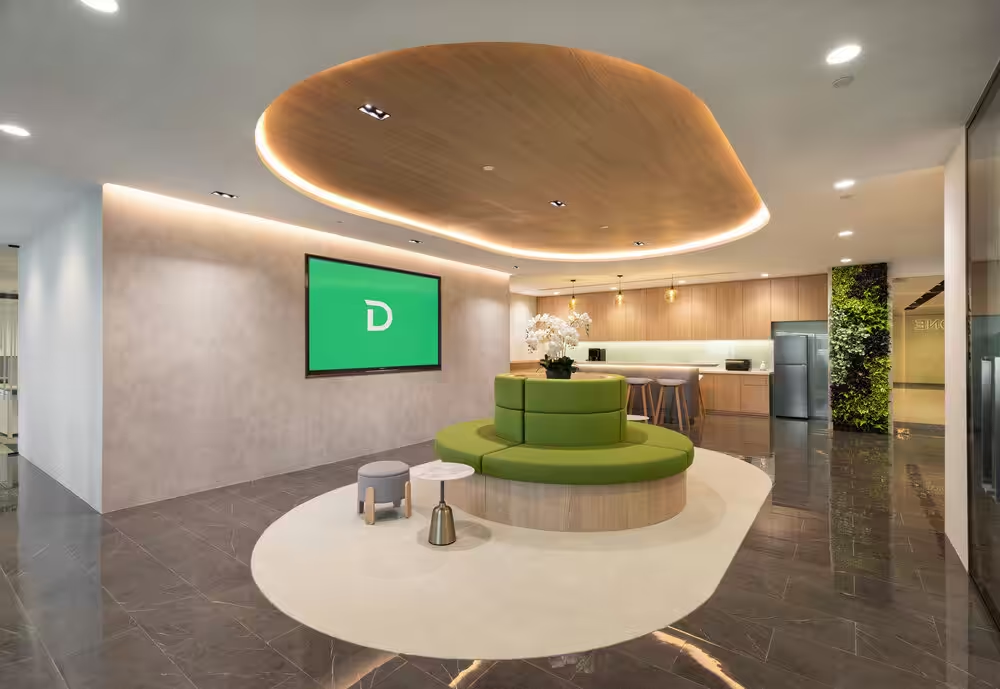
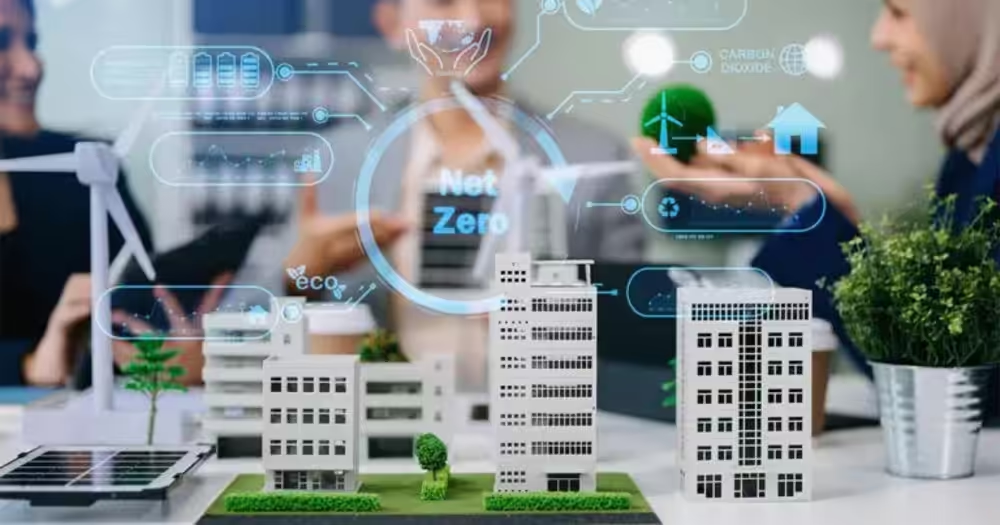
Sustainable Materials & Low-Carbon Construction are becoming core to future decorating trends, with Singapore workplaces increasingly adopting recycled composites for durable, low-carbon surfaces and finishes. This shift is strongly supported by global research, with Low carbon concrete: advancements, challenges and future directions in sustainable construction showing that recycled and eco-efficient materials can meaningfully reduce embodied carbon across a building’s lifecycle, while also highlighting that innovative low-carbon cement composites are capable of cutting CO₂ emissions by up to 40%.

These findings reinforce Singapore’s growing emphasis on green procurement, where companies prioritise eco-certified materials, low-emission products, and responsible suppliers. Together, these choices reduce environmental impact, support the Singapore Green Plan 2030, and enable businesses to build modern, functional, and environmentally conscious workplaces for the decade ahead.
5. Immersive Tech Integration
Immersive Tech Integration is becoming a core pillar of future interior design trends 2030, creating workplaces where digital and physical experiences blend seamlessly. AR-enhanced walls enable interactive collaboration, smart glass shifts instantly between transparent and private modes, and AI-assisted space personalisation automatically adjusts lighting, temperature, and acoustics to individual preferences. Together, these technologies transform the office into a responsive, intelligent environment that elevates both productivity and user experience.
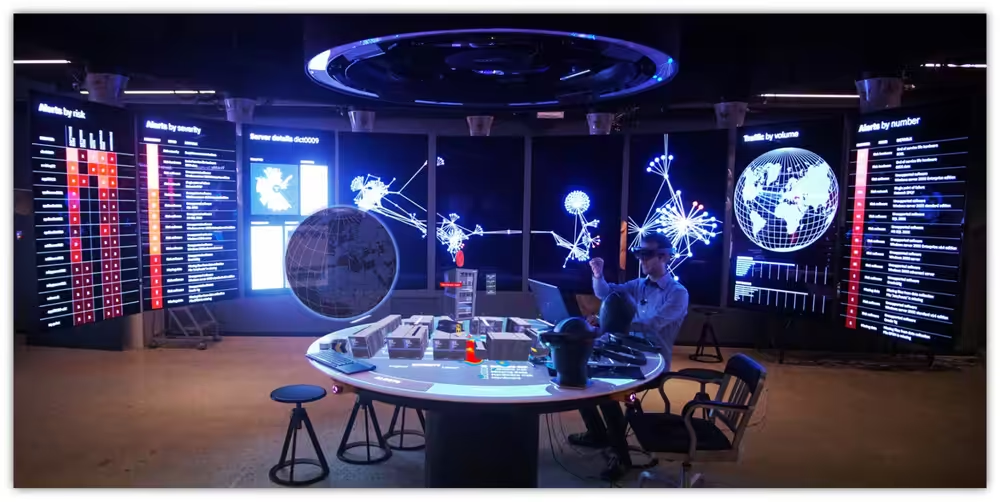
Findings from “Creation of AI-driven smart spaces for enhanced indoor environments” show that AI-enabled sensing systems can personalise lighting, temperature, and acoustics in real time, creating spaces that respond intuitively to user needs. This research supports the rise of immersive workplace technologies, where digital and physical interactions blend to enhance comfort, productivity, and overall user experience.
6. Hospitality-Inspired Commercial Spaces
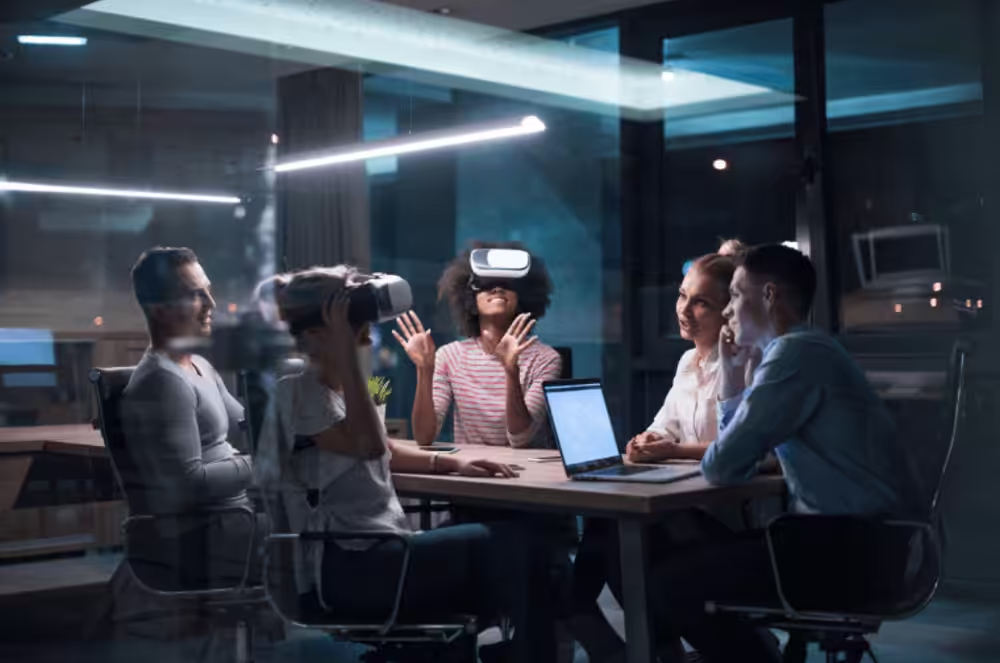
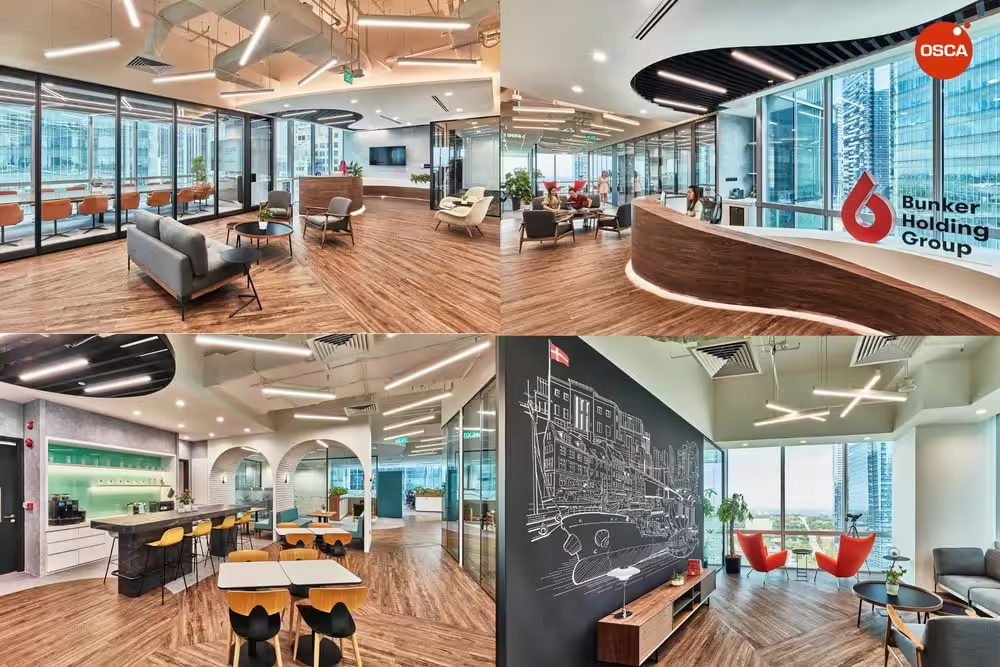
Hospitality-Inspired Commercial Spaces are becoming a defining direction within the next-generation office design for Singapore workplaces, transforming traditional offices into warm, welcoming, and experience driven environments. As millennials and Gen Z increasingly expect hotel suite comfort at work, companies are introducing warm lighting, lounge style seating, and curated social zones that encourage relaxation and spark creativity. Work Design Magazine notes that this hospitality led approach responds directly to employees’ rising need for comfort, belonging, and a sense of community.
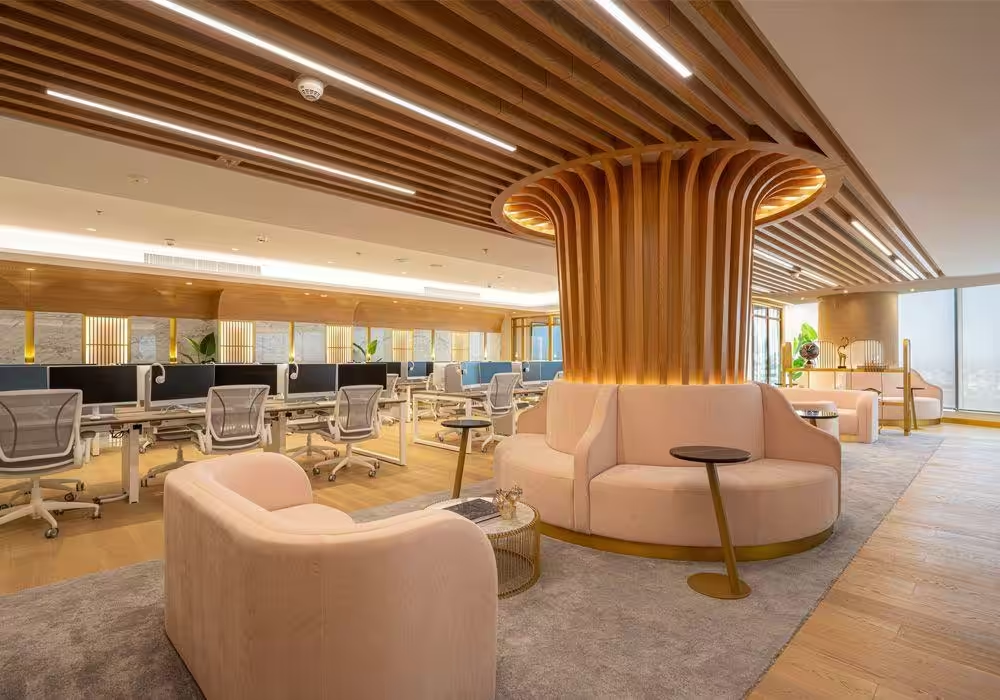
This shift is also reshaping executive areas, where luxury minimalism and soft, refined materials create a calm, hotel suite atmosphere. Together, these elements elevate wellbeing, strengthen engagement, and build workplaces people genuinely enjoy being in.
7. Data-Driven Space Planning & Digital Twins
Data-driven space planning and digital twins are set to redefine interior design by 2030. Virtual replicas of offices enable organisations to monitor occupancy, temperature, and usage patterns to optimise layouts and enhance overall comfort. The recent case study “Smart Buildings and Digital Twin to Monitoring the Efficiency and Wellness of Working Environments: A Case Study on IoT Integration and Data-Driven Management” shows that integrating IoT sensors with data-driven management allows workplaces to track real-time conditions, improve space utilisation, and better support employee wellbeing.
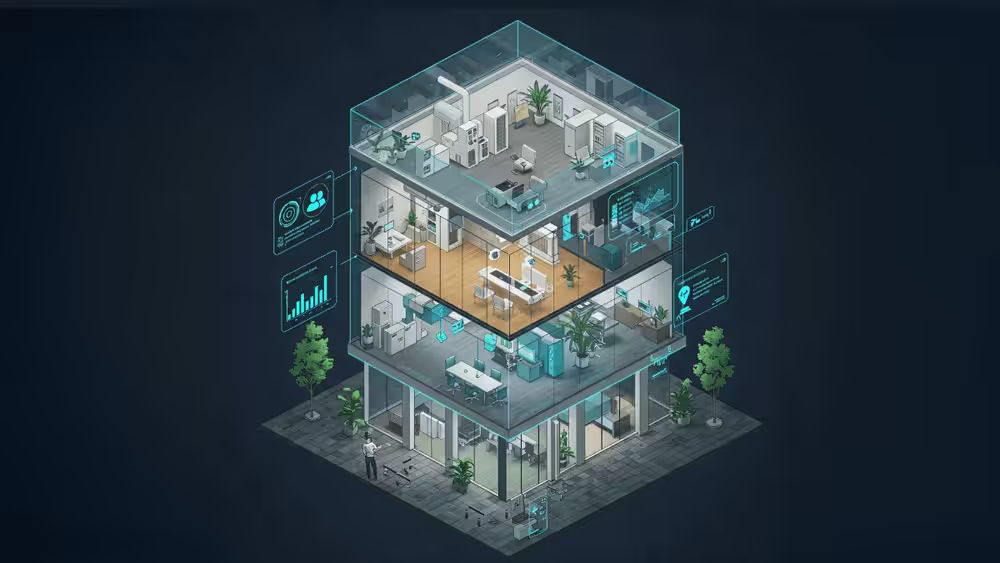
By 2030, AI will autonomously adjust lighting, HVAC, and spatial settings, reflecting one of the most transformative directions within future interior trends. This intelligent approach enables workplaces to respond dynamically to user behaviour, energy demands, and environmental conditions, resulting in spaces that are more productive, sustainable, and consistently comfortable for their occupants.
8. Quiet & Acoustic-Optimised Interiors
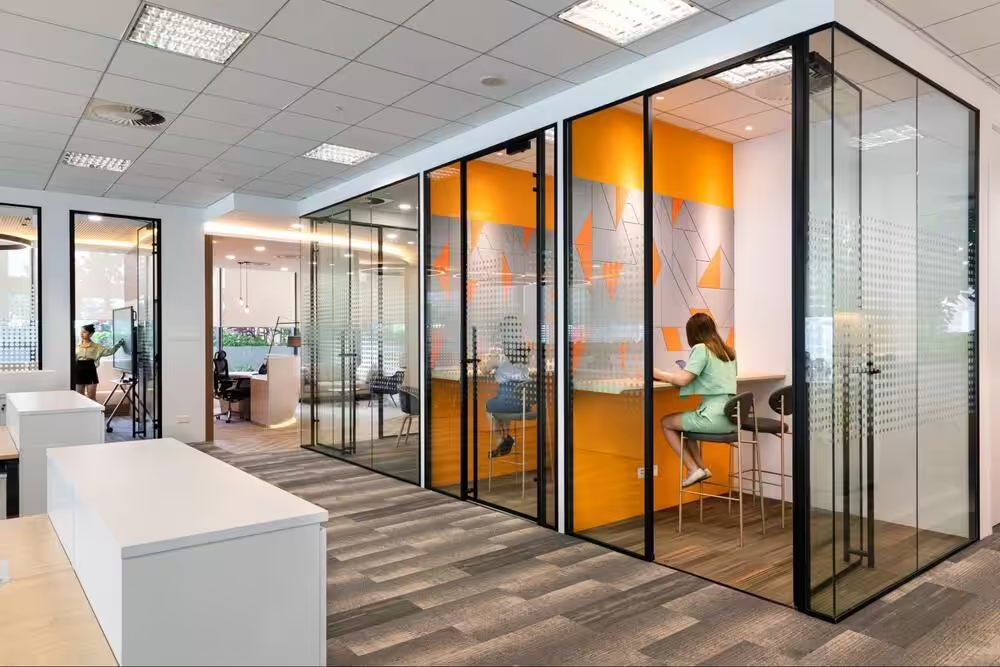
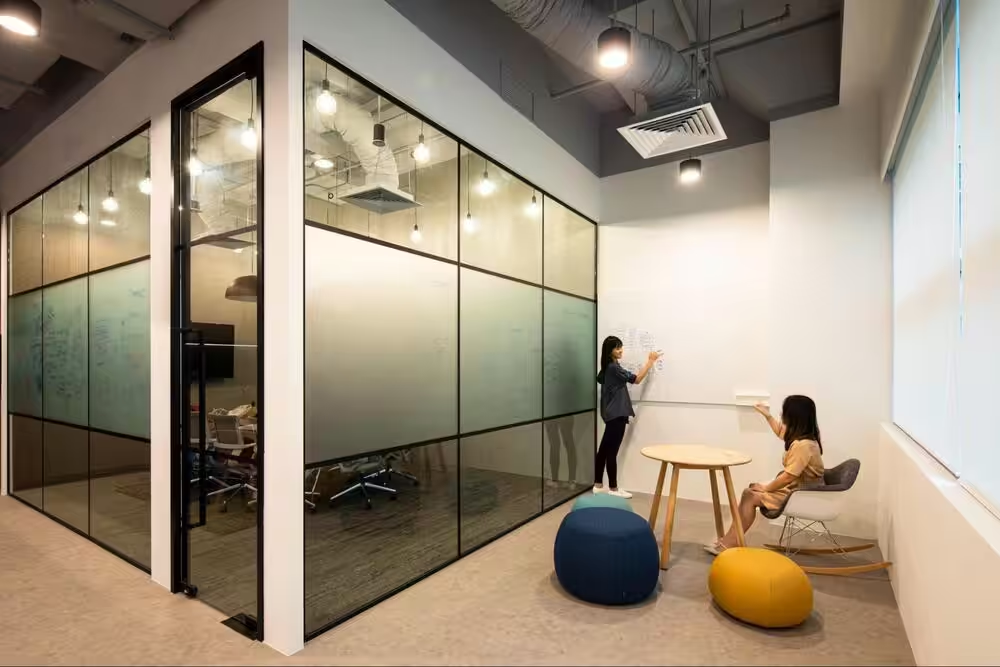
Acoustic optimisation is a growing focus in future interior design for offices as companies move away from noisy open plan layouts. Offices increasingly use high STC partitions, sound‑absorbing panels, and quiet zones like Zoom Rooms and acoustic pods to support focus. The 2025 study “Noise disturbance and lack of privacy: Modelling acoustic dissatisfaction in open-plan offices” found that insufficient acoustic privacy and high noise levels significantly increase employee dissatisfaction and reduce overall comfort, underscoring the importance of strong acoustic design.
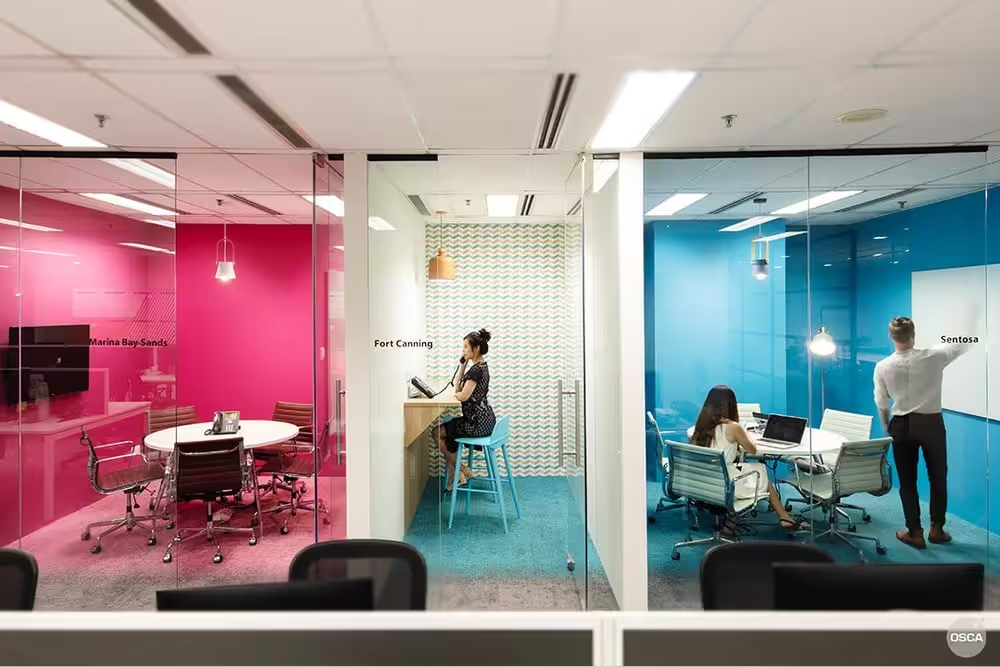
This balance of openness and privacy enhances productivity and reduces workplace stress, reflecting the direction of future interior design trends 2030 that place greater emphasis on wellbeing and user comfort. By 2030, advanced sound masking and room scale noise cancelling technologies are expected to become standard features in Singapore’s premium offices.
9. Futuristic Aesthetics & Corporate Branding
Futuristic interior design is about visual storytelling. Companies are using their physical space to project a forward thinking image. This includes LED accents, futuristic contours, metallic finishes, and architectural lighting that guides the journey through the office. It is about immersing the visitor in the brand’s vision of the future.
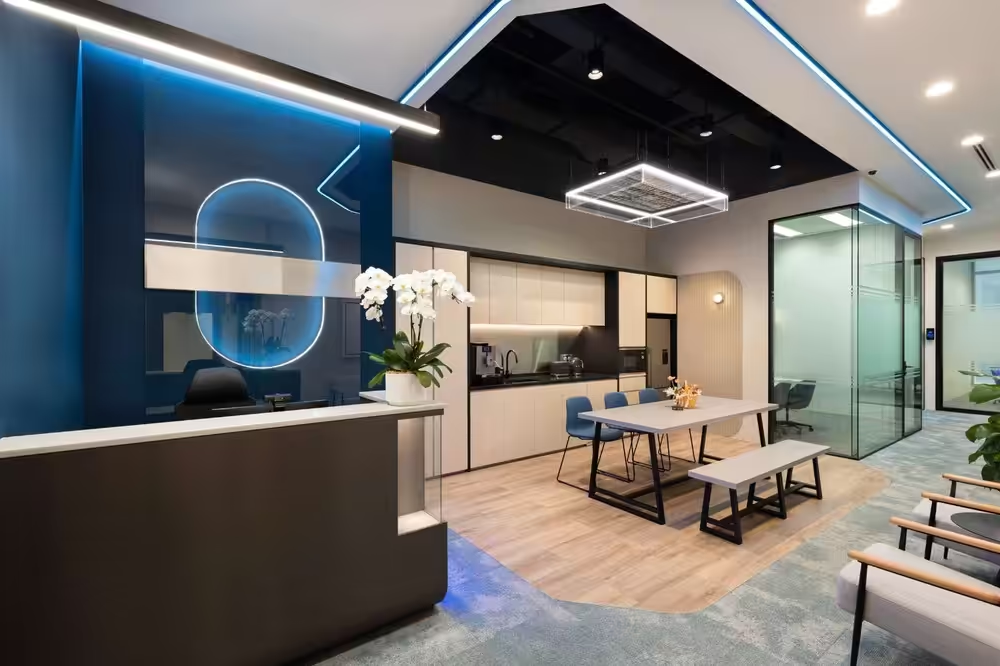
Research such as “The Impact of Changes to Daylight Illumination Level on Architectural Experiences in Offices Based on VR and EEG” demonstrates that illumination has a significant influence on how occupants interpret and emotionally respond to space. This reinforces the idea that lighting is not merely functional but a powerful design instrument for crafting immersive, brand-aligned environments, reflecting the future decorating trends within futuristic workplaces.
10. Wellness-First Interior Design
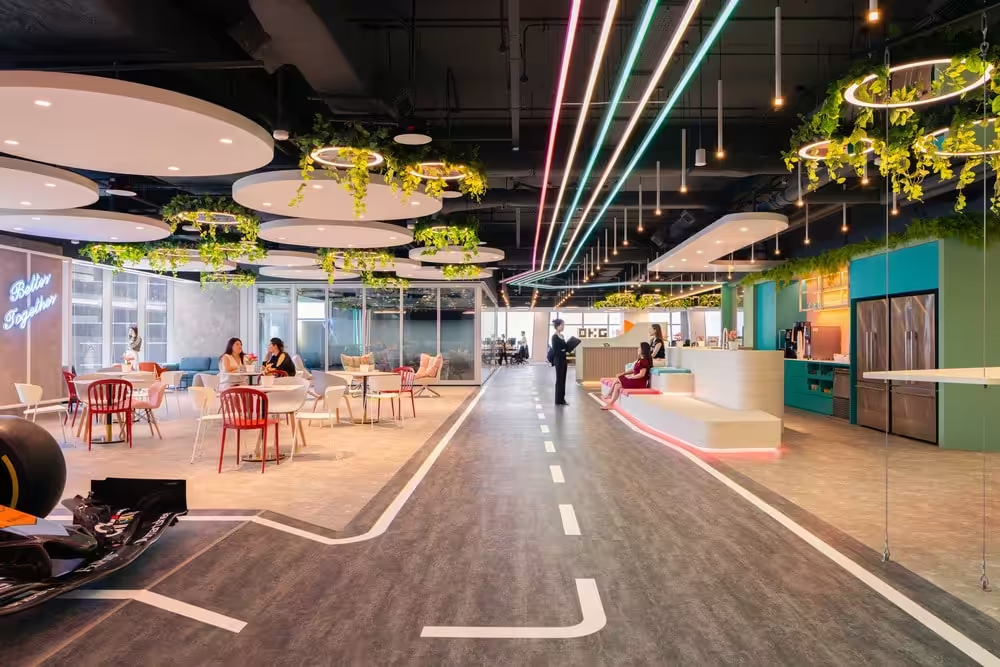
Employee health has become a core workplace priority. Workplace design for 2030 prioritises wellbeing, creating healthier, more comfortable environments. Reflecting principles of futuristic interior design, offices are increasingly equipped with air quality monitors, ergonomic workstations, and supportive seating to reduce physical strain. Restorative rooms and nap pods provide calm spaces for employees to recharge and support mental recovery.
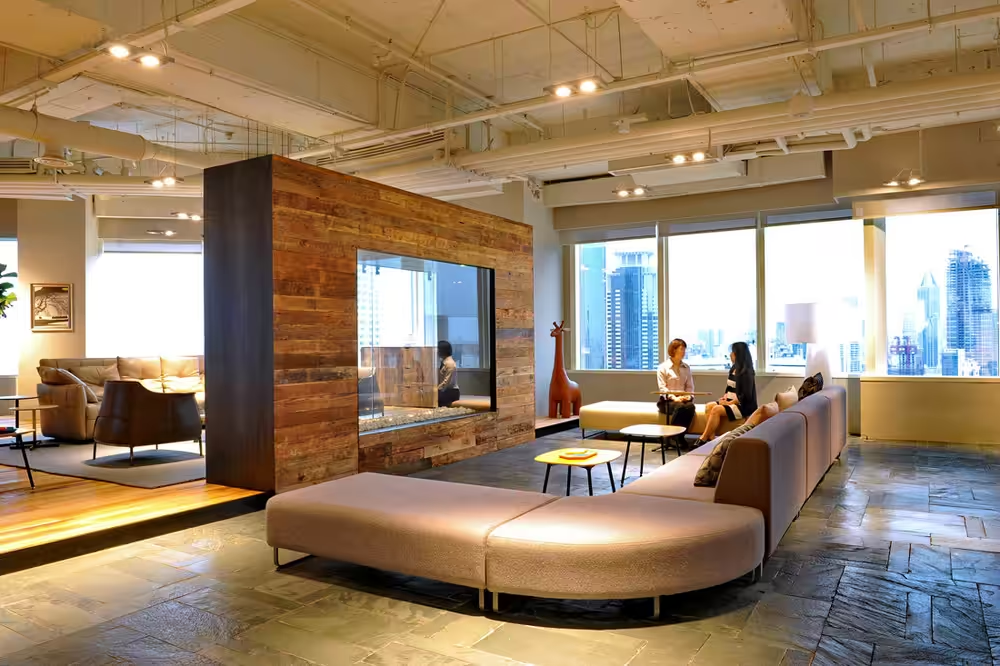
A recent review, “Ergonomic Interventions in Office Environments: Impact on Employee Productivity and Health”, found that such designs significantly reduce musculoskeletal discomfort, enhance comfort, and boost productivity, reinforcing the importance of wellness‑first, health‑centered interior design.
11. OSCA – A Workplace Interior Design Studio at the Forefront of Future Trends
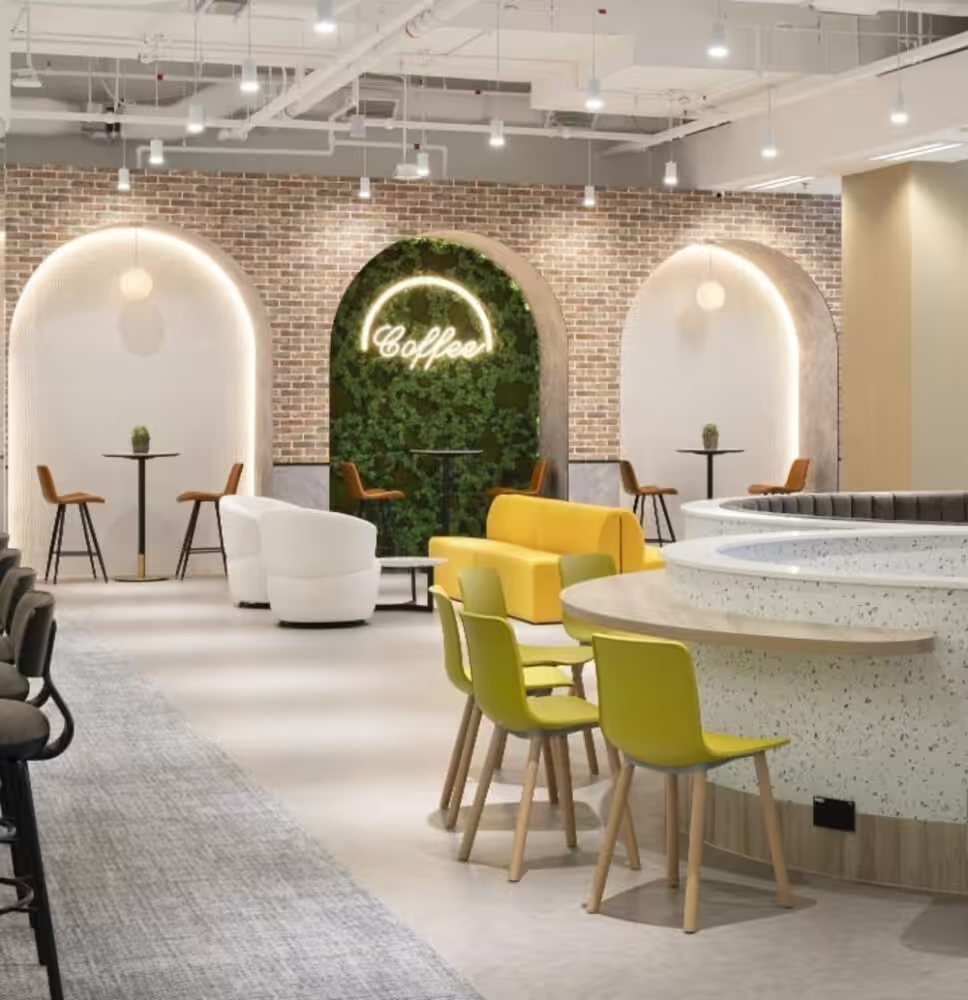
OSCA is a leading commercial interior design and office renovation company in Singapore, established in 2010. With a team of experienced architects, engineers and interior design specialists, OSCA is dedicated to creating workplaces that are not only visually appealing, modern and aligned with brand values but also comfortable, efficient and highly adaptable, in line with the future workplace design trends.
The company is recognised for its ability to provide a complete end-to-end service, from design consultancy through to full construction, including space planning, three dimensional visualisation, material selection, project supervision and final handover. This comprehensive approach enables OSCA to support businesses in building a strong brand identity while enhancing the employee experience in terms of productivity, creativity, well-being and overall workplace satisfaction.
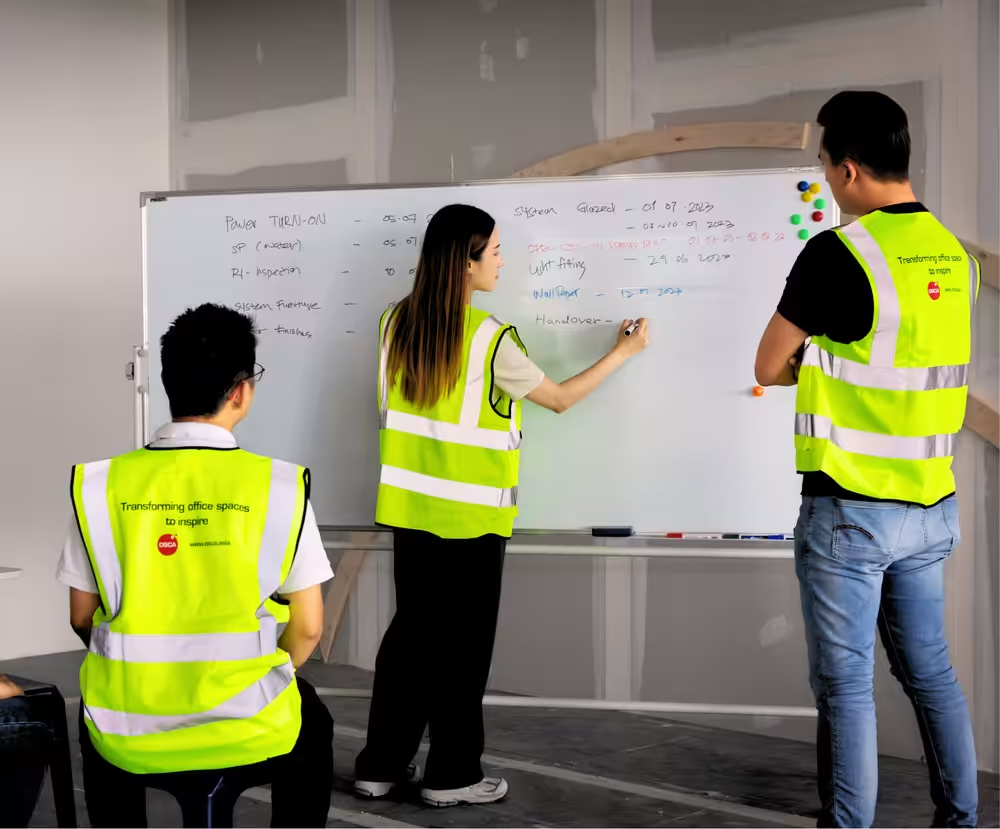
Some of OSCA’s outstanding projects:
The OKG office is a Biophilic 2.0 and Human-Centered Design. The workspace seamlessly blends natural elements with technology, creating comfort and collaboration. The signature spiral grid above the pantry serves as a visual focal point, while central meeting rooms, flexible work areas and separate quiet rooms support focus and productivity. The design transforms the office into an environment that fosters creativity, reduces stress and showcases the future interior trends of 2030.
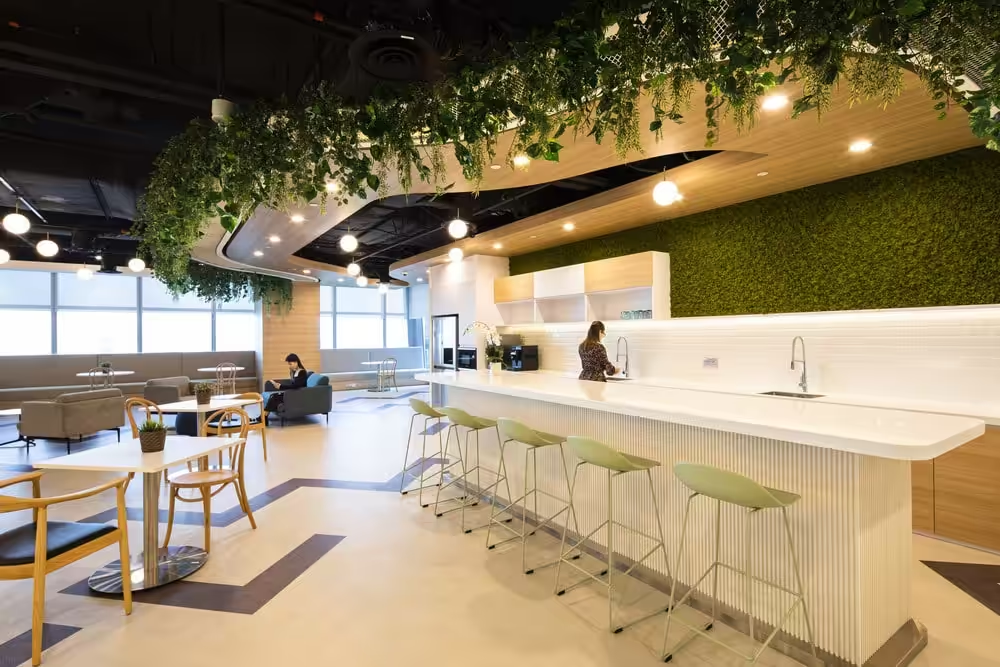
ARRI Asia’s office highlights Ultra-Flexible & Multi-Functional Layouts. Inspired by the brand’s iconic camera lenses, the space features curved walls and flappable eco-panels for sustainability, while movable furniture, collapsible meeting rooms, and open glass partitions allow rapid reconfiguration for different team activities.
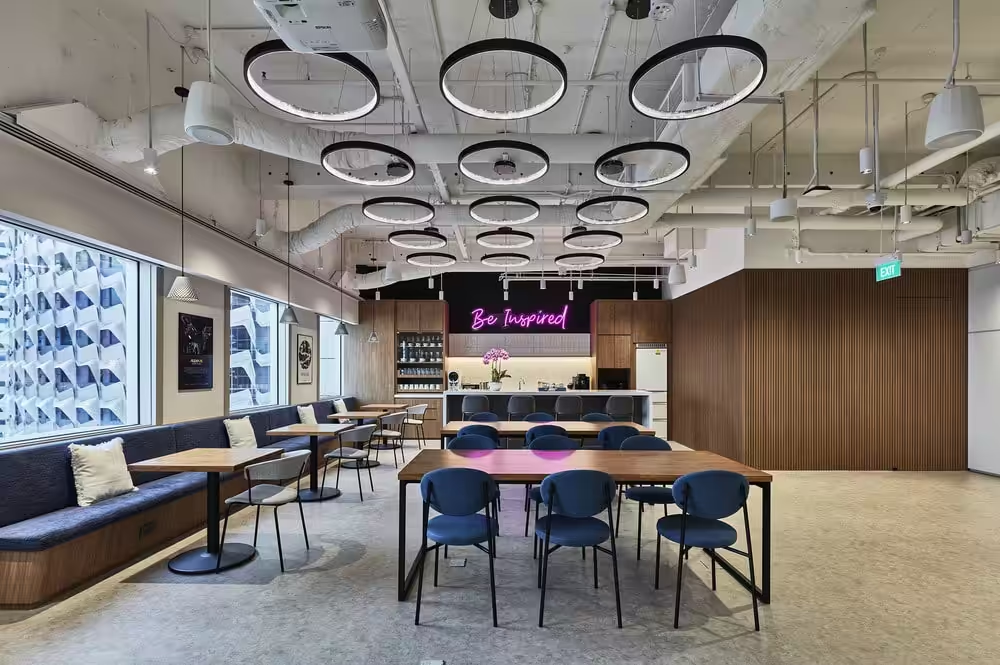
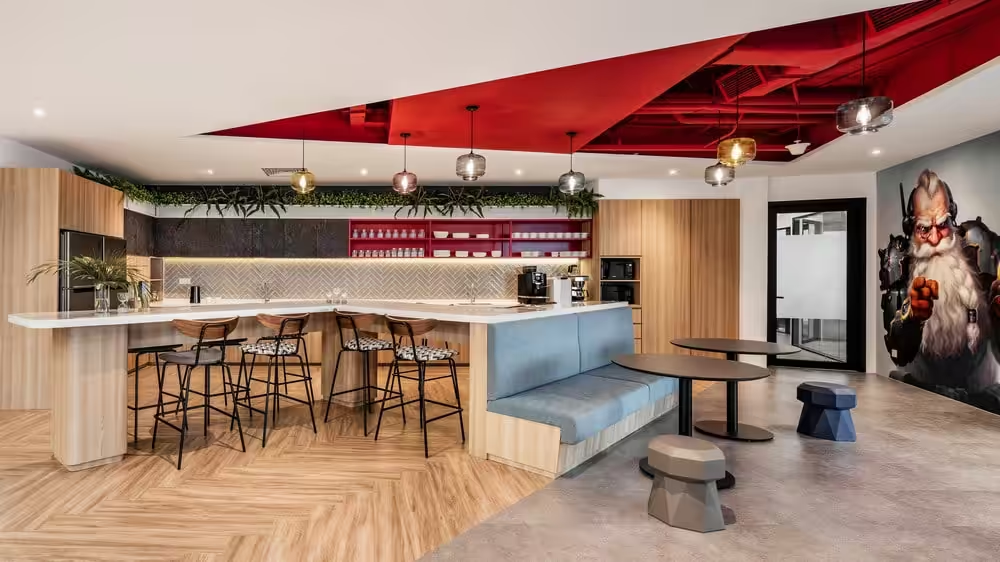
Xsolla Malaysia brings Futuristic Aesthetics and Immersive Tech Integration to the forefront. The office’s geometric forms, metallic accents, and game-inspired themes create an engaging, experiential environment. Branded corridors and enclosed themed spaces immerse employees in a digital narrative, echoing the principles of visual storytelling and brand-aligned design. This project demonstrates how design can elevate engagement, creativity, and the overall workplace experience.
Traveloka Singapore’s office embodies Hospitality-Inspired Design and Wellness-First Principles. Thoughtful touches like rest zones and ergonomic workstations prioritiseemployee comfort and mental wellbeing, aligning with the 2030 trend of creating healthier, more engaging workspaces.
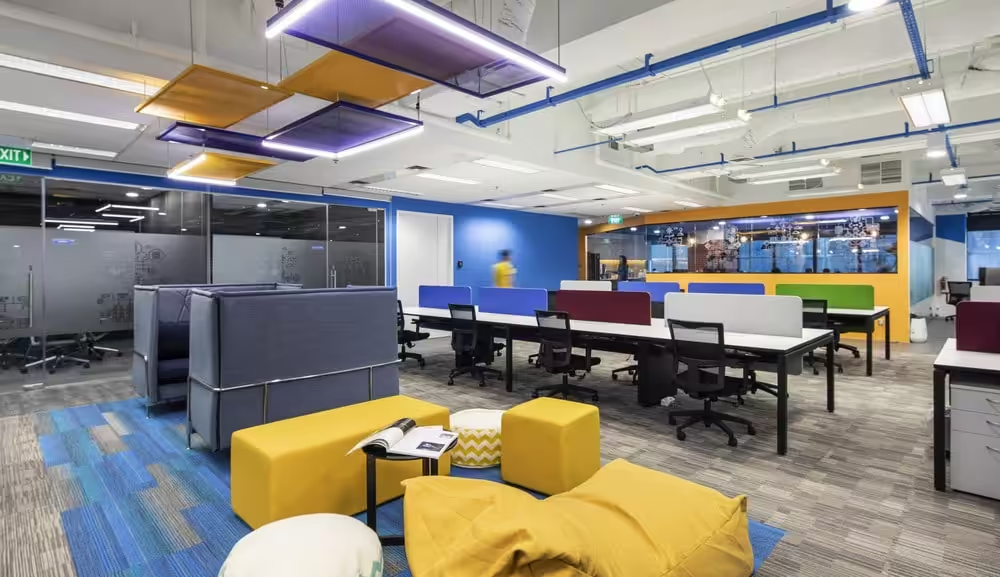
Experience the spirit of travel every day at work with Traveloka
As Singapore moves toward a new era of workplace transformation, keeping up with future interior design trends 2030 is key to staying competitive. If you’re ready to elevate your office into a smarter, healthier, and future-ready environment, OSCA is here to guide you every step of the way. Contact OSCA today to start building the workspace tomorrow.