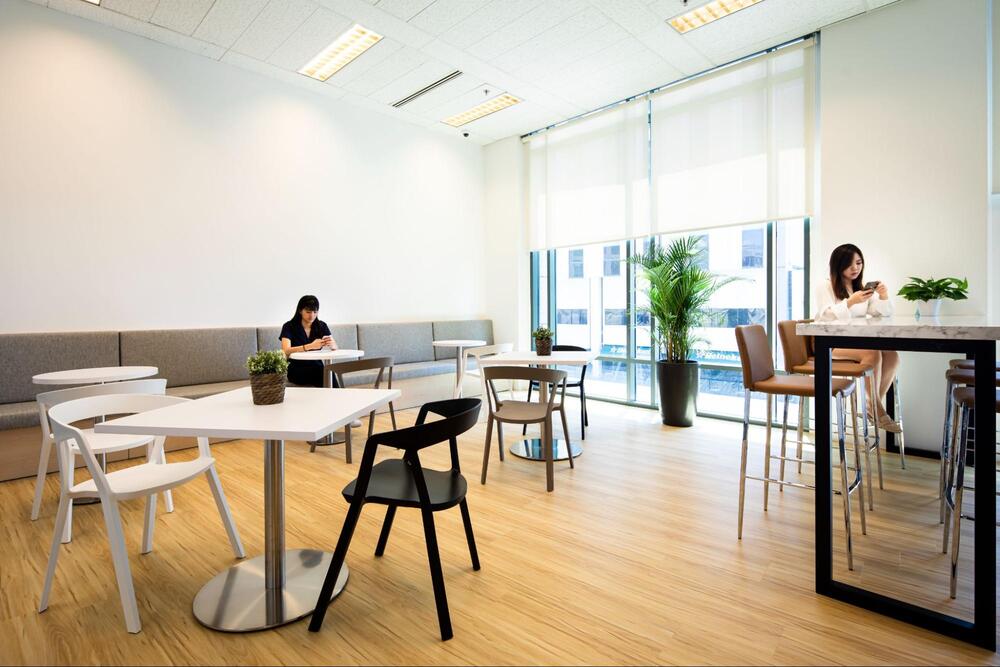
As workplace expectations continue to evolve, businesses are rethinking how office environments should function in a more flexible and digitally connected world. Traditional office models no longer meet the needs of modern teams who require both collaboration and autonomy. This shift has driven the rise of the hybrid office design space. In this guide, OSCA will explore what defines a hybrid office, the benefits it offers businesses, the essential design principles behind successful implementation, common challenges companies face, and how expert workplace strategy can help organizations build a future-ready office environment.
1. What is a hybrid office space?
A hybrid office space is a workplace designed to support employees who divide their time between working remotely and working on-site. It combines the flexibility of remote work with the structure of a physical office. Instead of assigning every employee a permanent desk, businesses create adaptable environments that support different work styles, team sizes, and daily tasks.
This model changes how companies use office real estate. Traditional layouts with rows of fixed desks no longer meet business needs because many desks remain empty during remote workdays. Instead, companies adopt a hybrid office layout that allows one area to serve multiple purposes throughout the day. For example, a meeting room may convert into a brainstorming zone. Lounge seating may function as an informal meeting point. Modular furniture may allow teams to reconfigure spaces based on project demands.
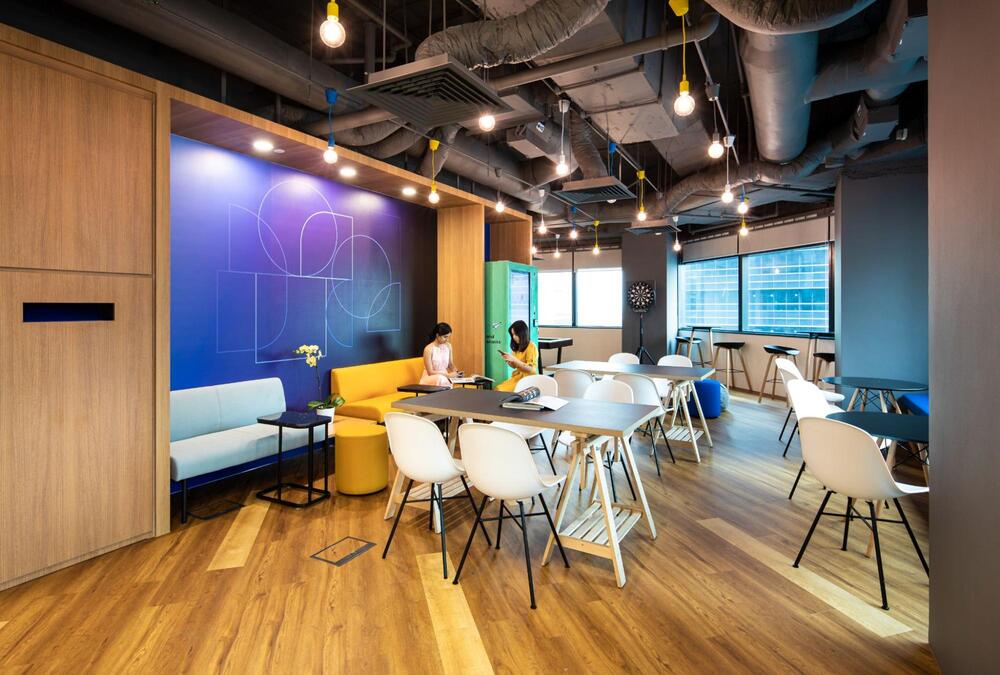
Flexible hybrid office layout with multi-purpose work zones
A well-designed hybrid office space includes features that support both productivity and flexibility. These characteristics help organizations maintain workflow while improving the employee experience.
- Flexible seating and hot desking: Hybrid offices often remove permanently assigned desks. Instead, employees reserve desks when needed using workplace booking software. This system reduces wasted space and improves occupancy planning.
- Collaboration zones and focus areas: A balanced hybrid office layout separates collaborative and quiet spaces. Employees need areas for discussion, meetings, and teamwork, but they also require spaces for deep focus.
- Technology-enabled workplace systems: Technology is critical in every hybrid working office space. Without proper digital systems, hybrid operations can become disorganized.
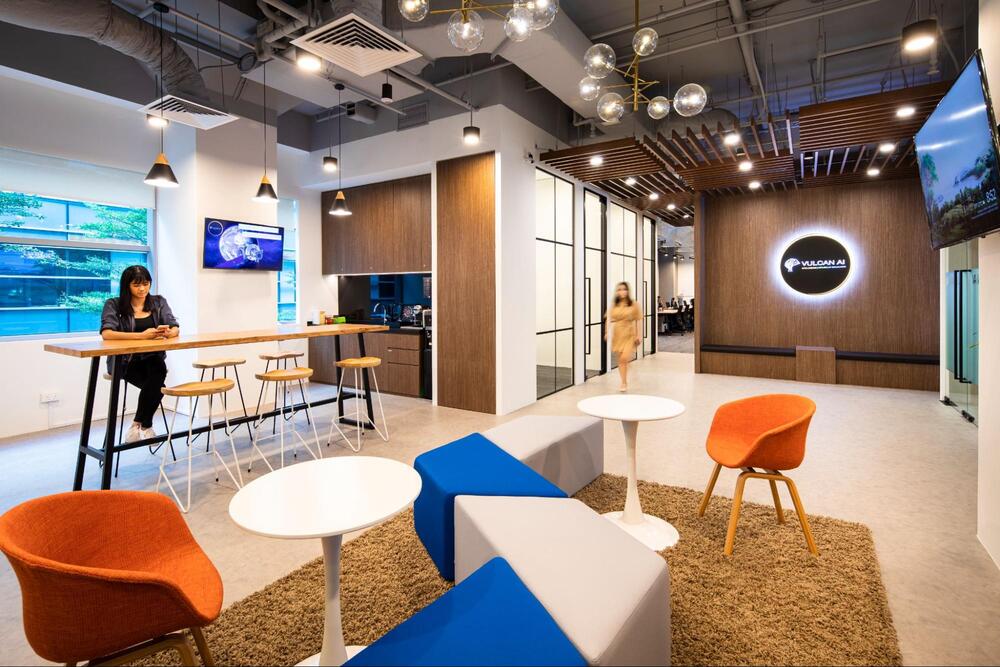
Hybrid working office space with collaborative and focus areas
2. Benefits of hybrid office space for businesses
Below are the core benefits businesses gain when implementing a structured hybrid working office space.
Increased productivity and employee satisfaction
A major benefit of a hybrid work space is improved employee productivity. Staff can choose the environment that best suits their tasks. Focus-heavy work can be completed remotely, while collaborative activities can take place in the office. This flexibility helps employees manage time more effectively and reduce common workplace disruptions. At the same time, employee satisfaction improves because workers gain more autonomy over their schedules. This often leads to:
- Higher engagement
- Lower burnout rates
- Better work-life balance
- Increased job satisfaction
Cost optimization for real estate and operations
A hybrid office space allows companies to reduce wasted floor area and operate more efficiently. Since employees are not present every day, businesses no longer need one desk per employee. Instead, organizations can optimize their hybrid office layout using desk-sharing and flexible seating systems.
This helps reduce:
- Total office footprint
- Rental expenses
- Utility costs
- Furniture and equipment spending
- Long-term maintenance requirements
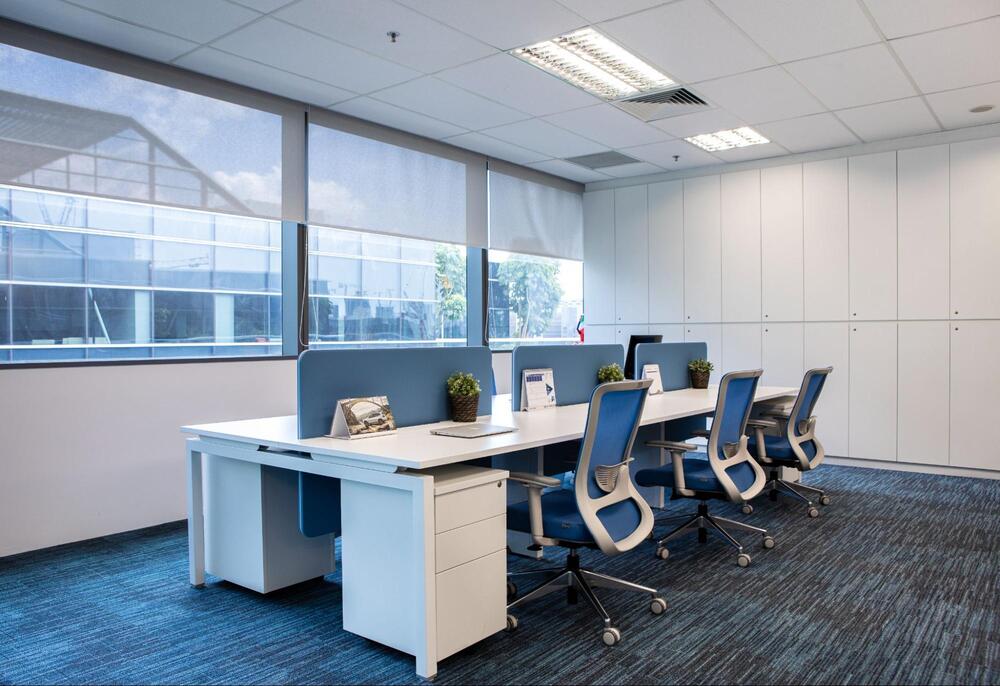
Workplace designed to improve productivity and flexibility
Better talent attraction and retention
Modern professionals increasingly expect workplace flexibility when evaluating employers. A business that offers a structured hybrid working office space is often more attractive to candidates than one requiring full-time office attendance.
Hybrid models expand recruitment opportunities by allowing companies to:
- Attract candidates from wider geographic areas
- Appeal to professionals seeking flexible schedules
- Improve employer branding in competitive industries
Sustainability and reduced carbon footprint
A hybrid office space can support sustainability goals by lowering environmental impact across daily operations. Reduced office attendance often leads to lower resource consumption and less commuting.
Environmental benefits include:
- Reduced electricity and water use
- Lower HVAC demand during partial occupancy
- Fewer commuting emissions
- Smaller office footprint requirements
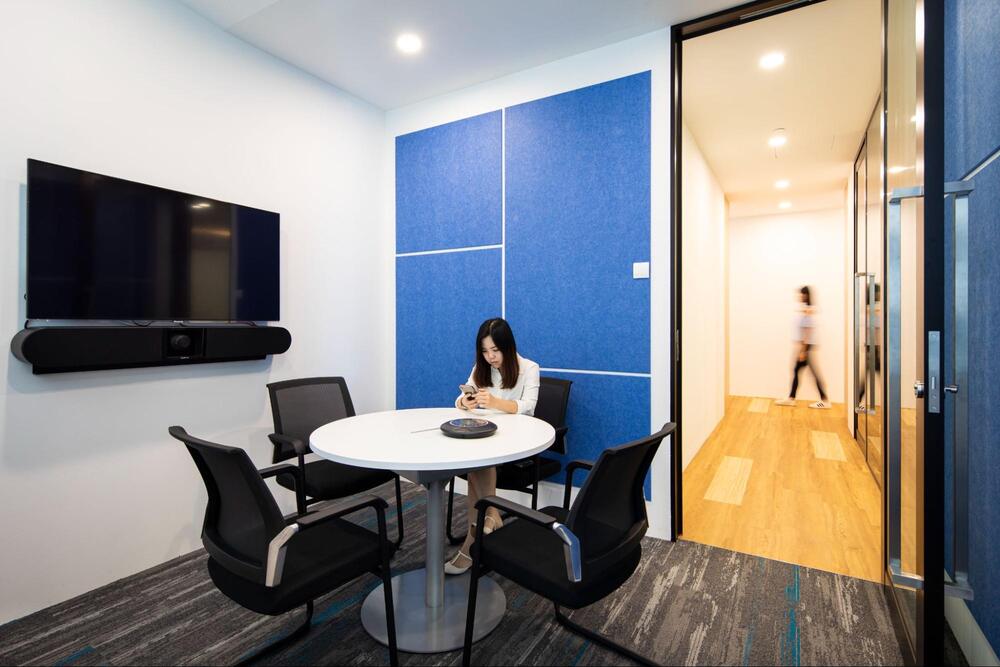
Modern workspace supporting employee wellbeing and performance
3. Key principles for hybrid office design
The following principles form the foundation of a successful hybrid office design layout and help organizations create a workplace that supports performance, wellbeing, and operational efficiency.
3.1 Activity-based working (ABW)
Activity-Based Working is one of the most important principles in modern hybrid workplace design Singapore. Instead of assigning employees to one desk or one area, this model provides different zones for different tasks. The concept is simple: employees choose the most suitable setting based on the type of work they need to complete.
A strong ABW strategy includes spaces such as:
- Focus booths for concentrated individual work
- Open collaboration tables for teamwork
- Private meeting rooms for formal discussions
- Lounge seating for informal conversations
- Phone booths for virtual meetings
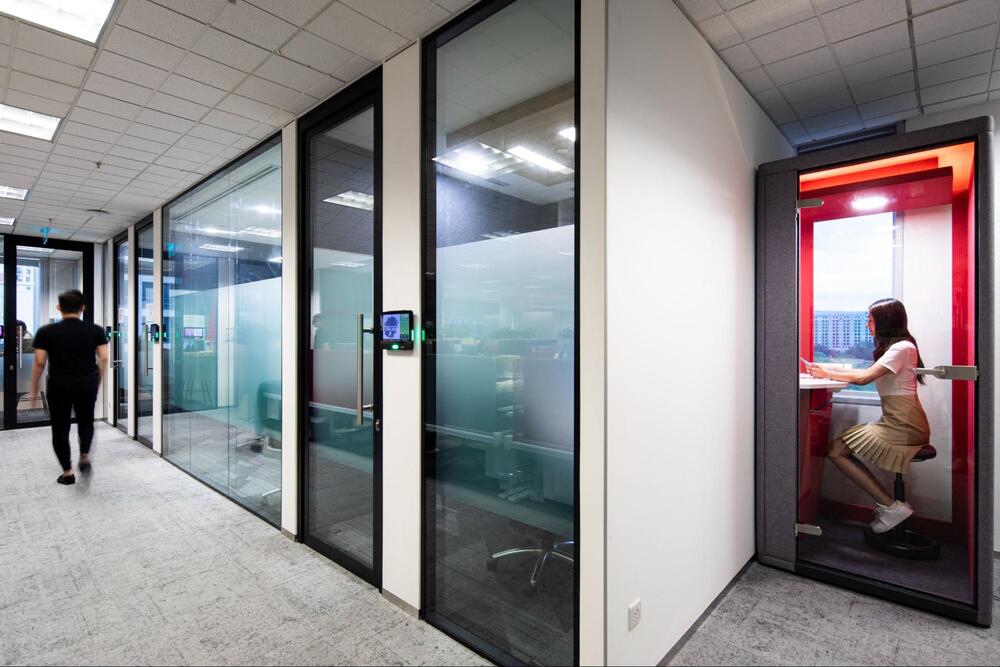
Activity-based working zones in hybrid office design
3.2 Flexible and modular layouts
A hybrid office design must adapt quickly to changing team sizes, business growth, and shifting workplace demands. Flexible and modular planning allows spaces to be reconfigured without major renovation. Instead of fixed layouts, businesses should use movable elements that can support multiple functions.
Examples include:
- Modular desks that can be rearranged
- Movable partitions for temporary meeting areas
- Folding walls for expandable conference rooms
- Mobile storage units for adaptable floor plans
- Multi-purpose furniture for shared use
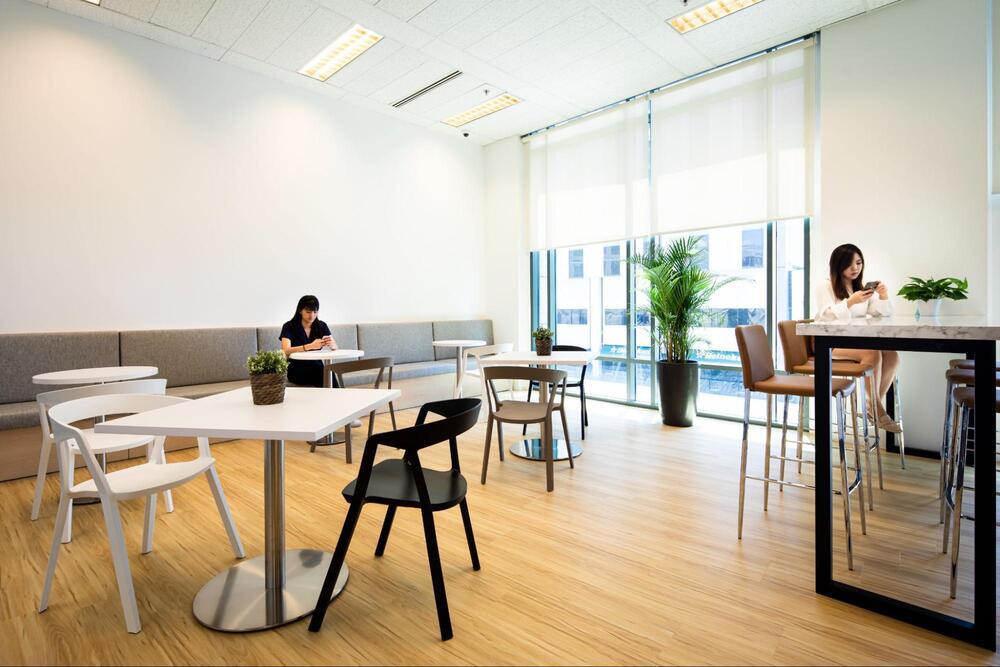
Modular office furniture for flexible workspace design
3.3 Human-centric design
People remain the center of every successful hybrid office design. Human-centric design ensures the workplace supports comfort, health, and usability. Employees who spend time in the office expect environments that help them work efficiently and comfortably. Poor ergonomics, lighting, or acoustics reduce productivity and discourage office attendance.
Core human-centric elements include:
- Ergonomic chairs and height-adjustable desks
- Proper task and ambient lighting
- Acoustic treatments for noise control
- Air quality and ventilation systems
- Comfortable breakout areas for mental reset
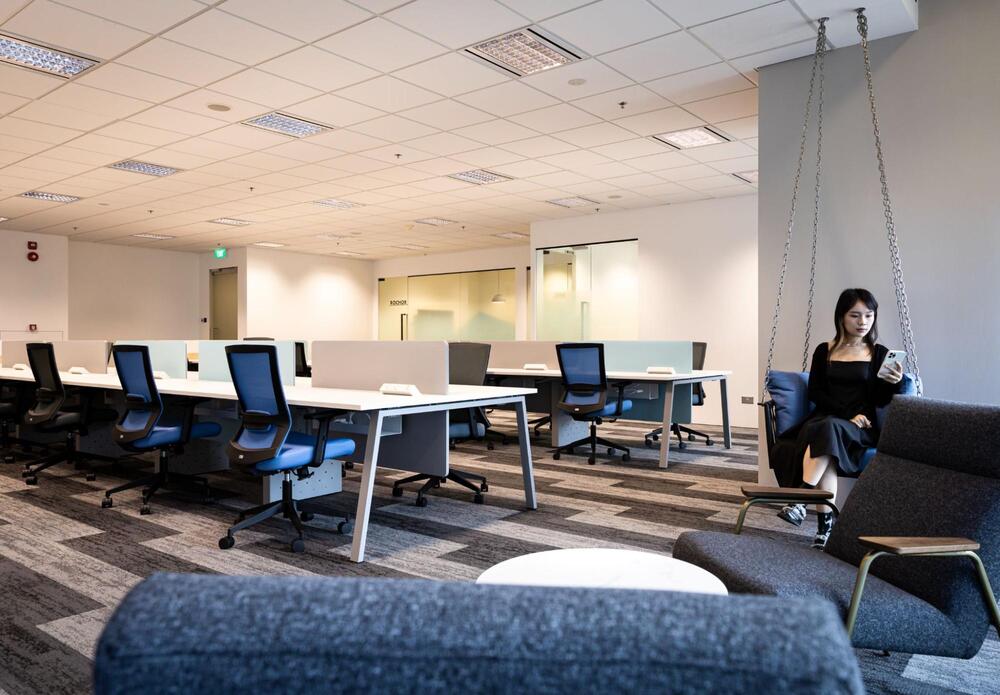
Human-centric workspace design with wellness focus
3.4 Technology integration
Technology is essential in every hybrid working office space. Hybrid teams rely on digital tools to connect remote and on-site employees without disruption. Without integrated technology, meetings become inefficient, desk booking creates confusion, and communication gaps emerge.
Technology systems should include:
- Desk reservation software
- Meeting room booking platforms
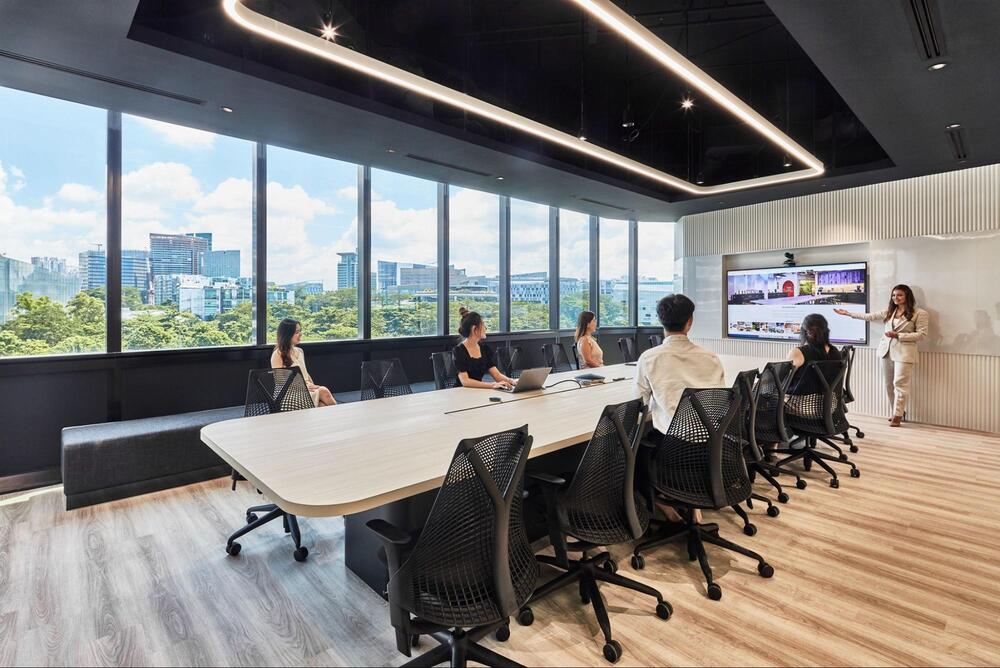
- Video conferencing systems
- Wireless presentation tools
- Occupancy sensors for space analytics
Smart office technology in hybrid workplace design
3.5 Biophilic design in hybrid offices
Biophilic design strengthens employee wellbeing by integrating natural elements into the hybrid work space. Research and workplace experience show that environments connected to nature can improve focus, reduce stress, and support cognitive performance.
Common biophilic features include:
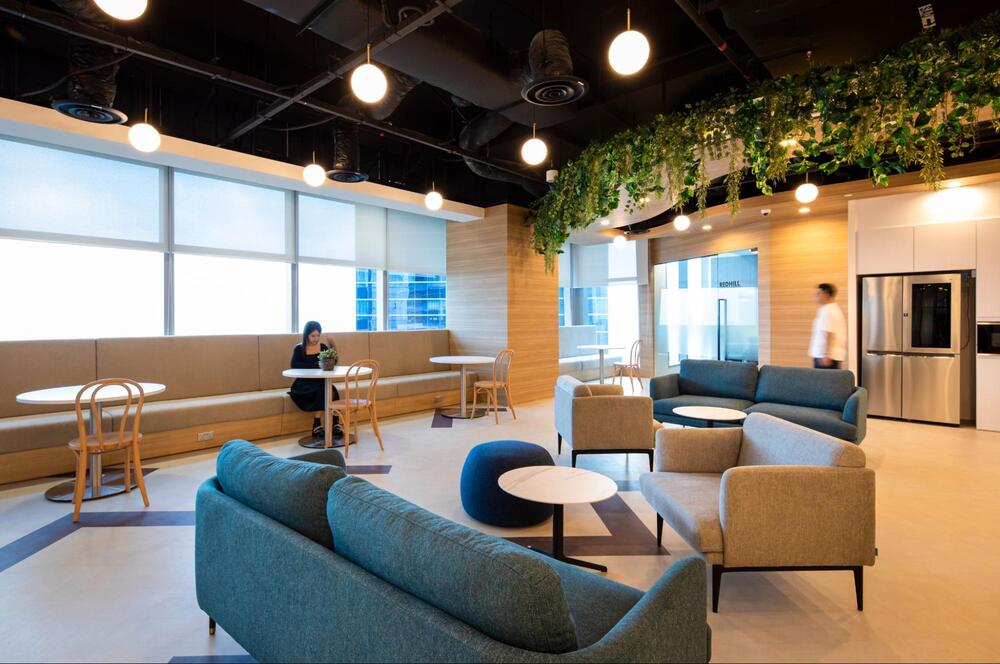
- Indoor plants and green walls
- Natural lighting access
- Organic materials such as wood and stone
- Nature-inspired textures and finishes
- Outdoor breakout or terrace areas
Biophilic hybrid office with natural light and greenery
4. Challenges of hybrid office space and how to solve them
Below are the most frequent challenges businesses face when managing a hybrid work space, along with proven strategies to solve them.
4.1 Managing collaboration vs privacy
One of the main challenges in a hybrid office layout is balancing collaboration with privacy. Hybrid teams need open spaces for meetings and teamwork, but employees also need quiet environments for focused work, video calls, and confidential discussions.
When offices prioritize collaboration too heavily, noise levels increase and distractions affect concentration. When offices focus too much on privacy, teams lose opportunities for spontaneous communication and idea-sharing.
To solve this issue, businesses should create zoning strategies that separate collaborative and quiet functions. Recommended solutions include:
- Design open collaboration zones away from focus areas
- Install acoustic panels and sound-absorbing materials
- Add enclosed meeting rooms for team discussions
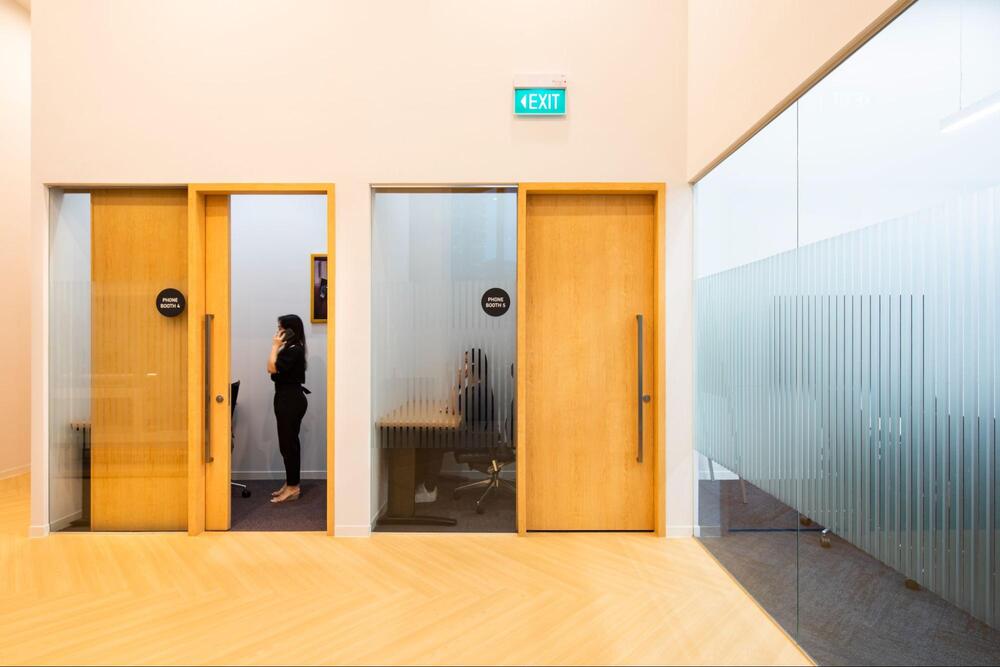
- Include phone booths for private virtual calls
- Build focus pods for individual concentration work
Acoustic privacy solutions in hybrid office layout
4.2 Technology integration issues
Technology failures are a major barrier in many hybrid offices. Since hybrid teams rely on digital tools to connect remote and in-office staff, weak infrastructure can disrupt communication and reduce efficiency.
To solve technology integration problems, businesses should treat technology as a core part of workplace design rather than an afterthought. Practical solutions include:
- Install enterprise-grade Wi-Fi throughout the office
- Standardize video conferencing equipment across meeting rooms
- Use centralized desk and room booking software
- Integrate wireless screen-sharing systems
- Ensure all digital tools work across remote and office devices
Efficient space utilization in modern hybrid workplace
4.3 Space underutilization
Many businesses struggle with underused office space after moving to a hybrid office space model. Traditional offices designed for full attendance often leave large areas empty when staff rotate between home and office.
To solve underutilization, businesses should redesign the office based on actual attendance data and workplace behavior. Best practices include:
- Replace assigned desks with hot-desking systems
- Reduce oversized workstation areas
- Convert unused desks into collaboration zones
- Create multi-functional meeting and event spaces
- Use occupancy sensors to track real usage patterns
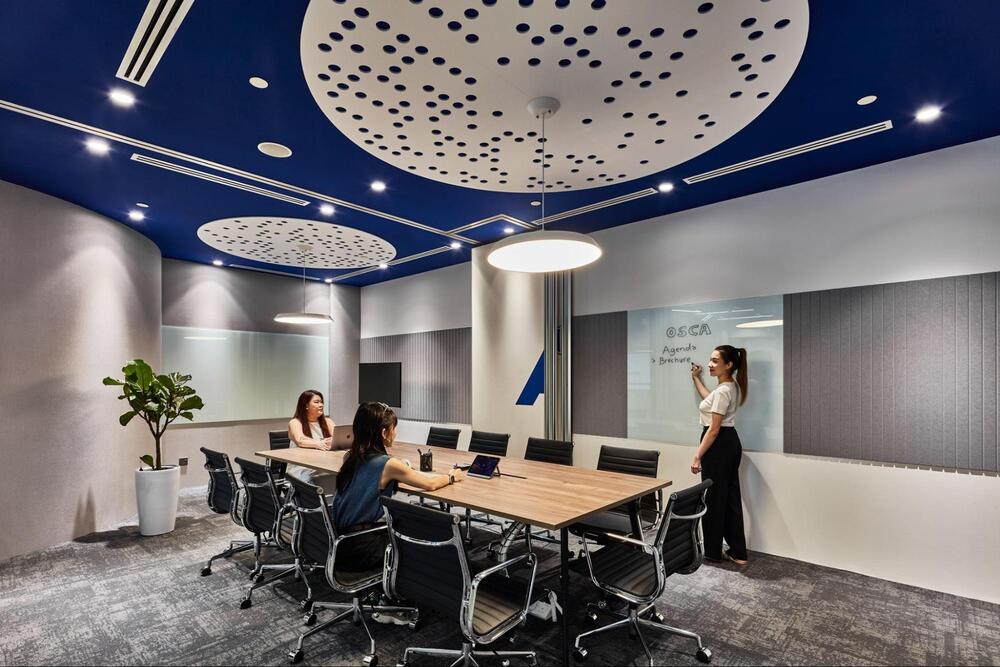
Workplace design balancing collaboration and privacy
4.4 Maintaining company culture
Maintaining workplace culture is more difficult in a hybrid working office space because employees spend less time together physically. Without regular interaction, teams may feel disconnected, communication may weaken, and engagement may decline.
To solve this, businesses must design offices that encourage meaningful interaction and reinforce company culture. Effective solutions include:
- Create social hubs and breakout spaces
- Design collaborative zones for team engagement
- Use branded interior elements throughout the office
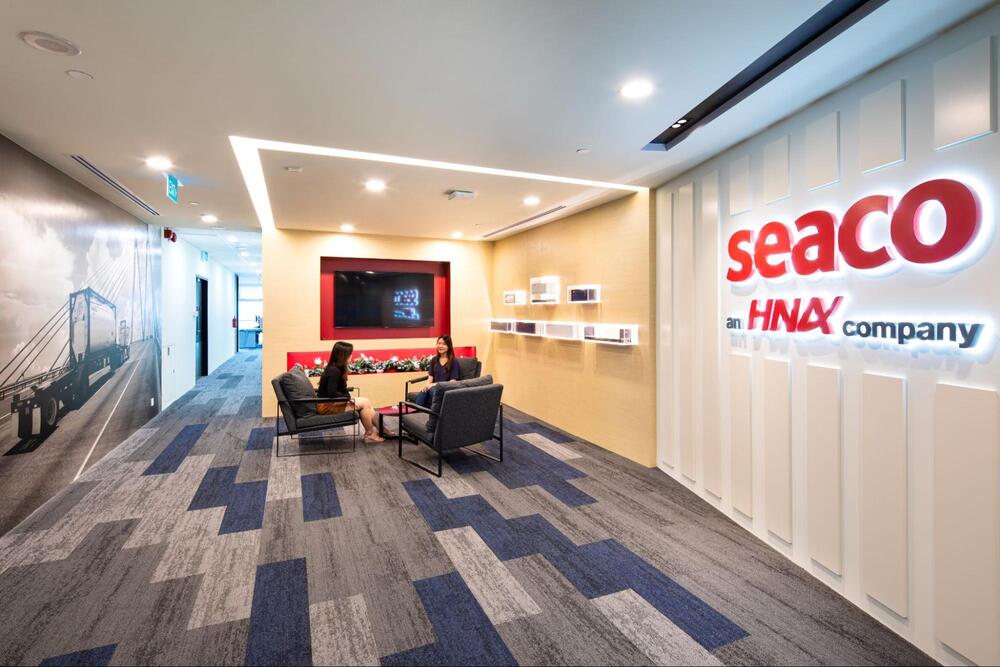
- Schedule anchor days for team attendance
- Host regular in-office events and workshops
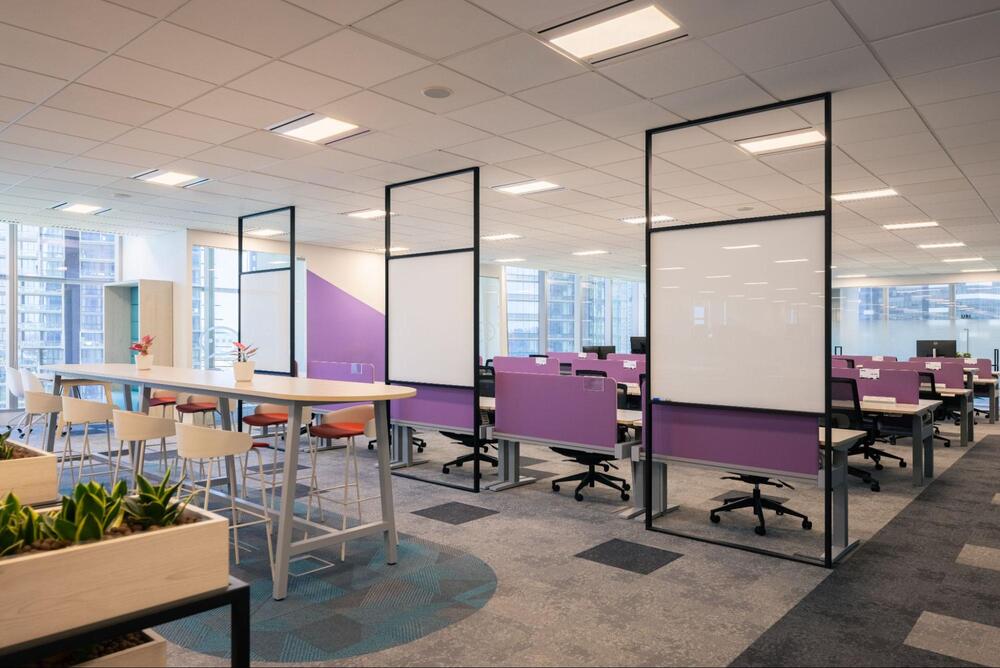
Efficient office space planning for hybrid teams
5. Why choose OSCA for hybrid office design?
Designing a successful hybrid office space requires more than visual creativity. It demands workplace strategy, technical planning, operational insight, and construction expertise. Businesses must balance flexibility, technology, collaboration, branding, and long-term scalability in one integrated environment. Without the right partner, many hybrid office projects fail to meet functional goals or deliver measurable return on investment.
OSCA provides a structured and strategic approach to hybrid workplace design Singapore, helping businesses create workspaces that align with operational needs, employee expectations, and future growth plans. With proven experience across Asia and a full-service delivery model, OSCA supports clients from workplace strategy to final construction.
End-to-end design and build expertise
One of the main reasons businesses choose OSCA is its integrated design and build model. OSCA provides complete project delivery from workplace planning to construction, ensuring every stage of the hybrid office space development process remains aligned with the original strategy. OSCA offers comprehensive Design & Build solutions from concept to construction.
Instead of managing separate consultants, designers, and contractors, clients work with one unified team throughout the project.
This approach provides several advantages:
- Better communication between design and construction teams
- Faster decision-making during project execution
- Reduced coordination risks and delays
- Improved budget and timeline control
- Greater accountability across all project stages
For companies planning a hybrid work office design Singapore project, this streamlined model reduces complexity and ensures design intent is maintained from concept through handover.
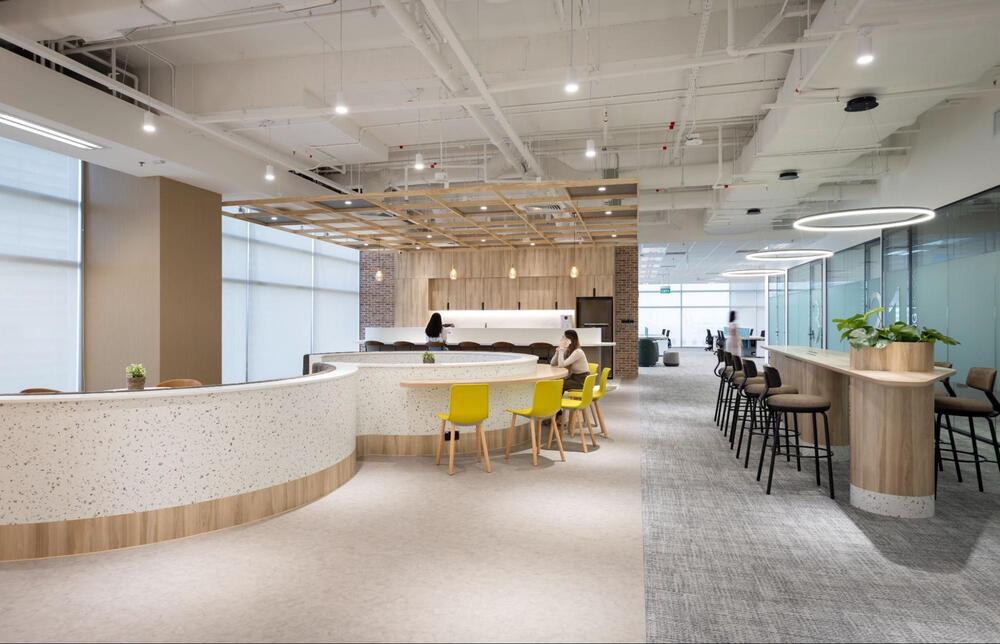
OSCA workplace strategy and hybrid office planning
Workplace strategy and change management support
A hybrid working office space must support more than furniture placement and floor planning. It must align with employee behavior, attendance patterns, departmental workflows, and business goals.
OSCA incorporates workplace strategy into every project by evaluating how teams work and how office space should support those behaviors. OSCA’s service offering includes Workplace Strategy and Enablement as well as Change Management.
This strategic planning process helps businesses:
- Define space allocation based on usage patterns
- Optimize desk-to-staff ratios
- Plan collaboration and focus zones effectively
- Improve departmental adjacencies
- Support employee adoption during workplace transitions
OSCA also helps businesses manage change by guiding teams through the transition into a new hybrid work space, ensuring the office supports actual user behavior rather than assumptions.
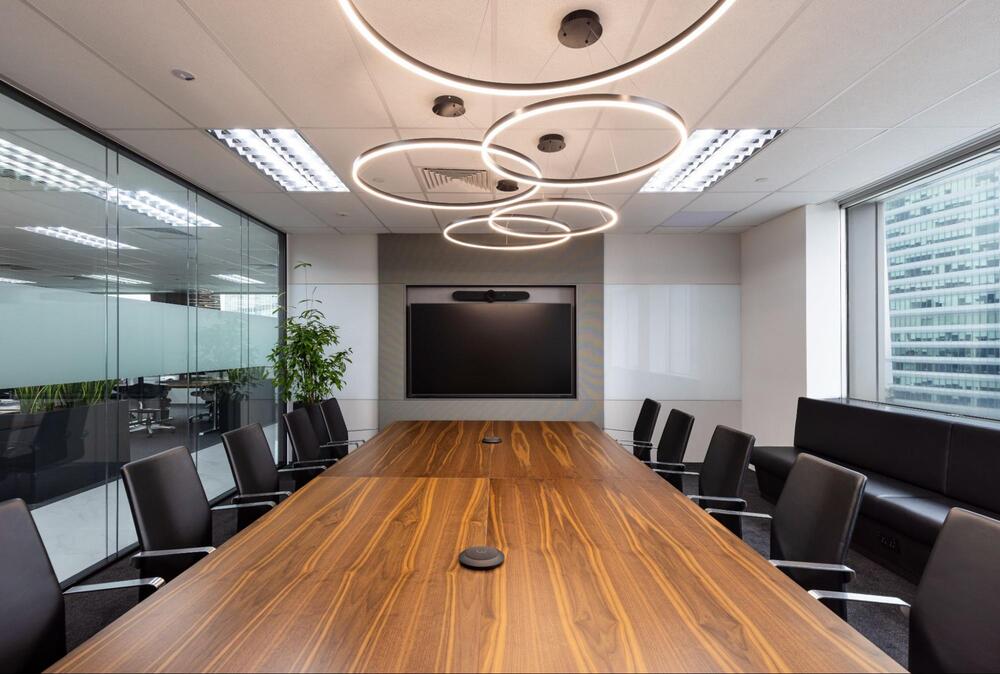
Custom hybrid workplace design solutions by OSCA
Proven regional experience across Asia
Hybrid workplace needs vary by business type, culture, and region. OSCA brings proven project experience across multiple Asian markets, helping clients develop workplace solutions suited to both international standards and local operational needs. OSCA has offices across Singapore, Malaysia, Vietnam, and Indonesia.
This regional experience gives OSCA insight into:
- Space planning for diverse workforce structures
- Local building and compliance considerations
- Regional workplace trends and expectations
- Scalable solutions for multinational businesses
For businesses seeking hybrid workplace design Singapore expertise with regional capability, OSCA offers both strategic depth and market understanding.
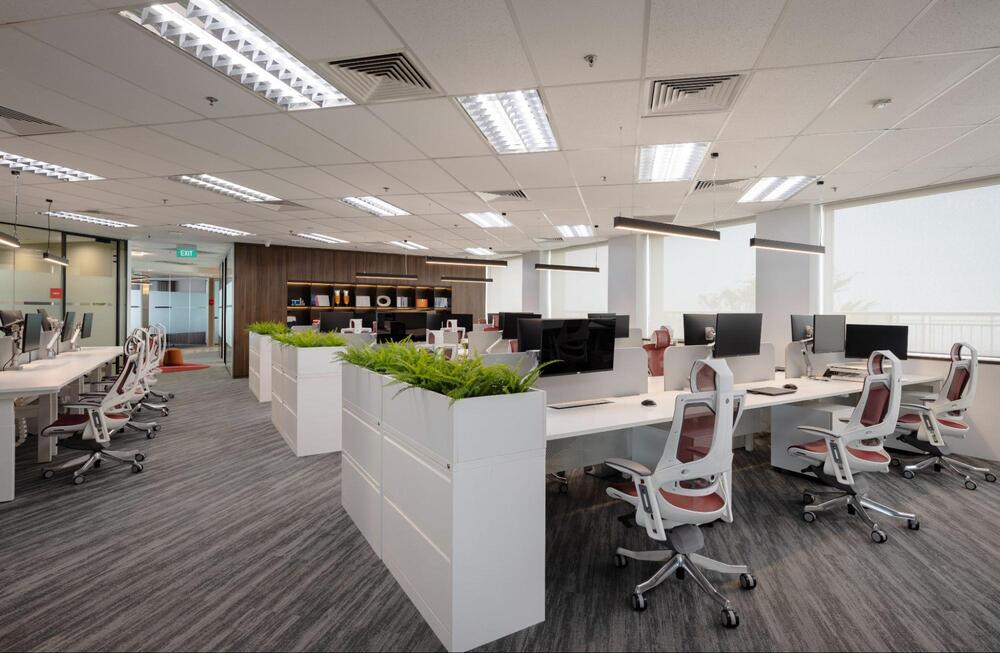
Innovative office interior designed by OSCA across Asia
Focus on productivity, flexibility, and brand identity
OSCA designs every hybrid office layout with a focus on performance. The company’s workplace strategy prioritizes productivity, operational flow, flexibility, and employee wellbeing. OSCA emphasizes human-centric design, ergonomic planning, and wellness-focused workspace environments.
Each project is tailored to help businesses:
- Improve workflow efficiency
- Support flexible working models
- Strengthen internal collaboration
- Reflect company culture through branded design
- Create a workplace employees want to use
In addition to performance, OSCA ensures every hybrid office space reflects the client’s brand identity through integrated graphics, wayfinding, and branded spatial design. OSCA’s capabilities include branding, graphics, and wayfinding integration.
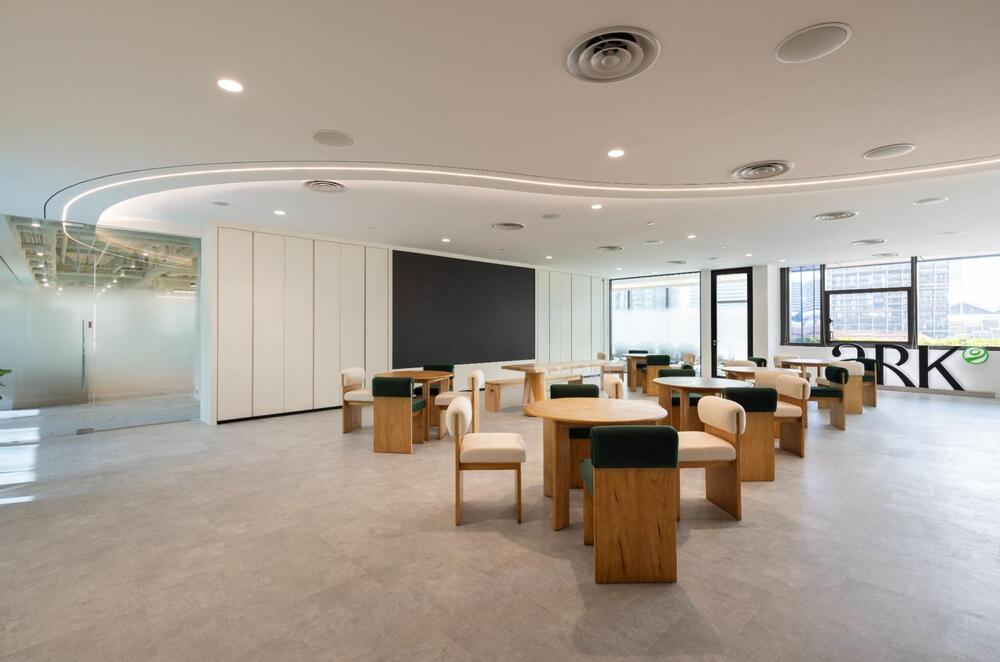
Hybrid office design by OSCA
A well-executed hybrid office space is no longer just a workplace trend, it is a strategic investment in the future of business operations. Building an effective hybrid workplace requires more than flexible furniture or remote work policies; it demands careful planning, workplace strategy, and thoughtful design integration. By partnering with experienced specialists such as OSCA, businesses can develop hybrid office environments that balance flexibility, technology, and employee experience while creating a workplace built for long-term performance and growth.